Updated: November 12, 2026
Stuck at the Same Level for Months? How to Get Past a Learning Plateau

Short answer
A plateau is usually a practice problem, not a talent ceiling. First confirm it with cold scores taken the day after practice, over several weeks. Then change the way you practice: one target per session, feedback that suits the skill, the hard part split into a few chunks, mixed and varied reps, short sessions spread across the week, a log of makes and misses, and an occasional video. Expect a dip before the next jump.
Is it a real plateau, or just a bad week?
A real plateau is a flat line across many days, measured the same way each time. One rough evening, a cold or a busy month at work doesn’t count.
Measure at the right moment, too. Your last rep of the night shows what your hands can do while the move is still fresh. Researchers call that performance and keep it apart from learning, which is what remains later.
How you do during practice is often a poor guide to what you have learned (Soderstrom and Bjork, Perspectives on Psychological Science, 2015).
People also misread it the same way each time. In Simon and Bjork’s 2001 keypad experiment, repetitive practice looked better in the session, tested worse a day later, and still got learners’ vote.
The Next-Day Test
SOLIDTime: 3 minutes · You need: a pen and the task you worked on
- When you finish a session, note the task and how your final attempts went.
- The following day, skip the warm-up. Try the task cold, three to five times.
- Give the very first try its own score. It tells you the most.
- Put that cold score beside the one from the night before.
- A big drop is normal. Last night was a high point, not your true level.
- Plan the next session from the cold score.
Badge reason: Many studies show that how a session goes and what you keep afterward can differ. The idea is SOLID; the attempt count is the author’s own choice.
Then ask whether you have been practicing the skill or just using it. Reps done the same way, at the same level, give the skill no reason to change.
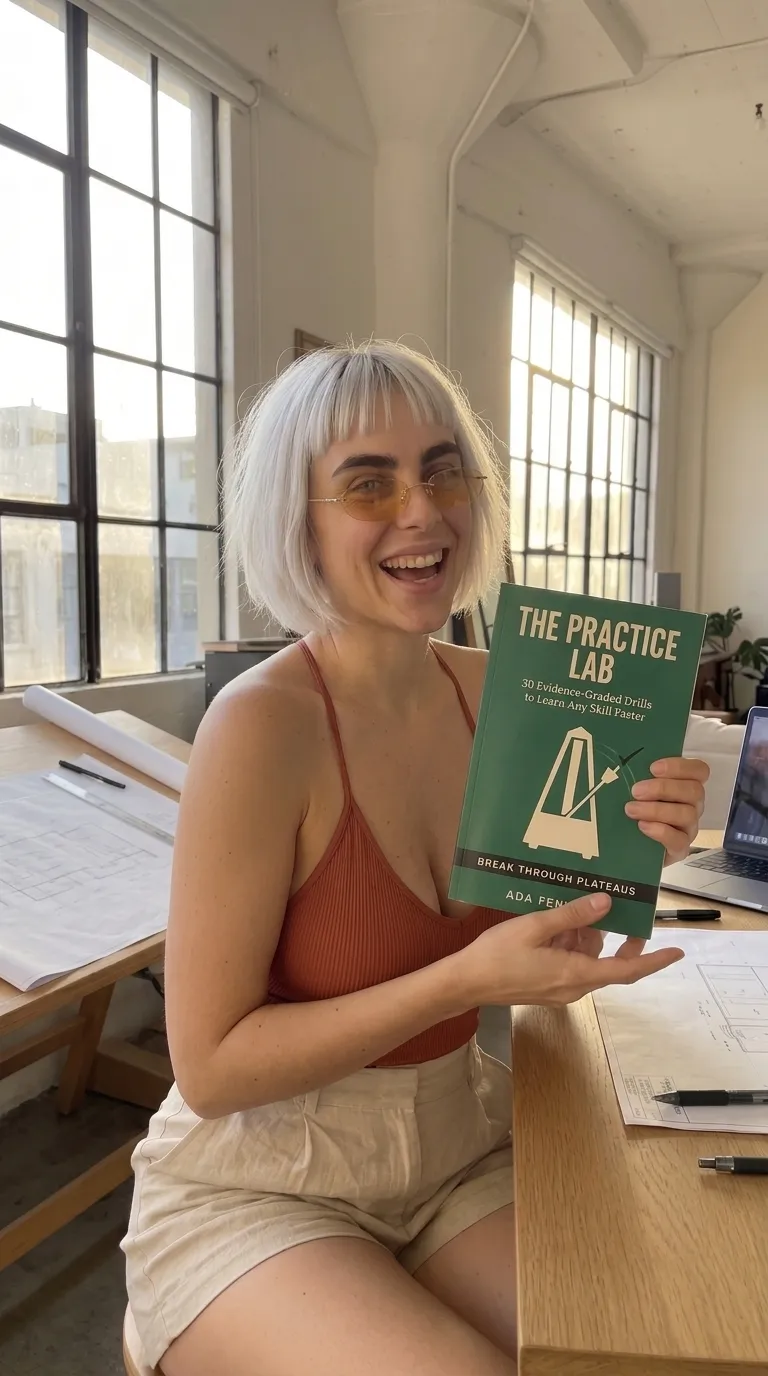

Which drill fits the way you’re stuck?
Pick the row that matches your stall and start there. SOLID means repeated support from tests on people. PROMISING means real but thin or indirect evidence. STORY ONLY means common advice that nobody has properly tested.
| What the stall looks like | Drill to try | Badge | Time |
|---|---|---|---|
| Great by the end of a session, gone by morning | The Next-Day Test | SOLID | 3 minutes |
| Your whole week of practice happens on Sunday | The Practice Week Map | SOLID | 10 minutes, weekly |
| You use the skill daily and it hasn’t moved in months | Break the Autopilot | STORY ONLY | 10 to 15 minutes |
| One bar, word or move breaks every time | Slow It Down to Clean It Up | STORY ONLY | 10 minutes |
| Your teacher gave you six fixes and you tried all at once | The One-Target Session | PROMISING | 2 minutes |
| A long section turns to mush halfway through | Chunk the Skill | PROMISING | 10 to 15 minutes |
| Fine in drills, lost in real games | The Shuffle Session | PROMISING | Your usual session |
| You replay the bad reps and forget the good ones | The Miss-and-Make Log | PROMISING | 3 minutes |
| It feels right but you suspect it doesn’t look right | Film Yourself | PROMISING | 10 minutes, weekly |
Notice that the book’s only two untested drills are both plateau drills. Plateau tips are everywhere; trials of them are scarce.
Why does a skill stop improving when you use it every day?
Daily use is not practice. Once a skill is good enough for ordinary life, it runs on autopilot and nothing pushes it further.
The book’s example is an office worker whose typing speed has not changed in ten years, despite typing every working day. Writer Joshua Foer called this “the OK plateau” in a 2011 popular book. That label is an account, not a lab result, but the research lands nearby.
Detailed records of skilled performance show plateaus, then dips while people try new methods, then leaps when one works (Gray and Lindstedt, Cognitive Science, 2017).
A 2021 study of Tetris players by Gray and Banerjee pointed the same way: technique, not raw button speed, set the ceiling. So a flat line usually means a method has run out. Getting off it means making the skill demanding again and putting up with a worse week first.
Break the Autopilot
STORY ONLYTime: 10 to 15 minutes · You need: the flat skill and some way to score it
- Write down the skill and about how long it has been stuck.
- Do it once as usual. If it feels effortless, it is on autopilot.
- Add one specific difficulty: a tighter target, a new rule, unfamiliar material.
- Work with that difficulty for 10 minutes, watching your technique, not your score.
- Scores will probably drop. Label the session “dip,” not “bad.”
- Check progress on another day, under normal conditions, cold.
Badge reason: Detailed records of skilled performance show dips before leaps. The drill itself has never been tested against ordinary practice.
For the typist, the new difficulty is ten minutes without the backspace key, copying text he has never seen. His mistakes stay visible, and within days a few problem letter pairs stand out.
Does slowing down actually help you break through?
It helps you get clean reps on a trouble spot. No experiment shows it raises your top speed.
The only tempo experiment the book found, Henley’s 2001 study of 60 high school wind players, saw no effect from the tempo pattern, though working with a model helped. It was a short, one-session test. A 2009 study of 17 advanced pianists by Duke, Simmons and Cash adds a clue: the next day, players with a higher share of correct practice attempts did better. That is a correlation, not proof.
So the book’s slow-practice drill aims at accuracy. Mark the spot that keeps breaking, lower the speed until it comes out right several times running, and count clean reps out of ten. Raise the speed a notch when most are clean, finish with a few reps near normal speed, and recount the next day.

Won’t 10,000 hours of practice get you there anyway?
Hours help, but the number was never a finish line, and how you practice predicts more than how long.
It comes from a 1993 study of 30 Berlin violinists by Ericsson, Krampe and Tesch-Römer. At 18, the top group averaged 7,410 hours, well short of 10,000. Ericsson later said the figure had no special power.
Pooled studies found deliberate practice accounted for 26 percent of differences between people in games, 21 percent in music and 18 percent in sports (Macnamara, Hambrick and Oswald, Psychological Science, 2014).
Ericsson and Harwell argued in 2019 that a stricter definition of practice raises those shares to 29 and 61 percent. Either way, the quality of each session is yours to change. That is also why counting clean attempts beats logging minutes.


How do you break a stuck skill into pieces?
Cut it into three or four chunks, smooth out each one, then practice the seams where they meet. Seams are where most sections fail.
People group movements into chunks on their own. In a 2003 sequence study, Sakai and colleagues found that shuffling a learned sequence hurt less when each person’s own groupings were kept, and the groupings varied between people. Cowan’s 2001 review put working memory at about four chunks, not the famous seven.
Chunk the Skill
PROMISINGTime: 10 to 15 minutes · You need: one section of the skill
- Choose a single section, such as a verse, a routine or a run of moves.
- Go through it slowly once and mark where you pause or take a breath.
- Use those marks to split it into three or four pieces.
- Repeat each piece until it flows.
- Then drill each seam: the end of one piece straight into the next.
- Play the full section and circle the seam that still fails.
Badge reason: One motor study found people did better when their own groupings stayed intact. Evidence that chunking on purpose helps adults is indirect, so the book grades it PROMISING (indirect).
When a whole attempt fails and you can’t tell why, list the steps in order, drill the weakest one alone, and rebuild the full skill in the same session. A 2009 meta-analysis by Fontana and colleagues broadly backed this, with too few studies for some comparisons.

Should you mix up and vary your practice?
Yes, after a new move works at all. Learn it in a block, then shuffle it with related skills and vary one detail at a time.
Expect modest gains. The 2024 meta-analyses by Czyż and colleagues found a large benefit from mixed practice in labs and close to none in real-world settings. Compare a mixed week with a blocked week using cold scores. To vary, keep your real equipment and change one thing that affects the result: distance, tempo, key or angle.
How often should you practice to keep improving?
Short sessions on most days beat one long weekly session. This idea has some of the strongest support in the book, and its Practice Week Map is graded SOLID.
In a 2006 randomized trial, Moulton and colleagues gave 38 junior surgeons equal training time, either in one day or once a week. A month on, the weekly group kept the skill better on most measures.
Of 19 direct comparisons of spread-out and massed surgical skills training, 15 favored spreading and none favored massing (Jørgensen and colleagues, Surgical Endoscopy, 2025).
Session length is less certain. In Baddeley and Longman’s 1978 typing study, one hour a day taught the most per hour and two two-hour sessions the least; nothing under an hour was tested. The book’s 20-minute starting block is its own suggestion. Split your real weekly time into short sessions on separate days, and move a missed one to a spare day rather than doubling up.

What should you do with your misses?
Put each miss next to a make from the same session. The difference between them usually points at the cause.
Avoiding errors is no cure: a 2026 review of 29 papers by Wong and colleagues found errorless practice gave healthy children and young adults no significant edge. Reviewing helps. In Ellis and Davidi’s 2005 study, soldiers who went over both failures and successes improved more than those who reviewed failures alone. So after each session, write one target, one miss, one make and one change, and read it before the next session.
A weekly phone clip of five to ten reps, watched with a single question in mind, shows what feel hides. A 2026 review by Wang and colleagues found the gains from watching your own best reps had faded a week later, so use video as a check.
Are you too old to get past a plateau?
No. Motor performance tends to dip with age, but the capacity to learn holds up.
Older adults’ capacity to learn motor skills stays intact, though gains on complex fine-motor tasks may be smaller (Voelcker-Rehage, European Review of Aging and Physical Activity, 2008).
In a small 2016 study by Bugos and colleagues, 17 adults aged 60 to 85 with little musical background completed 30 hours of piano training. A 2016 sports review by Macnamara and colleagues found top athletes had not started earlier as children. And if anything hurts, stop and ask a professional.
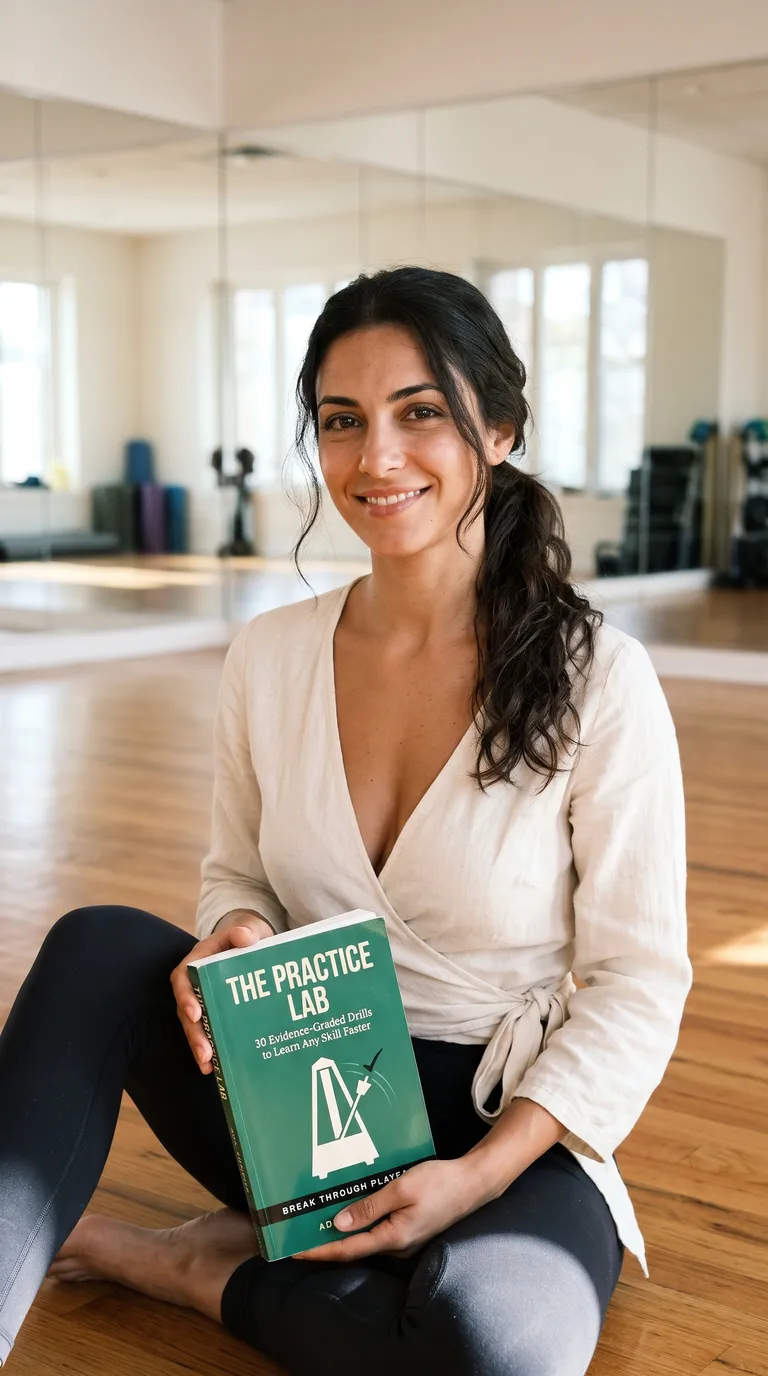
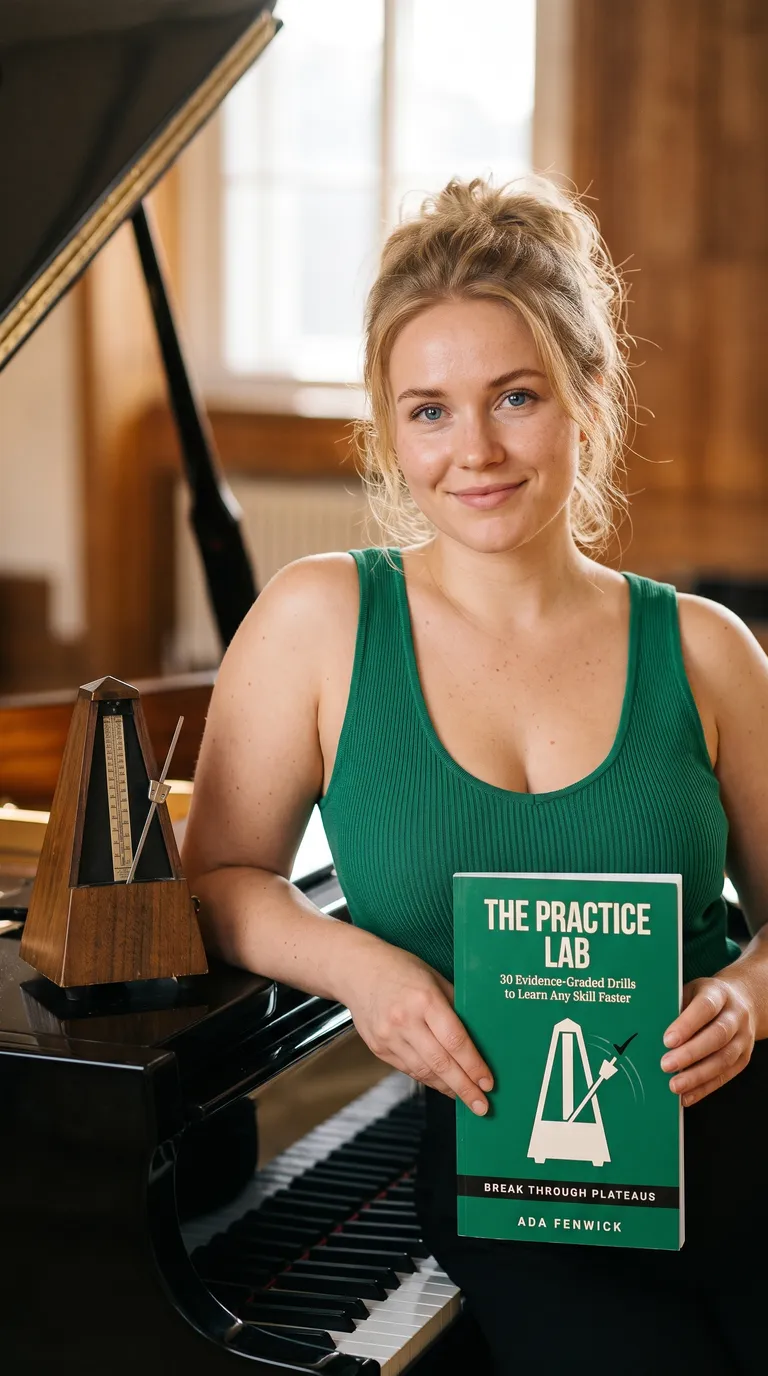
The book these drills come from
 The Practice Lab on Amazon (opens in a new tab)
by Ada Fenwick
The Practice Lab by Ada Fenwick is for adults learning or returning to a skill, from piano or pickleball to a spoken language, drawing, typing or a toast. Of its 30 drills, 2 are STORY ONLY, 23 PROMISING and 5 SOLID. It ends with four sample four-week plans and log pages.
- Practice Is Not Performance: the Next-Day Test
- Plateaus: dips before leaps, Break the Autopilot and slow practice
- Break It Down, Build It Back: chunks and part-then-whole practice
- Short Sessions, Spread Out: the Practice Week Map

It fits if
- Your instrument, sport, language or craft has stopped improving
- You came back to a skill as an adult
- You want to know which practice tips have evidence
Skip it if
- You want an exam study method
- You want a technique manual for one sport
- You need injury rehab
Questions people ask about learning plateaus
Is a learning plateau a sign I’ve reached my limit?
Usually not. It more often marks the limit of your current method. In records of skilled performance, dips came before leaps, and Tetris players were held back by technique rather than hand speed.
How long does a learning plateau last?
No study gives a typical length. If nothing about your practice changes, a flat line can last for years. Confirm it with cold next-day scores over several weeks, then change one thing about how you practice.
Does practicing longer help you get past a plateau?
Not by itself. Among 17 advanced pianists, minutes and run-throughs did not predict next-day playing, but the share of correct attempts did. Short sessions spread across the week have better support than longer ones.
Am I too old to get better at a skill?
No. A 2008 review found that older adults keep their ability to learn motor skills, even if gains on complex fine-motor tasks can be smaller. In one small study, adults aged 60 to 85 with little musical background completed 30 hours of piano training.
Sources
- Soderstrom and Bjork, Perspectives on Psychological Science (2015)
- Gray and Lindstedt, Cognitive Science (2017)
- Duke, Simmons and Cash, Journal of Research in Music Education (2009)
- Macnamara, Hambrick and Oswald, Psychological Science, on PubMed (2014)
- Moulton et al., Annals of Surgery, on PubMed (2006)
- Jørgensen et al., Surgical Endoscopy (2025)
- Voelcker-Rehage, European Review of Aging and Physical Activity (2008)
- The Practice Lab by Ada Fenwick, chapters 1 to 5, 7, 10, 11, 12, 14 and 15
