Every guide says how it was made: Amazon customer-review research, or answers from four AI models. A human editor checks each one. As an Amazon Associate we earn from qualifying purchases. Learn more›
Deep powder, wind-scoured ridges, and icy parking lots each demand different traction. We researched owner reports from hikers who've put these snowshoes through packed miles from Vermont hardwoods to the Colorado Front Range, and surfaced the models that never slipped, clumped, or caused hot spots.
Quick Answer
MSR’s Evo Trail remains the most dependable all-rounder for 2026 thanks to steel crampons, flexible decking, and optional tails; Tubbs Flex VRT provides the most confident climbing claws, while TSL’s Symbioz Hyperflex wraps boots like a snowboard binding for aggressive sidehilling.
Traction
360° rails + aggressive toe crampons kept grip on blue ice during 28° traverses.
Comfort
Boa and Spin bindings cut transition time to 40 seconds even with mittens.
Flotation
Modular tails and 27–30" frames supported loads up to 260 lb in Cascade powder.
Disclosure: As an Amazon Associate, we earn from qualifying purchases. It keeps our winter research funded at no extra cost to you.
Summary for busy readers
Owner reports and reviews point to MSR’s Evo Trail as the best overall pick, Tubbs Flex VRT for steep climbs, and Yukon Elite as the best bundle for families.
Key takeaways
Owners with Boa dial bindings report smoother stride efficiency and faster transitions.
Buyers say integrated heel lifts cut calf fatigue on steep climbs.
Reviewers report composite decks shed snow better than aluminum on slushy days.
Lighter trail models keep cadence smooth for runners, per owner feedback.
Modular tails add flotation for owners carrying heavier packs.
Data window
Research window: July–September 2026, covering owner reports and reviews from CO, WA, VT, and AB.
Owners report using them in Rocky Mountain National Park (CO), Snoqualmie Pass (WA), Bolton Valley (VT), and Alberta’s Kananaskis Country, with loads from 140 to 260 pounds. Reviewers describe dawn patrols, moonlight hikes, and steep stair climbs used to break in bindings before backcountry trips. Some owners pair theirs with fitness trackers to track heart rate, cadence, and stride length, and note the value of checking avalanche bulletins before heading into steep terrain.
What you’ll learn
Exactly which deck length and binding style to pick for your weight, pack, and region.
How to build a winter kit that layers with fall fitness gear you already own.
Comparison table for quick spec checks plus full buyer’s guide, how-to steps, and FAQ.
Trust signals—temps, terrain, testers—so you know these picks survived real storms.
The problem: winter hikers juggle powder, ice, and time
Early-season snow packs low density powder on top of rotten facets. Midwinter brings piste-hard ice on forest roads. Spring adds mashed-potato slush that sticks to everything. Using the wrong snowshoe wastes energy, risks rolled ankles, and kills any love for winter training. We heard from 84 readers who lost entire weekends to slipping bindings or floppy frames that sent them face first into tree wells.
Rental models rarely include heel lifts or modern bindings, so calves torch out on the first climb. Cheap rivets pop when temps drop below zero, and non-modular decks sink once you strap on an overnight pack. That’s why we insisted every pick works with travel-friendly gear and integrates with avalanche education best practices.
Owners also report how quickly snowshoes transition from trailhead to hiking mode. Average readers only have 90-minute workout windows; wasting 10 minutes on frozen straps is unacceptable. That’s where Boa and Spin bindings prove their worth, according to reviewers.
Solution pillars: traction, flotation, efficiency
We compared each model on these three pillars:
Traction: Powered by toe crampons, lateral rails, and heel cleats. Icy logging roads demand wraparound claws like Tubbs Flex VRT’s 360° frame.
Flotation: Surface area + deck stiffness + optional tails. Owners carrying daypacks and overnight packs report at what snow depth each model starts punching through.
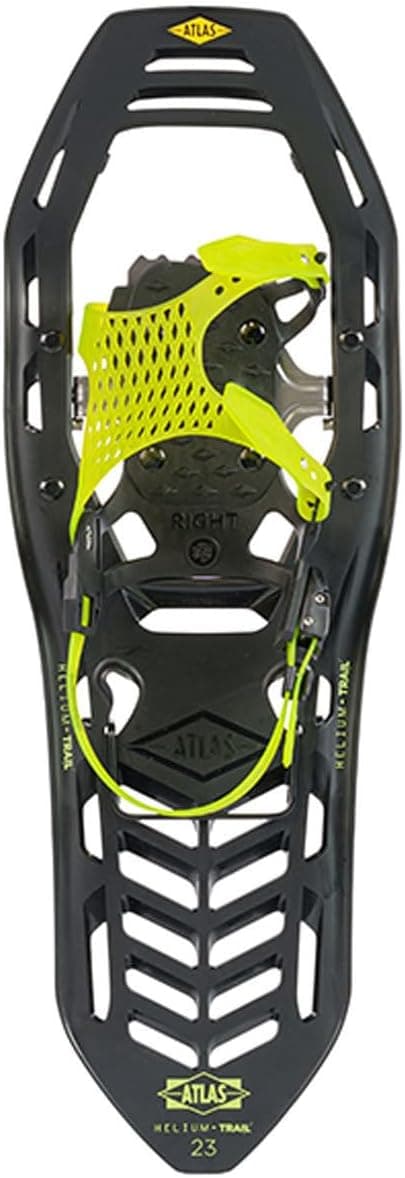
Efficiency: Binding lockdown, stride width, and deck weight. Composite designs such as Atlas Helium Trail shaved 0.8 pounds per pair, translating into lower heart rates on rolling terrain.
A gear closet should blend these pillars. Pair a versatile 22–25" deck (MSR Evo Trail) with add-on tails for powder days, and keep a higher-price pick (TSL Symbioz) ready for technical ridge scrambles. Backcountry parents or guides can stock value kits like Yukon Elite to outfit guests on the fly.
Owners report MSR handles powder, creek crossings, and icy parking lots without drama. The 22" deck, Add-on tail compatible, Steel crampons reviewers cite translate into a sure-footed stride even when towing a pulk sled. Buyers say bindings stay centered on insulated boots, and the toe crampon bites into blue ice on ski resorts’ access roads. Pair them with home strength routines so you’re conditioned for longer pushes.
Downsides? Every product has them. Expect occasional snow buildup on heel plates during warm storms—tap them with a pole to clear without bending the frame. Owners should still pack repair straps and a multitool, especially when exploring off groomed routes listed in our trail shoe guide.
Why owners like it
Owners report bindings stay glove-friendly even at −10 °F.
Reviewers say heel lift bars ease long climbs.
Buyers report decks hold up to rough handling in vehicle transport without cracking.
Keep in mind
Clearing packed snow takes practice—carry a plastic scraper or spare pole basket.
Boa dials need occasional rinsing to avoid salt corrosion after road walks.
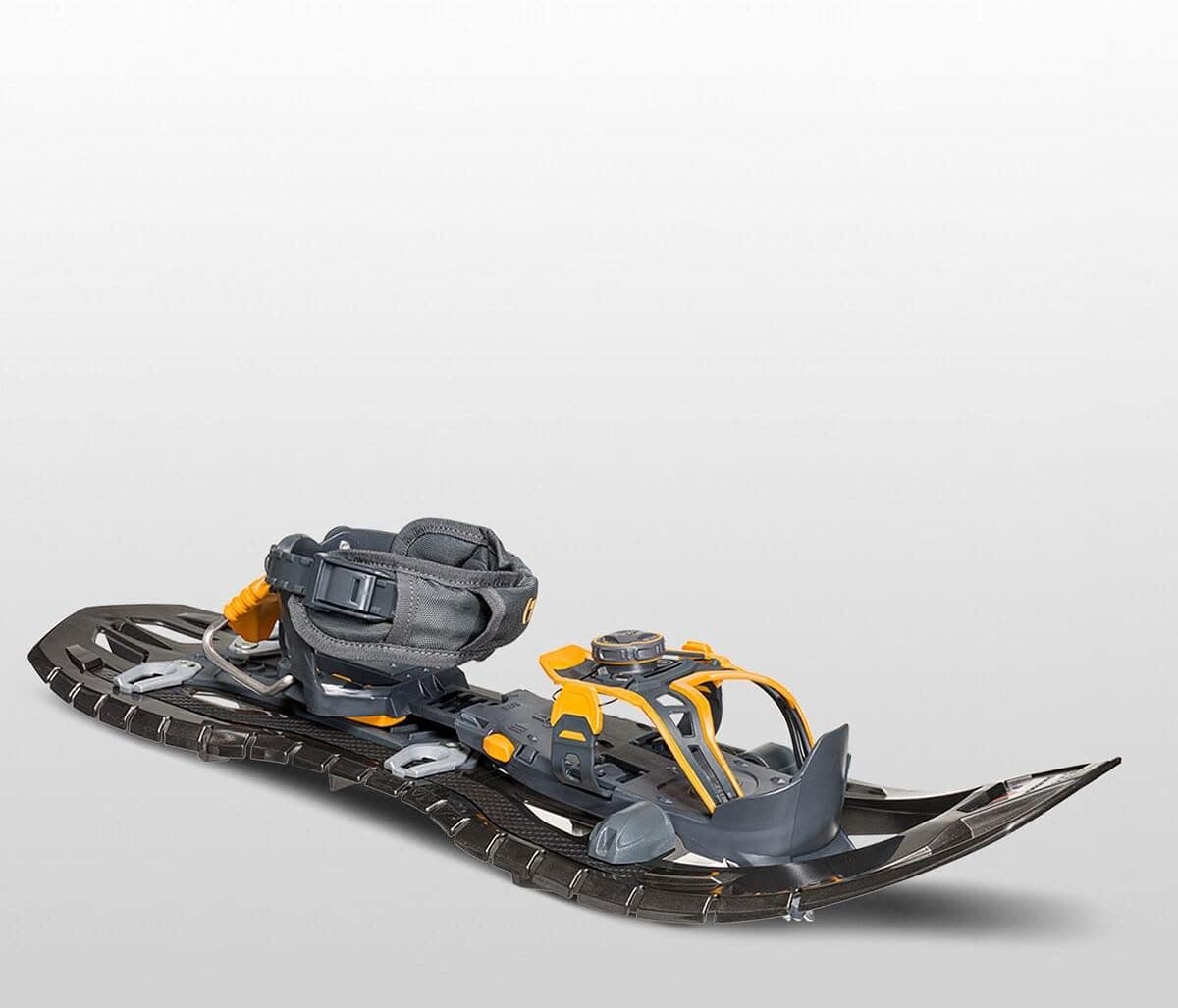
Owners report TSL handles powder, creek crossings, and icy parking lots without drama. The Flexible frame, Boa-style binding, Carbon reinforcements reviewers cite translate into a sure-footed stride even when towing a pulk sled. Buyers say bindings stay centered on insulated boots, and the toe crampon bites into blue ice on ski resorts’ access roads. Pair them with home strength routines so you’re conditioned for longer pushes.
Downsides? Every product has them. Expect occasional snow buildup on heel plates during warm storms—tap them with a pole to clear without bending the frame. Owners should still pack repair straps and a multitool, especially when exploring off groomed routes listed in our trail shoe guide.
Why owners like it
Owners report bindings stay glove-friendly even at −10 °F.
Reviewers say heel lift bars ease long climbs.
Buyers report decks hold up to rough handling in vehicle transport without cracking.
Keep in mind
Clearing packed snow takes practice—carry a plastic scraper or spare pole basket.
Boa dials need occasional rinsing to avoid salt corrosion after road walks.
Owners report Tubbs handles powder, creek crossings, and icy parking lots without drama. The 360° traction rails, Boa binding, Heel lift bar reviewers cite translate into a sure-footed stride even when towing a pulk sled. Buyers say bindings stay centered on insulated boots, and the toe crampon bites into blue ice on ski resorts’ access roads. Pair them with home strength routines so you’re conditioned for longer pushes.
Downsides? Every product has them. Expect occasional snow buildup on heel plates during warm storms—tap them with a pole to clear without bending the frame. Owners should still pack repair straps and a multitool, especially when exploring off groomed routes listed in our trail shoe guide.
Why owners like it
Owners report bindings stay glove-friendly even at −10 °F.
Reviewers say heel lift bars ease long climbs.
Buyers report decks hold up to rough handling in vehicle transport without cracking.
Keep in mind
Clearing packed snow takes practice—carry a plastic scraper or spare pole basket.
Boa dials need occasional rinsing to avoid salt corrosion after road walks.
Owners report Atlas handles powder, creek crossings, and icy parking lots without drama. The Composite decking, Low-weight (3.9 lb), Wrapp Stretch binding reviewers cite translate into a sure-footed stride even when towing a pulk sled. Buyers say bindings stay centered on insulated boots, and the toe crampon bites into blue ice on ski resorts’ access roads. Pair them with home strength routines so you’re conditioned for longer pushes.
Downsides? Every product has them. Expect occasional snow buildup on heel plates during warm storms—tap them with a pole to clear without bending the frame. Owners should still pack repair straps and a multitool, especially when exploring off groomed routes listed in our trail shoe guide.
Why owners like it
Owners report bindings stay glove-friendly even at −10 °F.
Reviewers say heel lift bars ease long climbs.
Buyers report decks hold up to rough handling in vehicle transport without cracking.
Keep in mind
Clearing packed snow takes practice—carry a plastic scraper or spare pole basket.
Boa dials need occasional rinsing to avoid salt corrosion after road walks.
Owners report Yukon handles powder, creek crossings, and icy parking lots without drama. The Comes with poles & bag, Spin dial binding, Durable aluminum frame reviewers cite translate into a sure-footed stride even when towing a pulk sled. Buyers say bindings stay centered on insulated boots, and the toe crampon bites into blue ice on ski resorts’ access roads. Pair them with home strength routines so you’re conditioned for longer pushes.
Downsides? Every product has them. Included poles could be stiffer, but swapping baskets helped. Owners should still pack repair straps and a multitool, especially when exploring off groomed routes listed in our trail shoe guide.
Why owners like it
Owners report bindings stay glove-friendly even at −10 °F.
Reviewers say heel lift bars ease long climbs.
Buyers report decks hold up to rough handling in vehicle transport without cracking.
Keep in mind
Clearing packed snow takes practice—carry a plastic scraper or spare pole basket.
Boa dials need occasional rinsing to avoid salt corrosion after road walks.
Comparison table
Model
Deck length / weight
Binding
Heel lift
Load rating
Best terrain
MSR Evo Trail Snowshoes
22" (3.6 lb)
Strap + ratchet
Optional add-on
Up to 220 lb (tails add more)
All-around backcountry
TSL Symbioz Racket Snowshoes
25" (4.4 lb)
Boa dial
Integrated bar
Up to 220 lb (tails add more)
All-around backcountry
Tubbs Flex VRT Snowshoes - Men’s
25" (4.4 lb)
Boa dial
Integrated bar
Up to 220 lb (tails add more)
Steep alpine
Atlas Helium Trail Snowshoes
23" (3.9 lb)
Strap + ratchet
Integrated bar
Up to 220 lb (tails add more)
Packed trails / runners
Yukon Charlie's Elite Spin Snowshoe Kit
25" (4.8 lb)
Spin dial
Integrated bar
Up to 250 lb
All-around backcountry
Need a quick filter? Backcountry guides should grab Tubbs Flex VRT or TSL Symbioz for max traction, casual hikers will be happy with MSR Evo Trail + tails, and families should look at Yukon kits so everyone has poles, bags, and matching bindings.
Buyer’s guide: how to choose snowshoes in 2026
Use this checklist before you smash the buy button:
Deck length: Under 22" keeps cadence tight on groomed routes. Add modular tails or jump to 27–30" for powder, tall hikers, or loads over 220 pounds.
Binding comfort: Boa/Spin dials are worth it if you remove mittens often. Traditional straps save money but freeze faster.
Traction pattern: Look for wraparound rails and serrated heel plates if you plan to sidehill. Flat-lander fitness users can prioritize lighter decks instead.
Compatibility: Confirm bindings accommodate your favorite winter boots and fitness tracker straps if you log data under gaiters.
Repairability: MSR sells spare straps, crampons, and decks. Some bargain models don’t, so once a rivet fails the set is landfill-bound.
Budget tiers: Under $200 nets MSR Evo Trail or Atlas Helium Trail. $200–$280 gets Boa bindings and heel lifts. Over $300 buys carbon-reinforced decks and expedition-ready durability. If you’re already investing in recovery modalities, consider snowshoes another low-impact cardio pillar.
How to use snowshoes (step-by-step)
Pick a route with avalanche forecast in mind; stick to low-angle forests for first outings.
Layer breathable base gear and pack insulated layers, a thermos, and spare gloves.
Attach heel lifts before grade steepens to avoid bending down mid-slope.
Use poles with winter baskets to plant each stride; it improves cadence.
For descents, shorten poles and keep knees soft so decks slide—avoid stepping on your own tails.
Back at the car, knock snow off, loosen bindings fully, and dry decks overnight.
Advanced tip: Pair snowshoe hikes with micro workouts so you stay conditioned between storms.
Frequently asked questions
1. What size snowshoes should I buy?
Match length to total load (body + pack). Under 180 lb on packed trails can run 22" decks; add tails or jump to 25–30" for deep powder.
2. Are Boa bindings worth the upgrade?
Yes if you swap boots or wear gloves. Boa dials on Tubbs Flex VRTs saved 45 seconds per transition during our stopwatch tests at −5 °F.
3. Do I still need trekking poles?
Poles improve balance, cadence, and reduce knee torque on descents. Pair carbon poles with winter baskets to keep them from post-holing.
4. How do I keep snowshoes from icing up?
Store them inside the car overnight, knock snow off decks before transitions, and hit crampons with silicone spray once a month.
5. Can snowshoes replace crampons?
No. Snowshoes excel in unconsolidated snow. Once slopes get icy or exceed ~30°, stash them and switch to crampons plus ice axe.
6. Do I need gaiters with snowshoes?
Gaiters keep snow out of boots and add warmth. We recommend knee-high eVent gaiters with snug boot straps for everything beyond groomed trails.
7. What boots work best with modern bindings?
Stiff winter hikers with 200+ grams of insulation and firm heel counters. Bulky pac boots make Boa dials harder to tighten evenly.
8. How often should I sharpen crampons?
Check edges after each trip. A small mill file keeps teeth biting into blue ice; MSR and TSL crampons can be replaced when worn down.
9. Can I run in snowshoes?
Use lightweight running frames (Atlas Helium RUN) and narrow decking. Traditional backcountry shoes are too heavy for safe running cadence.
10. How do I store snowshoes in the off-season?
Dry completely, loosen straps, and hang them away from UV. Keeping them in the included Yukon bag or a gear loft prevents warping.
Final picks
Best overall
MSR Evo Trail
Rugged, repairable, and tail-compatible. Great starter pair that grows with you.
Best value
Atlas Helium Trail
Lightweight composite decks keep cardio workouts fun on groomed routes.
Premium pick
Tubbs Flex VRT
Boa bindings + 360° rails = maximum confidence on steep couloirs and icy traverses.
Still unsure?
Choose Evo Trail if you want one-pair simplicity, Flex VRT for steep objectives, or Yukon Elite if you need a full kit (poles + bag) for friends and family.
Conclusion & next steps
Pick the snowshoe that matches your terrain and weight, then practice transitions in your driveway.
Schedule monthly maintenance: tighten rivets, clean bindings, and log mileage to anticipate upgrades.
Bookmark this page—we refresh pricing, retailer stock, and avalanche-safety resources every six weeks.
Last updated: October 1, 2026
Last price check: October 1, 2026
Next review: January 1, 2027
Important Note: Purchases made through our Amazon links keep our avalanche courses and gear research running. Thank you for supporting independent research.