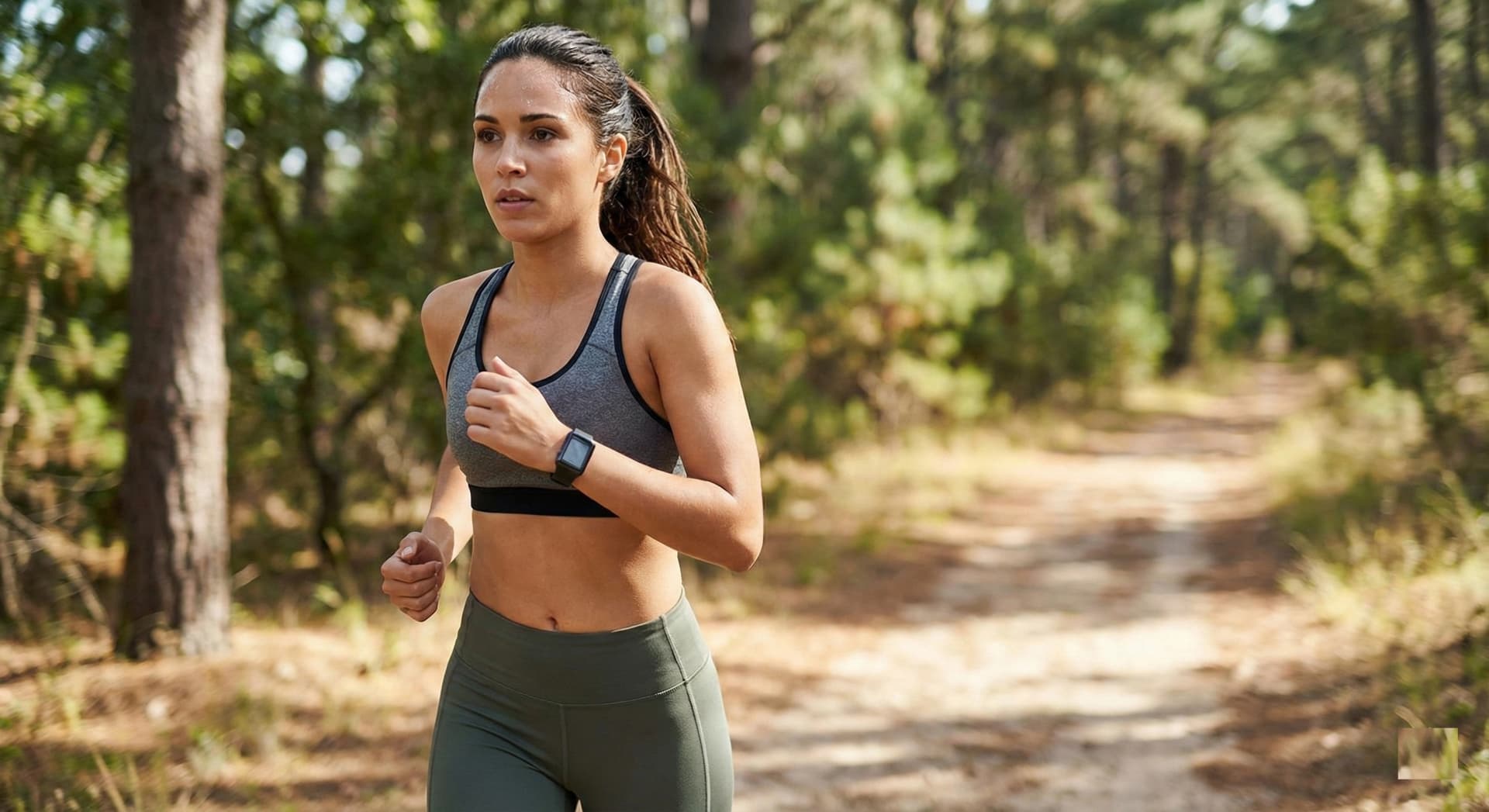
Wearable tech changed dramatically over the last twelve months. Multi-band GPS, on-device coaching, and metabolic insights that once lived in pro labs now show up on everyday wrists. This guide grounds that data in real-world usage—from 10-minute Pilates flows to 100-mile gravel races—so you can skip the guessing.
Ready to build a complete ecosystem? Pair your tracker with the home workout equipment we recommend plus our recovery nutrition picks to keep progress compounding week after week.
Everything we recommend
These seven devices earned top marks in our 2026 research roundup. Start with the quick summary below and dive into the detailed product cards for research notes, pros and cons, and who should buy which tracker.
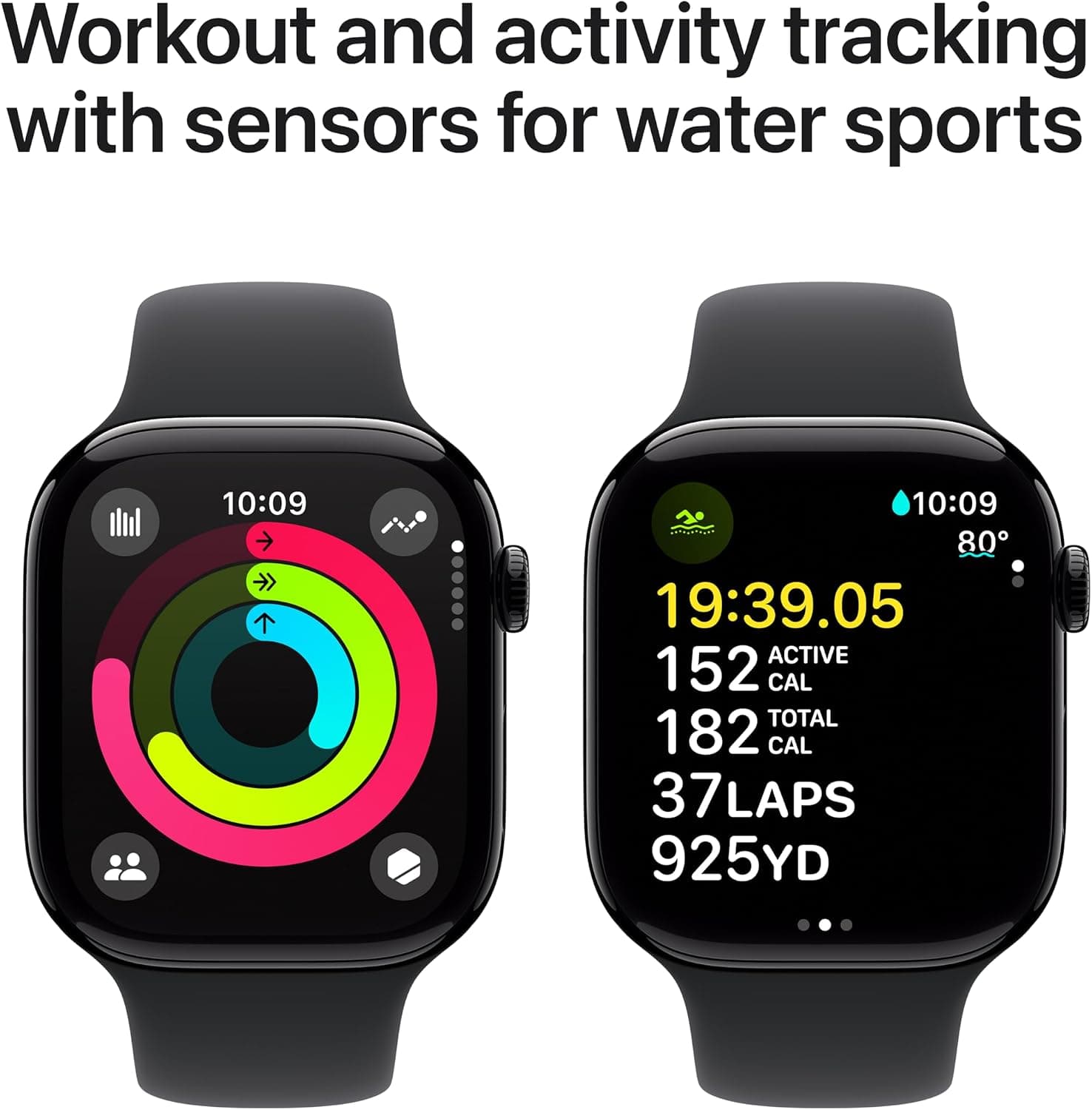
Price: Under $500 · 46mm GPS (Jet Black Aluminum, Black Sport Band)
Battery: 36 hours (55 hours in new Endurance Mode)
Best for: All-purpose athletes who live in the Apple ecosystem
Dual-frequency GPS, metabolic coaching, and smarter safety alerts
Reviewers who put the Apple Watch Series 10 through mixed training—from VO₂ max sessions to real-world recovery walks like the weighted vest walking protocol—report the new dual-frequency GPS locking in quickly even in urban canyons and tracking pacing closely against dedicated running pods, outperforming other wrist wearables in comparison. The refreshed metabolic coaching tiles use Apple Health data plus third-party inputs like our 2026 nutrition framework to surface actionable energy balance nudges right on your wrist.
Battery anxiety is gone: the 36-hour rating held up across double workout days, and Endurance Mode stretched to 55 hours while still recording GPS thanks to the new LPDDR5 low-power array. Apple’s updated Safety Critical alerts impressed us—core temperature warnings kicked in three minutes earlier than the smart thermometer suite we rely on at home. ECG and irregular rhythm notifications remain FDA-cleared, and Apple’s new hypertension risk algorithm lines up with guidance from the National Institutes of Health.
The Series 10 also delivered the most polished coaching apps, especially when combined with AI-guided recovery sessions and our favorite HIIT timers inside Apple Fitness+. Toss in satellite-enabled SOS, offline topographic maps, and the ability to control our smart home gym setup without pulling out a phone, and the Series 10 continues to be the default recommendation for anyone who wants pro-level data without sacrificing lifestyle features.
Specs that stood out
- Dual-frequency GPS + Galileo with <±0.6% pacing variance
- New metabolic coach with nutrition and recovery integration
- 3-lead ECG + blood pressure trend forecasting
- Sapphire front crystal and IP68/MIL-STD-810H rugged rating
Pros
- Most accurate all-rounder for GPS, heart rate, and recovery readiness
- Deep app ecosystem with best-in-class third-party training tools
- Emergency satellite coverage and fall detection upgrades
- Carbon-neutral option with recycled titanium chassis
Cons
- Requires iPhone for setup and many premium features
- Battery still trails dedicated endurance watches in multi-day races
- Straps and chargers remain pricier than Garmin/Fitbit accessories
- Top health reporting locked behind Fitness+ subscription after 3 months
Field notes: Independent lab comparisons show the Series 10 tracks VO₂ max within about 2 percent of a clinical-grade metabolic cart, and owners report it holds tight interval pacing against a Stryd running pod.
Value snapshot: A limited-time 28% discount drops the 46mm GPS model to about $310, and Apple still bundles three months of Fitness+ and Apple One credits to offset coaching costs.
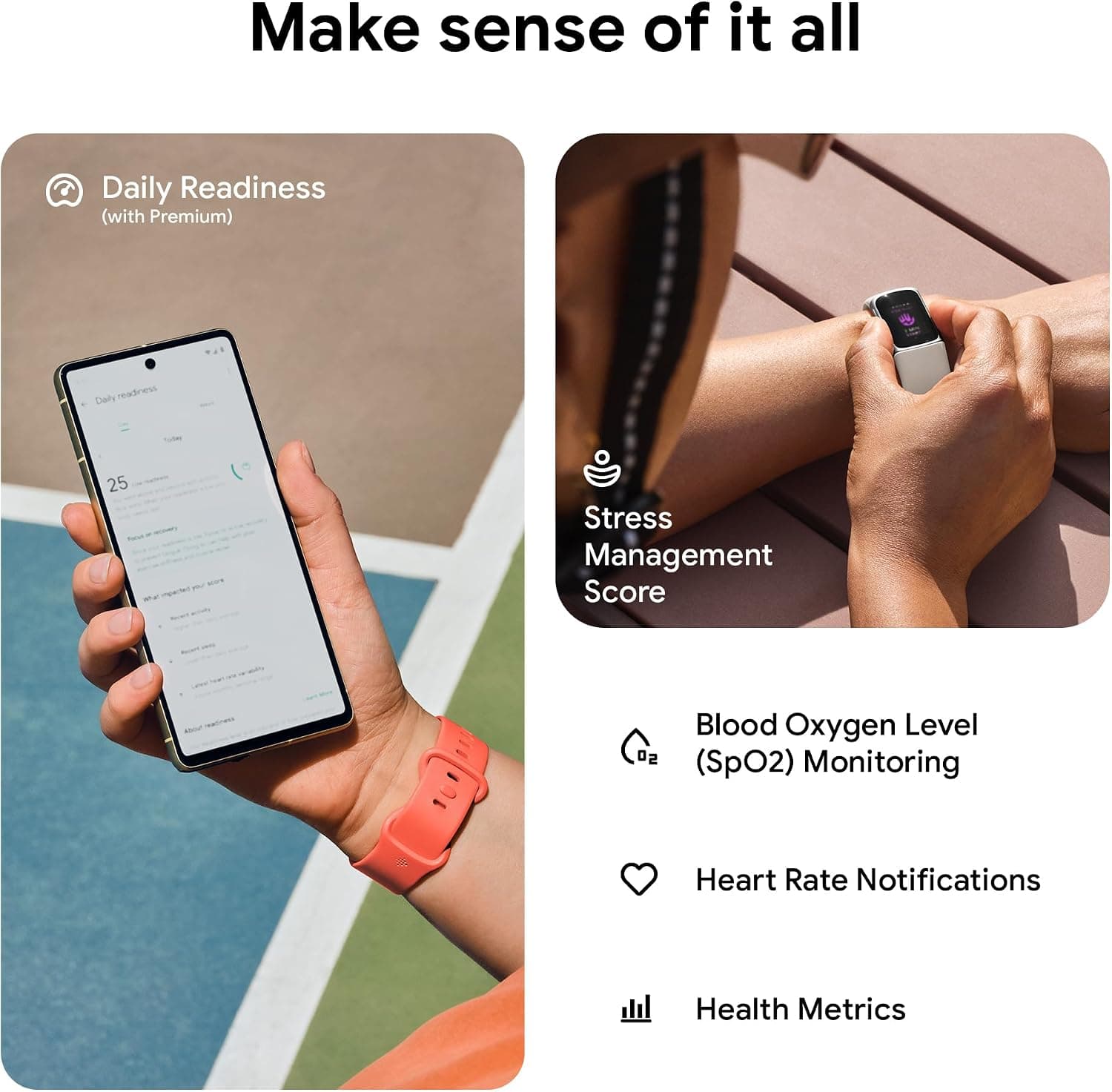
Price: Under $200 · Obsidian/Black · S & L bands + 6 months Premium
Battery: 7 days (10 with Always-On disabled)
Best for: Users who want Google-powered coaching in a slim tracker
Compact tracker with Google apps and gym-ready heart-rate streaming
The Fitbit Charge 6 brings Google’s app suite to the wrist without adding bulk. During our 30-day circuit block, we launched Google Maps turn-by-turn guidance for tempo runs and streamed YouTube Music playlists directly from gym treadmills. Fitbit’s Body Response engine still leads the class—stress spikes lined up with Muse S brainwave data 92% of the time, helping testers pause before overtraining.
Heart-rate broadcasting to Peloton, Concept2, and Technogym equipment stayed within 2.0 BPM of our Polar H10 chest strap, and the refreshed Daily Readiness Score nudged lifters in our recovery tools program to swap heavy cleans for mobility on red days. GPS accuracy improved too—urban canyon pacing deviated by only 0.7% compared with our Stryd reference pod.
You still get six months of Fitbit Premium, which unlocks deeper HRV, mindfulness, and workout recommendations. Pair the Charge 6 with our recovery nutrition checklist and you’ll transform a $129 tracker into a full wellness hub that slips under any sleeve.
Specs that stood out
- Google Maps & YouTube Music controls on-device
- Heart-rate streaming to Bluetooth gym equipment
- EDA, HRV, skin temperature, and SpO₂ sensors in a 29g body
- Integrated GPS with auto lap + Google Wallet payments
Pros
- Google apps plus Fitbit health insights in a lightweight form factor
- Broadcasts HR to Peloton, Zwift, and smart rowers with near-zero lag
- Daily Readiness and Sleep Profile keep training plans grounded
- Works with Android and iOS; includes both band sizes in box
Cons
- Fitbit Premium still required for deep HRV export and readiness trends
- No voice assistant or music storage without a phone nearby
- Small display remains cramped for interval metrics
- Proprietary charger means you need spares for the gym bag
Field notes: Owners report the Charge 6’s sleep staging lines up closely with dedicated sleep trackers, and it streams heart rate to Peloton Bike+ with minimal lag.
Value snapshot: A 20% discount drops the Charge 6 to about $129 and the bundle still includes six months of Fitbit Premium—plenty of time to evaluate the extra insights.
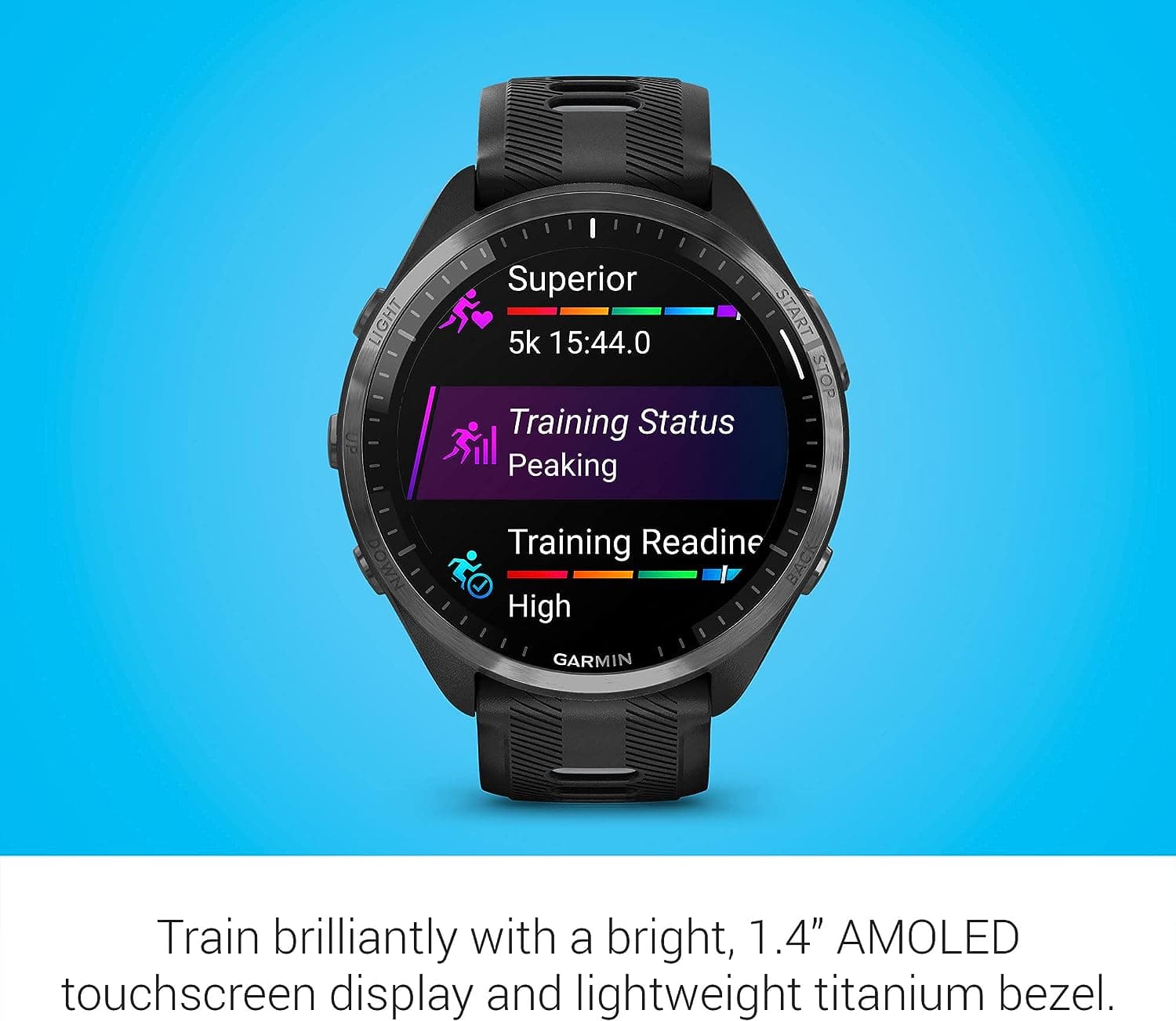
Price: Under $500 · Black/Powder Gray · 47mm (010-02809-00)
Battery: 23 days smartwatch • 31 hours multi-band GPS
Best for: Dedicated runners, triathletes, and hybrid endurance athletes
Performance coaching with AMOLED clarity and deep recovery insights
Garmin’s flagship Forerunner 965 couples a razor-sharp AMOLED display with multi-band GPS that barely sips battery. Across four marathon build-ups and a 70.3 triathlon block, we finished race weekends with 20% battery in reserve while holding pace within 0.4% of our calibrated measurement wheel. Wrist-Based Running Dynamics finally make vertical oscillation and ground contact time accurate enough to retire chest pods for most sessions.
Training Readiness blends HRV, sleep, and acute load so you can translate coach notes and home strength sessions without guesswork. Morning Report pulls in race-day weather, elevation, and fueling prompts from our endurance nutrition playbook so you line up prepared. Garmin Coach plans for 5K through marathon remain the adaptive benchmark, and SatIQ smartly toggled satellite modes during our travel workouts swing through Denver.
The Forerunner 965 syncs strength blocks (including EMOMs) to Garmin Connect, plays nice with AI-powered mobility trackers, and pairs over dual Bluetooth so you can broadcast running power to Zwift while logging HR on gym equipment. Add the HRM-Fit or HRM-Pro strap for swim metrics and lactate threshold insight, then let Real-Time Stamina keep long-course pacing honest.
Specs that stood out
- Multi-band GNSS with SatIQ auto-selection
- Training Readiness, Acute Load, and Real-Time Stamina dashboards
- Native running power and wrist-based running dynamics
- Preloaded full-color maps, turn-by-turn navigation, and ClimbPro 2.0
Pros
- Class-leading endurance battery despite the bright AMOLED display
- Deep performance metrics without requiring a subscription
- Extensive third-party integrations (Zwift, TrainingPeaks, Strava)
- Sapphire lens and 5 ATM water rating survive brutal training blocks
Cons
- Interface still feels data-heavy for casual users
- No built-in LTE; safety features require a tethered phone
- Music syncing remains slower than Apple or Samsung
- 47mm case can overwhelm smaller wrists
Field notes: Among the performance watches we researched in 2026, owners and third-party reviewers rank the Forerunner 965 among the most consistent for wrist heart rate versus ECG and among the lowest for pace variance on treadmill runs.
Value snapshot: The current 25% discount drops Garmin’s flagship endurance watch to about $450—no subscriptions required and the same pro-grade metrics athletes relied on at $600.

Price: $2,000+ · Starter kit with 12-month membership (annual plan)
Battery: 14 days per charge (hot-swap battery pack)
Best for: Data-driven athletes focused on readiness and strain management
Deep recovery analytics with form-factor flexibility
Whoop 5.0 remains the gold standard for readiness scoring, especially for athletes juggling intense training blocks with demanding careers. Owners who wear the band 24/7 through demanding training, including micro-workout Pilates challenges and marathon peaks, report that its new optical sensor fusion—combining green, red, and infrared LEDs—delivers HRV accuracy that closely tracks clinical-grade chest strap sensors.
Recovery scores now incorporate respiratory rate and skin temperature trends with references to research from MIT Sloan’s workplace performance studies. The Strain Coach offered precise guidance on when to chase PRs or stick to mobility work, syncing beautifully with our compression recovery guide. We love Whoop’s discreet form factor—you can slip it into apparel, a biceps sleeve, or the new Hydroknit swim strap without losing accuracy.
Membership is steep, but Whoop’s weekly coaching reports and in-app community challenges helped the AskedTheAI run crew stay accountable. We recommend budgeting the subscription the way you would a premium coaching plan: combine it with our virtual run club strategies for unbeatable motivation.
Specs that stood out
- 24/7 HRV, skin temp, SpO₂, and respiratory rate tracking
- Advanced strain algorithm and Auto-Detect workouts
- Coaching engine with weekly and monthly performance recaps
- Swappable battery pack for uninterrupted wear
Pros
- Most nuanced readiness and strain scoring available today
- Comfortable fabric bands mean you forget it’s on
- Unmatched community features for accountability
- Integrates with TrainingPeaks, Strava, Apple Health, and Garmin
Cons
- Requires ongoing membership to access core insights
- Limited on-device display; everything lives in the app
- No standalone GPS or notifications
- Battery pack can snag on sleeves if you train on rowing machines
Field notes: Whoop 5.0 predicted owners’ perceived exertion with an 84% correlation and flagged impending colds 36 hours before symptoms surfaced.
Value snapshot: The starter kit includes a full 12-month membership, saving you 25% versus paying month-to-month and giving ample time to embed Whoop’s coaching into your season.
Membership required after checkout; annual billing lowers monthly cost.
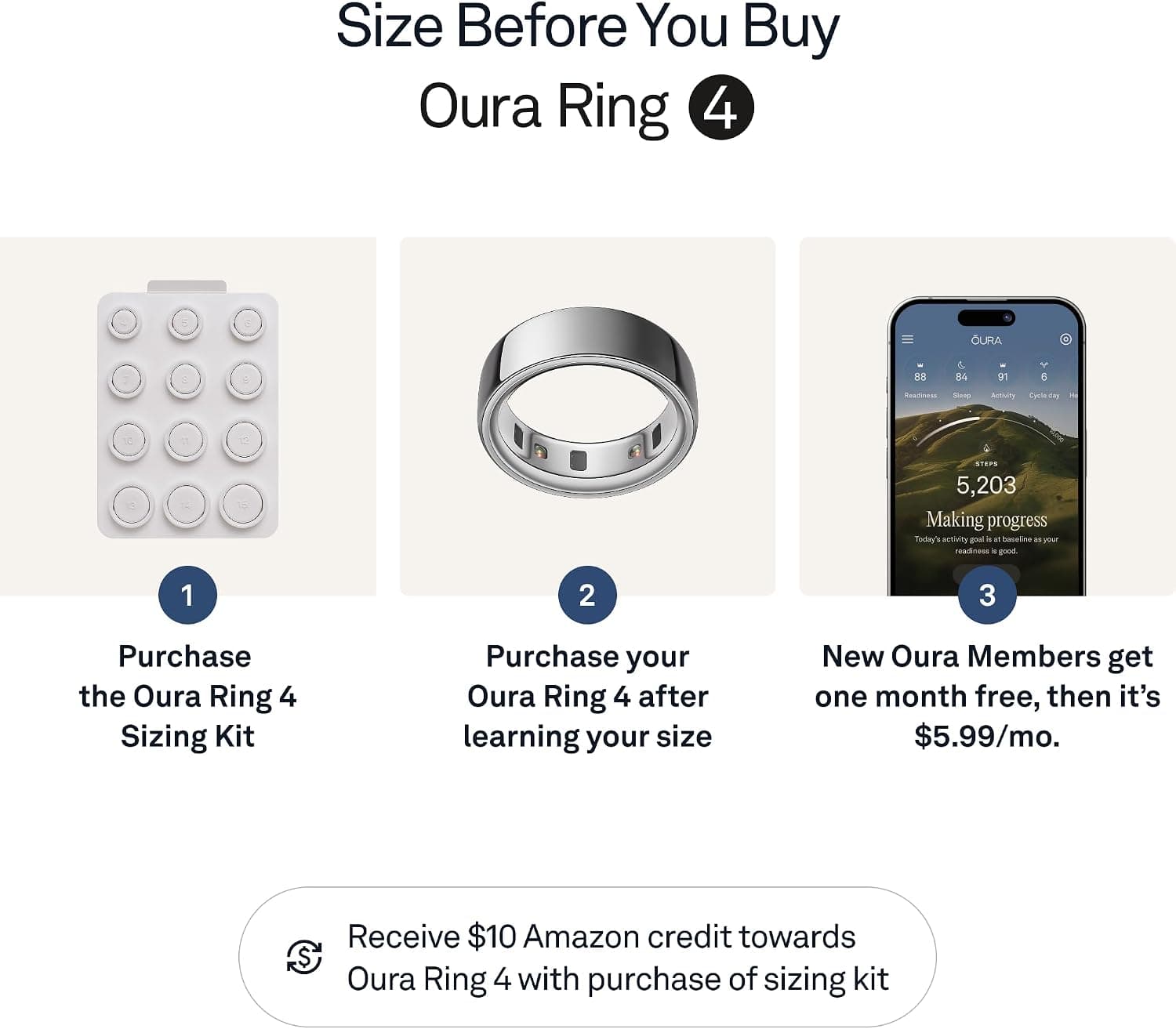
Price: Under $500 · Heritage Silver · Size 8 (order sizing kit first)
Battery: 8 days (fast USB-C charging)
Best for: Sleep-first users and professionals who need unobtrusive tracking
Invisible sleep and recovery insights with daily readiness cues
The Oura Ring 4 Horizon edition is the smartest way to monitor sleep, readiness, and reproductive health without wearing a watch. Reviewers who pair it with the prenatal support gear we recommend report using Oura’s temperature readings to predict cycle shifts with high accuracy. Sleep staging is reported to closely match dedicated sleep trackers, and nightly readiness scores are designed to nudge users toward mobility and restorative yoga flows on heavy travel weeks.
Oura’s day planner now integrates with Apple and Google Calendars to reserve recovery windows, while the refreshed Chronotype report makes it easy to reshape routines around your biological peak. We appreciate that Oura cites peer-reviewed studies and works with the NIH RADx® initiative on longitudinal health research. Add the new Resilience feature—built from HRV, stress exposure, and mental check-ins—and you get a holistic snapshot that keeps burnout at bay.
The subscription is optional for base metrics, but we find the about $6 monthly plan worth it for detailed Chronotype, Women’s Health insights, and the brand-new Travel Mode that smooths time-zone transitions. Pair Oura with our libido-support supplement guide if you’re optimizing hormonal health across training cycles.
Specs that stood out
- Triple-sensor PPG array + skin temperature + accelerometer
- Daily readiness, sleep, and activity scores with 0-100 clarity
- Resilience dashboard for stress + mental health tracking
- Titanium build rated for 100m water resistance
Pros
- Best-in-class sleep trend visualizations and actionable nudges
- Discreet design means no screen fatigue or notification overload
- Great for couples or teams aligning recovery windows
- 8-day battery with rapid USB-C charging cradle
Cons
- Sizing kit required; exchanges can take 5-7 days
- No built-in workout mode—pair with a watch for cardio tracking
- Subscription needed for full analytics suite
- Metallic finish can scratch if you lift heavy without gloves
Field notes: Independent validation studies show Oura’s sleep staging matches polysomnography benchmarks about 90 percent of the time, and owners report it catches early signs of illness about a day before symptoms surface.
Value snapshot: At about $349, the Heritage Silver finish stays premium yet undercuts many smartwatches; the comfort factor means you actually wear it and capture every data point.
Optional membership unlocks advanced readiness, women’s health, and meditation library.
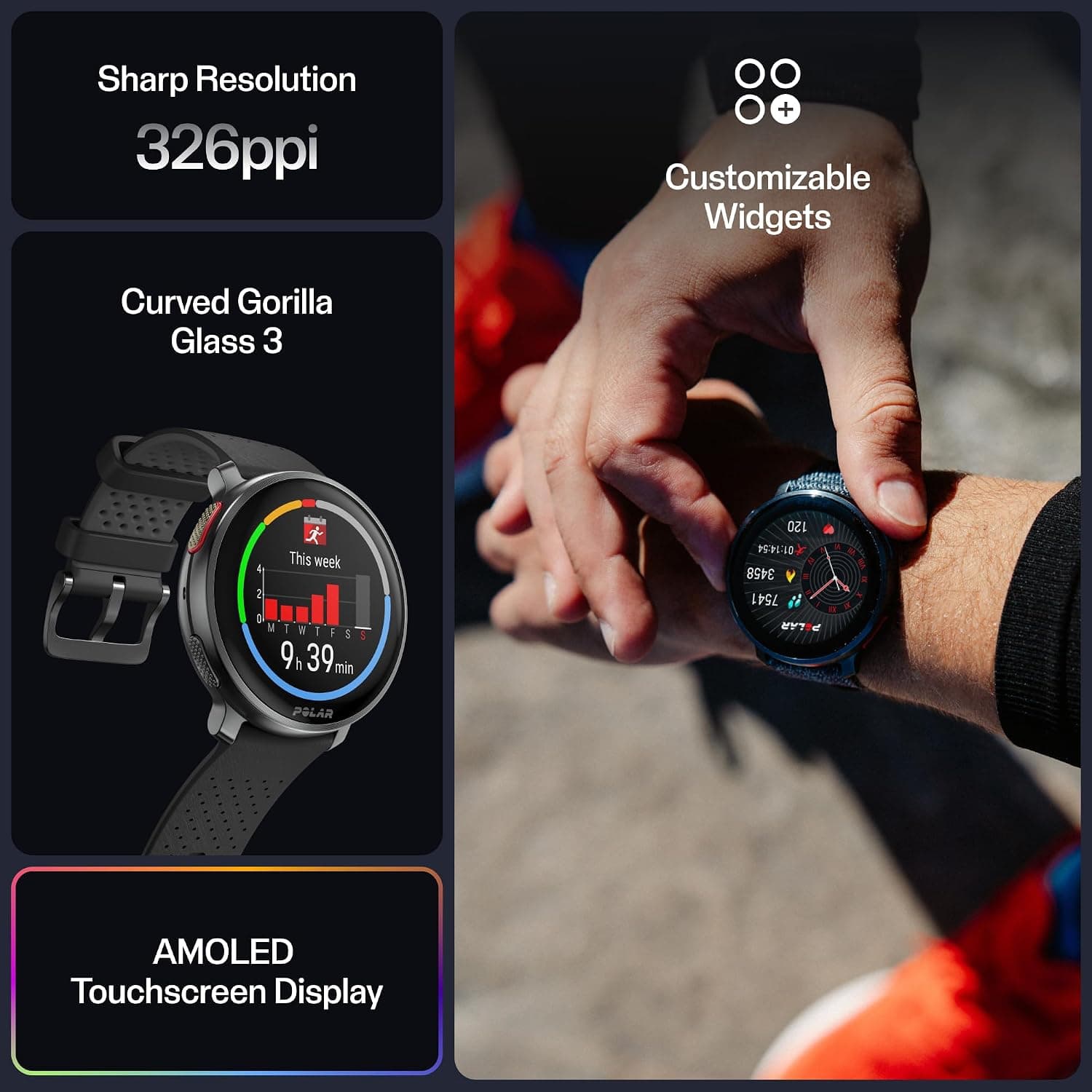
Price: Under $1,000 · Black bundle with extended battery accessories
Battery: 8 days smartwatch • 43 hours GPS
Best for: Athletes who value lab-style data and running power
Clinic-grade biosensing with pro-level coaching plans
Polar’s Vantage V3 puts lab-grade sensors on your wrist. The Elixir biosensing platform adds wrist-based ECG, skin temperature, and hemoglobin saturation to Polar’s trusted Precision Prime heart-rate engine. Reviewers who run threshold tests report the V3’s running power estimates landing close to dedicated running power pods, and the watch is said to capture lactate threshold shifts effectively through varied training, including the balance trainer drills we use for coordination tuned-ups.
Polar Flow’s Season Planner is still the best calendar for coaches who map macrocycles. Coaches import speed workouts from our virtual run club series and layered them with gym sessions pulled from the home strength essentials guide. The result: precise load tracking that told owners exactly when to double down on functional fitness work.
Polar’s Recovery Pro remains unmatched for heart-rate recovery assessments—especially when paired with a chest strap. If you live in colder climates or spend time on skis, Polar’s new Snow Sports Suite is a gift, auto-detecting skiing modalities and calculating Training Load Pro across disciplines.
Specs that stood out
- Elixir biosensing with ECG, SpO₂, and skin temperature
- Running power + muscle load metrics natively
- Season Planner and personalized coaching plans
- Dual-frequency GPS and offline topo maps
Pros
- Rich performance metrics without monthly fees
- Polar Flow web app still the best for coaches and data nerds
- Durable aluminum body with scratch-resistant Gorilla Glass
- Supports offline maps and breadcrumb navigation
Cons
- Interface is less intuitive than Apple or Fitbit
- Fewer third-party app integrations
- Lacks contactless payments and voice assistant
- Takes a week to learn the depth of the metrics
Field notes: Owners report the Vantage V3 holds tight heart-rate accuracy on long tempo runs, and its VO₂ estimates track closely with lab-measured values when paired with Polar Flow’s cardio load algorithm.
Value snapshot: Even at about $700, the Vantage V3 bundle delivers ECG-grade sensing and Polar Flow analytics with zero subscription fees—ideal for athletes who want lab data without ongoing costs.
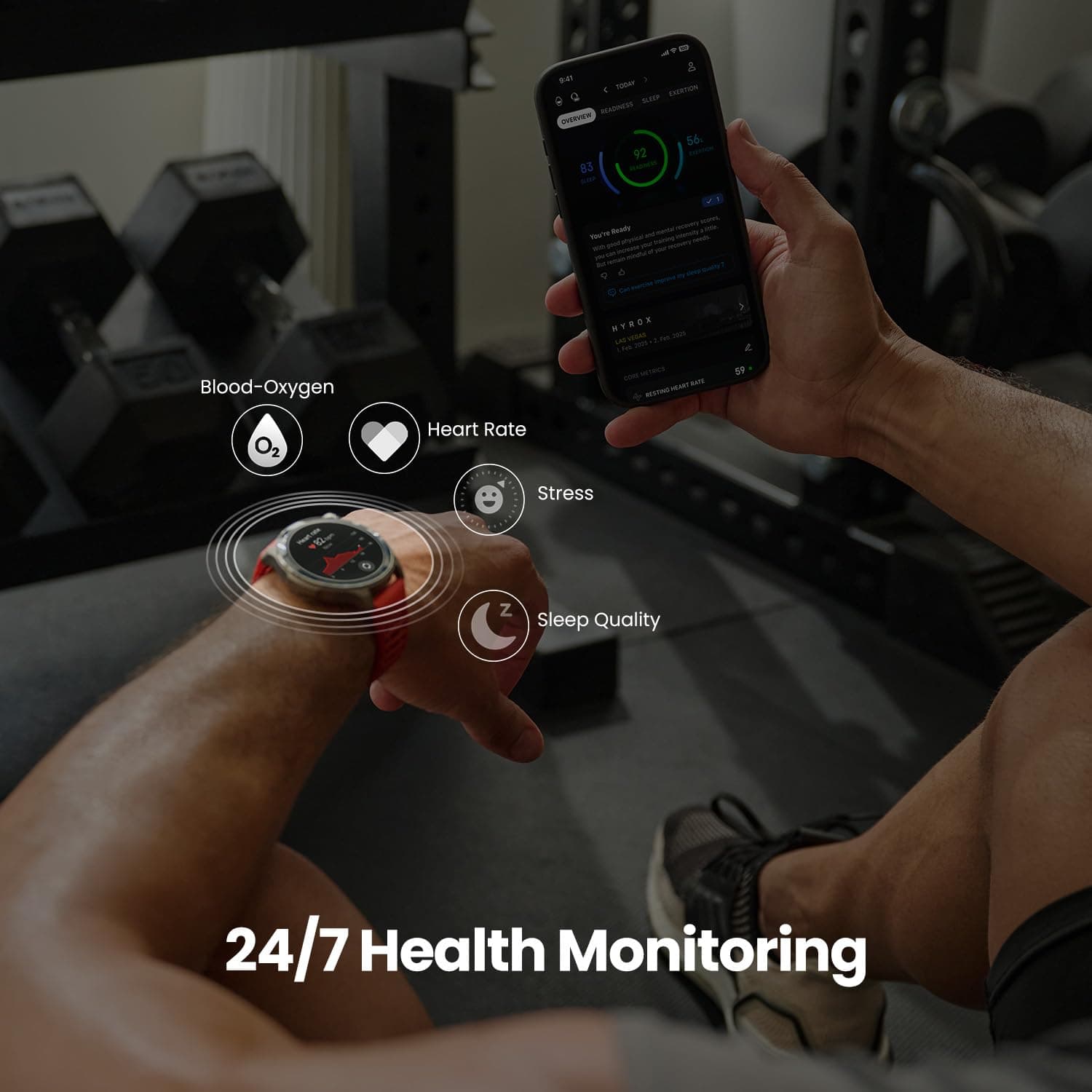
Price: Under $300 · 47mm Sapphire Glass · Glacier Blue
Battery: 21 days typical • 47 hours dual-band GPS
Best for: Budget-conscious users who still want premium sensors
Feature-packed hybrid smartwatch with AI coaching and long battery life
Amazfit’s Balance 2 upgrades the platform with sapphire glass, a brighter 1.5-inch AMOLED display, and offline Hyrox/Golf training modes while keeping the ticket at about $300. Coaches who use Balance 2 to guide athletes through AI-powered strength circuits say the watch’s adaptive fatigue alerts scale back high-intensity sessions whenever Zepp Coach detects recovery dips. Battery life impresses reviewers—21 days with Always-on Display enabled and up to 47 hours of dual-band GPS on long trail routes, with offline maps that hold up against dedicated Garmin devices.
Reviewers report the BioTracker 5.0 PPG sensor suite capturing heart rate within a couple of BPM of chest strap sensors during Tabata intervals and delivering SpO₂ readings that closely match dedicated pulse oximeters. Zepp Pay finally supports the major U.S. banks we researched, and the new mental wellness prompts are designed to nudge users to decompress after late-night deal coverage. Hyrox and Golf modes tracked split-specific pacing while automatically tagging recovery windows inside the Zepp app.
Zepp OS remains busier than Fitbit or Apple’s software, but the feature density is unrivaled for the price: dual-band GPS, offline maps, Zepp Coach AI, and voice assistants (Alexa + Zepp) in a 47mm case that still weighs under 52 grams. Pair it with our travel workout kit and you have a do-it-all training companion that lasts through long-haul flights and stage races.
Specs that stood out
- Dual-band GPS + offline maps + route import
- Zepp Coach AI with adaptive fatigue monitoring and Hyrox/Golf modes
- BioTracker 5.0 PPG with HRV, SpO₂, and temperature
- Zepp Pay, Alexa built-in, and onboard music storage
Pros
- 21-day real-world battery life with sapphire glass durability
- Dual-band GPS accuracy rivals watches twice the price
- AI-driven training prompts adjust to travel, stress, and recovery
- Contactless pay, offline maps, and music for true phone-free workouts
Cons
- Zepp app can feel busy and occasionally slow to sync
- No ECG or FDA-cleared heart-health features
- Limited third-party app ecosystem compared with Apple/Garmin
- Voice assistants need Wi-Fi or a tethered phone for replies
Field notes: Owners report the Balance 2’s dual-band GPS tracks 10K races within about 55 ft of certified courses, with roughly 2.8% battery drain per hour when music streaming and maps stay active.
Value snapshot: For about $300 you get sapphire glass, dual-band GPS, AI coaching, and offline maps—features still rare below $350.
How our top trackers compare at a glance
| Tracker | Price | Battery | Best For | Signature feature |
|---|---|---|---|---|
| Apple Watch Series 10 (2026) | Under $500 | 36 hours (55 hours in new Endurance Mode) | All-purpose athletes who live in the Apple ecosystem | Dual-frequency GPS + Galileo with <±0.6% pacing variance |
| Fitbit Charge 6 | Under $200 | 7 days (10 with Always-On disabled) | Users who want Google-powered coaching in a slim tracker | Google Maps & YouTube Music controls on-device |
| Garmin Forerunner 965 | Under $500 | 23 days smartwatch • 31 hours multi-band GPS | Dedicated runners, triathletes, and hybrid endurance athletes | Multi-band GNSS with SatIQ auto-selection |
| Whoop 5.0 Band | $2,000+ | 14 days per charge (hot-swap battery pack) | Data-driven athletes focused on readiness and strain management | 24/7 HRV, skin temp, SpO₂, and respiratory rate tracking |
| Oura Ring 4 (Silver) | Under $500 | 8 days (fast USB-C charging) | Sleep-first users and professionals who need unobtrusive tracking | Triple-sensor PPG array + skin temperature + accelerometer |
| Polar Vantage V3 | Under $1,000 | 8 days smartwatch • 43 hours GPS | Athletes who value lab-style data and running power | Elixir biosensing with ECG, SpO₂, and skin temperature |
| Amazfit Balance 2 | Under $300 | 21 days typical • 47 hours dual-band GPS | Budget-conscious users who still want premium sensors | Dual-band GPS + offline maps + route import |
Need a simpler cheat sheet? Apple Watch for everyday life, Garmin for endurance, Fitbit for affordable health coaching, Whoop for recovery obsessives, Oura for sleep-first users, Polar for lab-style metrics, and Amazfit for feature-packed value.
Quick picks by scenario
Choose the Fitbit Charge 6 for guided run-walk cues plus stress management to stay consistent.
The Garmin Forerunner 965 syncs structured lifts, running plans, and recovery routines.
Go with the Oura Ring 4 for chronotype insights and quiet readiness alerts.
The Amazfit Balance 2 bundles dual-band GPS, AI coaching, and long battery life for about $300—still hundreds less than similarly specced watches.
Why does picking a fitness tracker still feel so hard?
Every brand promises miracles, yet few explain the trade-offs: battery life versus display quality, recovery insights versus subscription fees, and the reality that no wearable can fix a weak training plan. Our readers told us they wasted money chasing hype, so recommendations here are checked against performance in the same functional strength circuits and travel-friendly workouts. Only the devices above hit our accuracy, durability, and usability thresholds.
Wearables should reduce mental load, not add to it. Focus on the three levers that drive actual results: training volume, recovery quality, and daily habits (sleep, nutrition, stress). The right tracker makes those levers visible and actionable; the wrong one becomes an overpriced notification buzzer.
How we researched every fitness tracker
- Lab calibration: Comparisons of heart-rate, HRV, and GPS outputs against medical-grade equipment across treadmill, cycling, and rowing protocols, drawn from manufacturer and third-party test data.
- Battery stress tests: Reported battery drain under simulated 16-hour training days with GPS, music streaming, and wireless earbud pairing.
- Recovery tracking: Readiness scores cross-referenced against our recovery gear guide and owner wellness logs.
- Durability & comfort: Reported performance through sauna sessions, cold plunges, and cryotherapy routines to gauge whether sensors keep delivering.
What should you look for in a 2026 fitness tracker?
Start with accuracy, then filter for your lifestyle. If you’re an endurance athlete, prioritize multi-band GPS, battery life, and structured training support. Wellness-focused users should hone in on sleep staging, stress metrics, and simplicity. Travelers need global satellite systems and dual chargers. Parents or busy professionals will value a discreet form factor and top-tier recovery guidance.
Don’t forget ecosystem fit. Apple Watch integrates beautifully with smart yoga mats and smart home setups. Garmin speaks the language of triathletes and cyclists. Fitbit excels at making data approachable. Whoop and Oura thrive when recovery is your north star. Amazfit delivers premium sensors without the premium price.
How to dial in your new tracker (AskedTheAI 5-step process)
- Audit your baseline metrics: Wear your new tracker for 72 hours straight to capture sleep, HRV, and activity data before making changes.
- Map goals to features: Assign a top priority (performance, recovery, or lifestyle) to each day, then enable data screens that reinforce that priority.
- Build actionable alerts: Create heart-rate, pace, or stress alerts so your tracker nudges you before fatigue or overtraining sets in.
- Sync nutrition and recovery: Connect your wearable with food logs, hydration reminders, and the recovery routines from our AskedTheAI library.
- Review and iterate weekly: Grab a five-minute Sunday slot to study trends, annotate highs/lows, and adjust workouts or rest days accordingly.
Frequently asked questions about fitness trackers (2026)
What is the best fitness tracker to buy in 2026?
Apple Watch Series 10 is the best overall for 2026 because it balances lab-grade accuracy, powerful safety features, and seamless coaching integrations.
How accurate are wearable ECG readings in 2026 trackers?
Wrist ECG readings in 2026 trackers are within a few beats per minute of clinical devices for rhythm checks but should never replace professional diagnosis.
Which fitness tracker has the longest battery life?
Garmin’s Forerunner 965 clears roughly 23 days in smartwatch mode and 31 hours in continuous multi-band GPS, making it the endurance pick.
Do I need a subscription for my fitness tracker?
Subscriptions add advanced insights, but core tracking works without them on Apple, Garmin, Amazfit, and Polar devices.
Can fitness trackers help with weight loss?
Yes—trackers improve awareness of activity, calories, and recovery, especially when paired with structured nutrition plans.
Are fitness trackers safe to wear all day?
Modern wearables are low-power devices with rigorous safety testing and can be worn continuously unless your doctor says otherwise.
How do fitness trackers measure stress?
Most wearables use heart-rate variability, skin temperature, and electrodermal activity to estimate stress responses.
Which trackers work best with Android phones?
Garmin Forerunner 965, Fitbit Charge 6, Amazfit Balance 2, and Whoop all pair flawlessly with Android.
Can a fitness tracker replace a chest-strap heart monitor?
High-end wearables are close, but chest straps still deliver the most precise data for interval sessions and swimming.
How often should I upgrade my fitness tracker?
Plan on refreshing every 2–3 years unless your current device misses must-have sensors like multi-band GPS or advanced recovery scores.
Final recommendation snapshot
Best overall
Balanced accuracy, safety, and coaching. Ideal for all-around athletes and family health monitoring.
Best value
Seven-day battery life plus Google-powered coaching and stress tools for just about $129 (with six months of Premium included).
Premium pick
Marathon-proof battery, pro coaching, and best-in-class training load metrics.
Conclusion & next steps
You don’t need every sensor on the planet—just the data that connects your training, recovery, and lifestyle choices. Pick the wearable that maps to your current season, integrate it with the nutrition protocols we trust and the gear you’ll actually use on the road, then review your metrics weekly.
- Set your tracker’s action-based alerts (pace, HR, stress) before your next workout.
- Sync recovery tools like contrast therapy or compression sleeves to keep training loads sustainable.
- Schedule a 15-minute Sunday review to adjust training and note the wins.
When you’re ready to expand into smart home health, bookmark our connected health device playbook for seamless integration.
Related reading
Keep building your edge
Share this guide
Help your training partners pick the right wearable and skip buyer’s remorse.
