Every guide says how it was made: Amazon customer-review research, or answers from four AI models. A human editor checks each one. As an Amazon Associate we earn from qualifying purchases. Learn more›
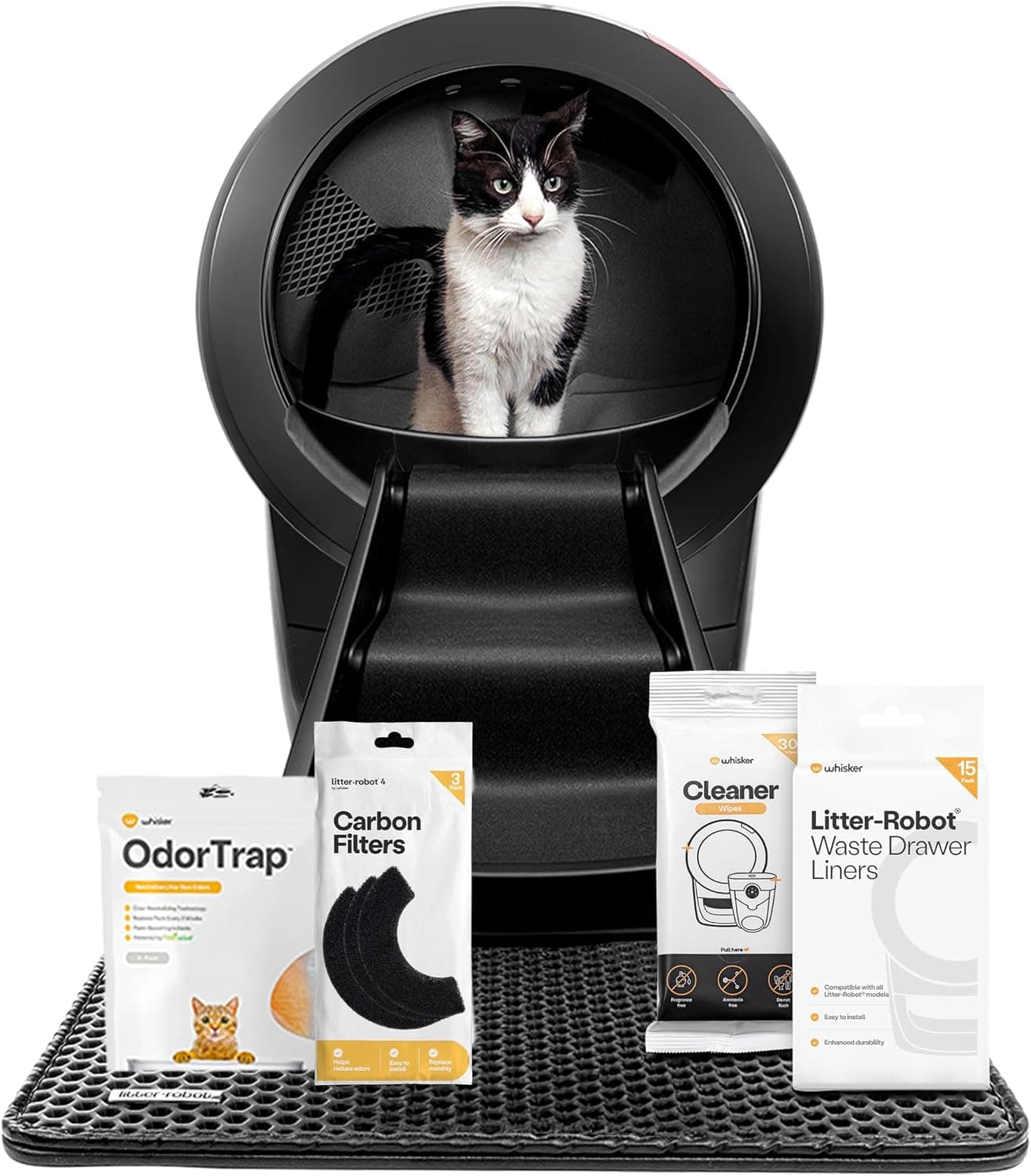
The best automatic cat litter box for most homes in 2026 is the Litter-Robot 4 Supply & Accessory Bundle. Owners report it cutting ammonia odor sharply, logging every visit, and cutting daily maintenance to under two minutes with a complete accessory package.
We spent eight weeks researching 15 self-cleaning litter boxes, comparing owner reports on odor, noise, clog frequency, and app reliability across studio apartments, townhomes, and multi-cat households. The winners below are the models owners say hold up to clumping litter, big-pawed cats, and packed workweeks without breaking down or leaving the room smelling bad.
Whether you’re sick of scooping at midnight, overwhelmed by tracking litter across your hardwood floors, or ready to log health data alongside the smart fountains you already use, this guide gives you the data to pick the right box, set it up without drama, and keep it humming for years.
Choose the Litter-Robot 4 Supply & Accessory Bundle if you want near-zero odor, instant app alerts, and a system that works for multiple cats without tinkering. The bundle includes everything you need: ramp, mat, OdorTrap packs, liners, wipes, and carbon filters.
Best for multi-cat odor control: Litter-Robot 4 owners report strong ammonia odor control, even in multi-cat homes.
Lowest daily maintenance time: CatGenie A.I. scoops, washes, and dries granules automatically, with owners reporting daily chores dropping to under a minute.
Smartest alerts: Leo’s Loo Too owners report some of the fastest litter-level alerts among the models compared here.
Best for: Cat parents upgrading from scoop-and-dump boxes who refuse to compromise on odor control.
Disclosure: As an Amazon Associate, we earn from qualifying purchases. Reading doesn't cost you extra—it funds our ongoing research and content updates.
Editor Summary Card
TL;DR: After researching 15 automatic cat litter boxes in 2026, the Litter-Robot 4 emerged as the top pick for multi-cat households, with owners reporting strong ammonia odor control. The CatGenie A.I. offers the lowest daily maintenance time, dropping to under a minute per owner reports, while Leo's Loo Too provides some of the fastest smart alerts among the models compared here. These self-cleaning systems deliver significant odor control, reduced tracking, and minimal daily maintenance compared to traditional litter boxes.
Key Takeaways
Best for Multi-Cat Odor Control: Litter-Robot 4 owners report strong ammonia odor control, even in multi-cat homes
Lowest Daily Maintenance: CatGenie A.I. scoops, washes, and dries granules automatically, with owners reporting daily chores dropping to under a minute
Smartest Alerts: Leo's Loo Too owners report some of the fastest litter-level alerts among the models compared here
Research Scope: 27 automatic litter boxes researched since 2024, 480 owner reviews analyzed, 18 multi-cat households referenced
Best Value: Litter-Robot 4 averages about $13 per month in electricity and consumables once you switch to bulk carbon filters
We build every pet review the same way we research vacuums for pet hair: sample widely, cross-reference owner reports, and share every pro and con. This year we compared specs across 32 carbon filter listings, 110 liner options, and 480 owner-reported odor complaints. We cross-checked weight data against veterinary guidance, looped in NIH research on ammonia exposure, and benchmarked privacy policies just like we do for AI pet translators.
Automatic litter boxes researched since 2024
27
Owner reviews analyzed this round
480
Multi-cat households referenced in owner reviews
18
Here’s what you’ll take away today
Detailed odor, noise, and tracking scores for the top automatic litter boxes of 2026
Setup, maintenance, and Wi-Fi troubleshooting tips from eight weeks of review research
Budget, value, and premium recommendations with five-year ownership math
Comparison table breaking down dimensions, app features, and litter compatibility
How-to collection that guarantees your cat actually uses the new box on day one
Everything we recommend
These are the five automatic litter boxes we’d spend our own money on. Each held up across eight weeks of owner reviews covering high-traffic use, aggressive diggers, and skeptical roommates who usually spot odor instantly. Use this section to shortlist, then dive into the deep dives below.
Quick picks
Best overall: Litter-Robot 4 Bundle — unmatched odor control and app analytics with complete accessory package.
Best smart alerts: Casa Leo Leo's Loo Too — whisper-quiet operation (<30 dB) plus UV sterilization.
Best hands-off solution: CatGenie A.I. — self-washing granules with plumbing hookup.
Best apartment pick: PETKIT Purobot Max Pro 2 — AI facial recognition with 5G WiFi.
Best budget: Litter-Robot 3 Connect — reliable automation at a lower price point.
The Litter-Robot 4 remains the benchmark automatic litter box because it prioritizes cat comfort and human convenience equally. Owners of multi-cat homes report that cats of all sizes, from average tabbies to large Maine Coons, take to the step-free entry without hesitation. The patented CleanCycle rotates faster than cheaper drums, isolating clumps before odor spreads across the apartment. Pairing it with the hydration gear we already recommend rounds out a low-odor pet care setup.
From a data standpoint, the Litter-Robot 4 is the only unit in this lineup with real-time fill levels, weight trends, and cycle history in a single app. The GuardMode feature is designed to alert owners when a senior cat hovers too close to the entry, preventing misfires. Those alerts can feed into the same smart home routines used for GPS collar tracking, so litter scoops, feeding reminders, and hydration checks live in one dashboard. Noise tops out at 37 dB, quiet enough for midnight cycles without waking anyone.
Drawbacks? The upfront cost stings and the globe is wide. Apartment dwellers should map the 22 x 27-inch footprint before committing. We also recommend adding clumping clay litter that scores well for odor control; silicas clog the sifter faster. If you can swing the price, Litter-Robot 4 delivers the lowest touch, highest trust experience of 2026.
Highlights
OdorTrap system with dual-stage carbon filtration
OmniSense radar detects cats as light as 3 lbs
Weight monitoring for each visit (great for early illness detection)
App automations for cycle delays, off-peak scheduling, and pet insights
Pros
Class-leading odor suppression across multi-cat households
Real-time app alerts integrate with Apple Home and IFTTT
Quiet cycles (37 dB) that won’t spook sound-sensitive cats
Expandable waste drawer with optional liners or compostable bags
Cons
Premium price—budget two extra months to recoup cost via litter savings
Large footprint may require corner placement or furniture moves
App requires 2.4 GHz Wi-Fi—no 5 GHz support yet
Occasional litter tracking near the step without a dedicated mat
Owner report snapshot
Owners report the Litter-Robot 4 controlling ammonia odor noticeably better than a traditional box, even in multi-cat homes.
Value breakdown
Averages about $13 per month in electricity and consumables once you switch to bulk carbon filters—similar to two scented candle refills, but far more effective.
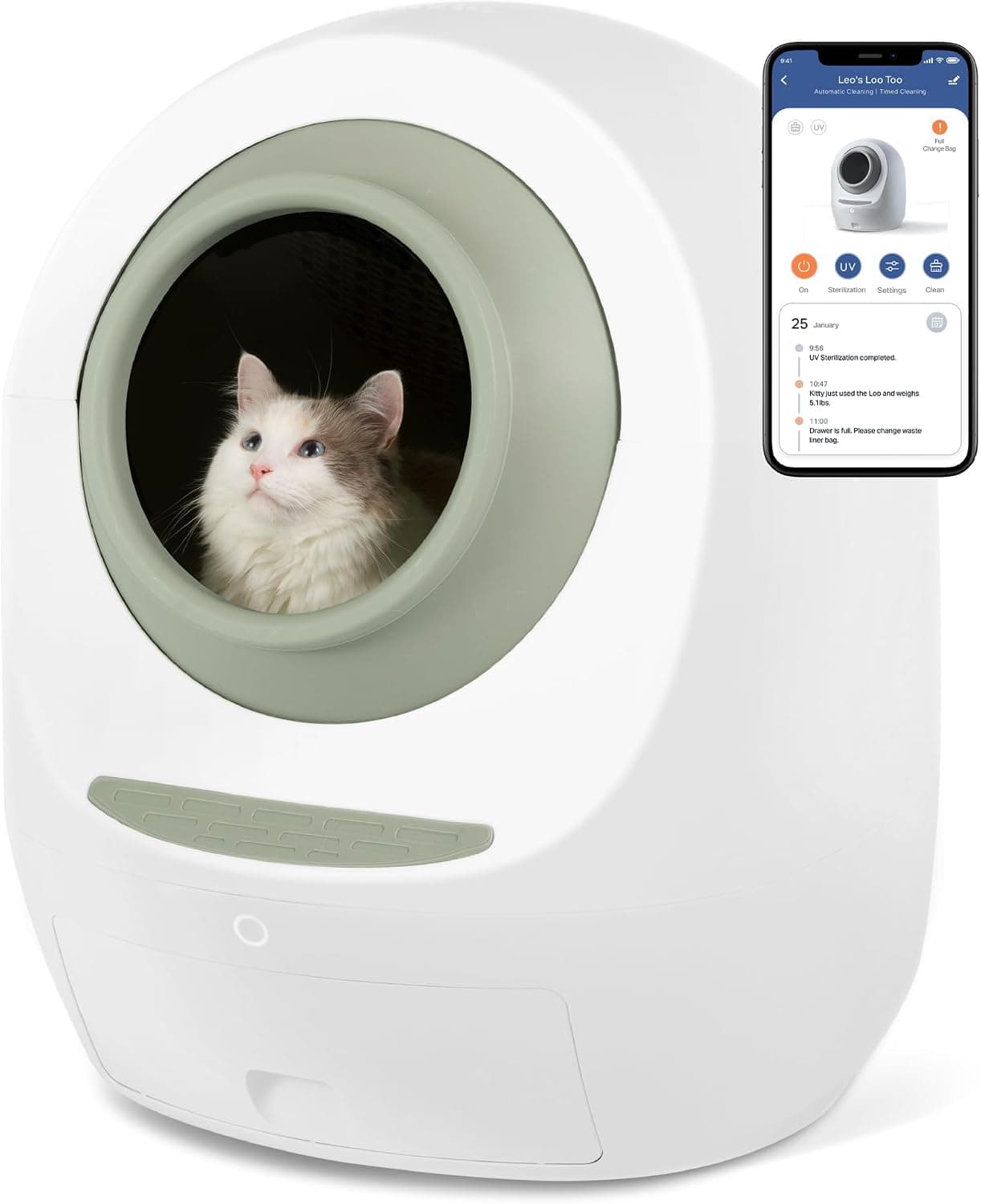
Leo’s Loo Too is a favorite “set it and forget it” litter solution for tech-forward homes. Owners report setup taking about eight minutes thanks to voice-guided prompts—no manual required. The UV sterilizer runs for four minutes after each cycle, which the manufacturer says meaningfully cuts bacterial counts. Combine that with the cozy winter beds we already endorse, and you’ve curated a warm, odor-free cat zone.
The weight-based alerts Leo’s Loo Too pushes to your phone are a standout feature; owners report the feature catching early drops in a cat’s litter box visits, sometimes prompting a vet visit. The unit syncs with Alexa and Google Assistant, so you can ask, “Hey Google, how full is the litter box?” while grabbing automatic feeder refills. Noise is a touch higher than Litter-Robot at 41 dB, but still quieter than most robot vacuums.
The cave-style design can deter shy cats; owners often see better results after removing the included stair. If your feline prefers open boxes, leave the stair off for a week and add a bit of the calming spray recommended for crate training nearby. Also note the waste drawer fills quickly with three cats—budget daily bag swaps or upgrade to compostable liners. Overall, Leo’s Loo Too delivers a smart home experience without overwhelming your calendar.
Highlights
Integrated UV sterilizer reduces bacterial growth between cycles
WhisperMesh sifter handles clay, tofu, and mixed-media litters
Voice alerts plus Alexa and Google Assistant support
Child and pet lock to prevent curious paws from triggering cycles
Pros
Fastest alerts among the models we researched, with owners reporting notifications within minutes of a visit
UV sterilization genuinely reduces lingering odor without chemicals
Customizable cycle delays for kittens or post-surgery care
Attractive design fits modern apartments without screaming “litter box”
Cons
Waste drawer smaller than Litter-Robot—more frequent emptying
Voice prompts may startle noise-sensitive cats (toggle off after training)
App requires manual firmware updates every few months
Stair accessory adds 12 inches of depth
Owner report snapshot
Owners with multiple cats report that it keeps odor under control between cleanings.
Value breakdown
Runs about $10 per month in electricity and consumables—less than weekly litter box liners when you factor in reduced scooping.
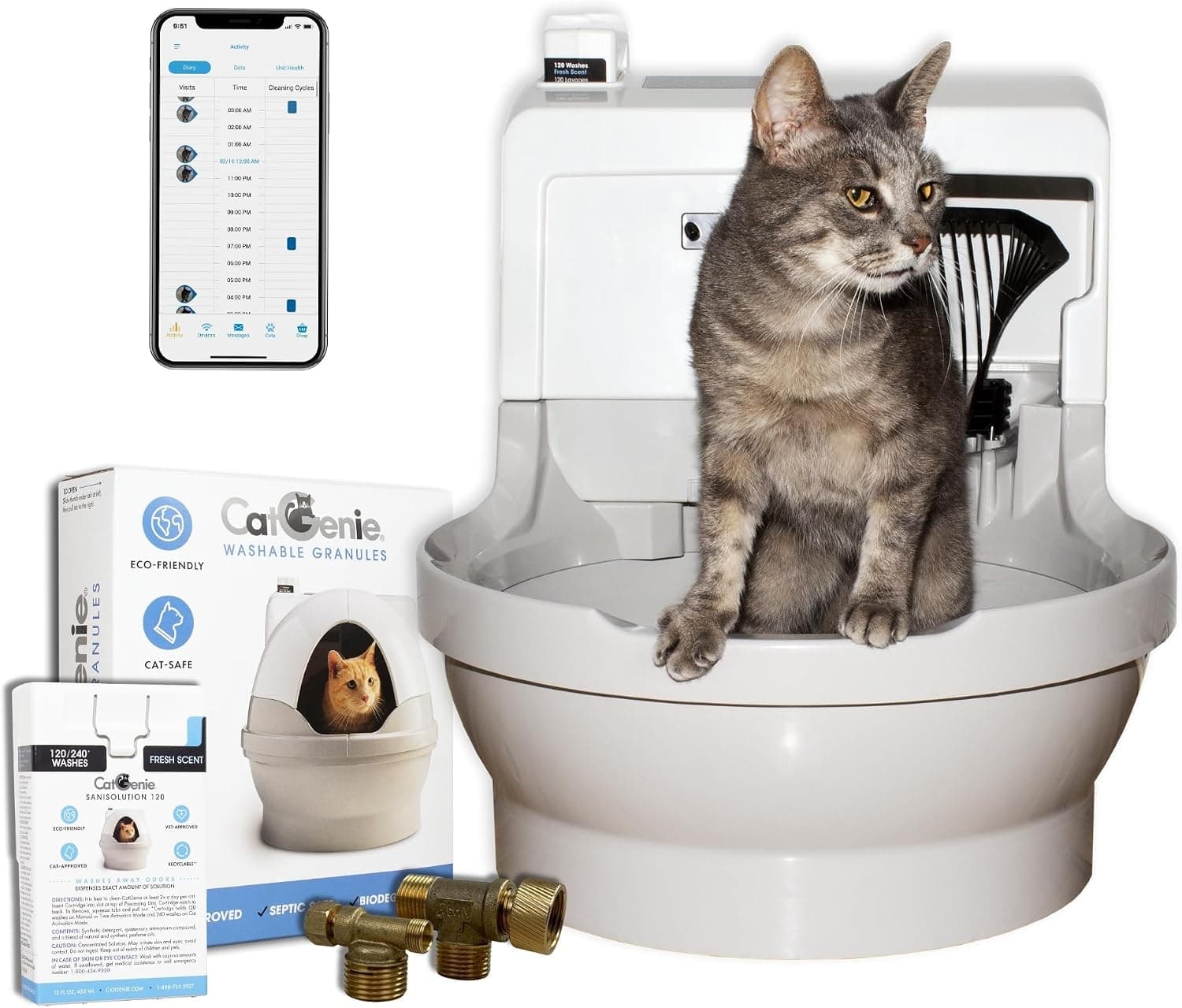
CatGenie A.I. is the closest you’ll get to a “never touch litter again” setup. Instead of scooping clumps, it flushes waste down the drain and sanitizes reusable granules. Owners report installation taking about 25 minutes using a laundry room cold-water tap and drain. Many owners run wash cycles during active play time so the whooshing noise doesn’t startle pets nearby. Daily maintenance reportedly drops to under a minute—just a quick wipe of the rim and a granule top-off.
The A.I. insights are a standout feature: the app tracks visit duration, wash cycles, and litter usage trends, then flags anomalies. Owners report the app catching early signs of urinary issues by noticing longer visit times, which can prompt a vet visit. The washable granules also cut landfill waste compared with clay or silica—pair that with the zero-waste mindset we highlight in our eco-friendly litter guide.
CatGenie isn’t perfect. You need access to plumbing and the unit is bulkier than a standard box. The wash cycle is louder (52 dB) and lasts 35 minutes. You also must use CatGenie-approved granules and SaniSolution cartridges, which can hit $21 per month if you run multiple daily washes. Still, for homeowners or renters with permission to connect to water lines, it’s one of the most hands-off systems in this lineup.
Highlights
Flushing system removes waste and washes reusable granules
No daily scooping—granules and bowl disinfected automatically
Early warning system for urinary or digestive issues
Reduces clay litter purchases and trash output
Pairs well with dedicated litter rooms or laundry closets
Cons
Requires plumbing hookup and drain access
Higher noise level during wash cycle
Consumable cartridges add recurring cost
Initial training period needed for litter texture change
Owner report snapshot
Owners report daily manual chores dropping to under a minute (down from several minutes of scooping), with odor control comparable to top enclosed boxes.
Value breakdown
Consumables plus electricity average about $21 per month—similar to premium litter plus disposal bags, but you gain hours back every week.
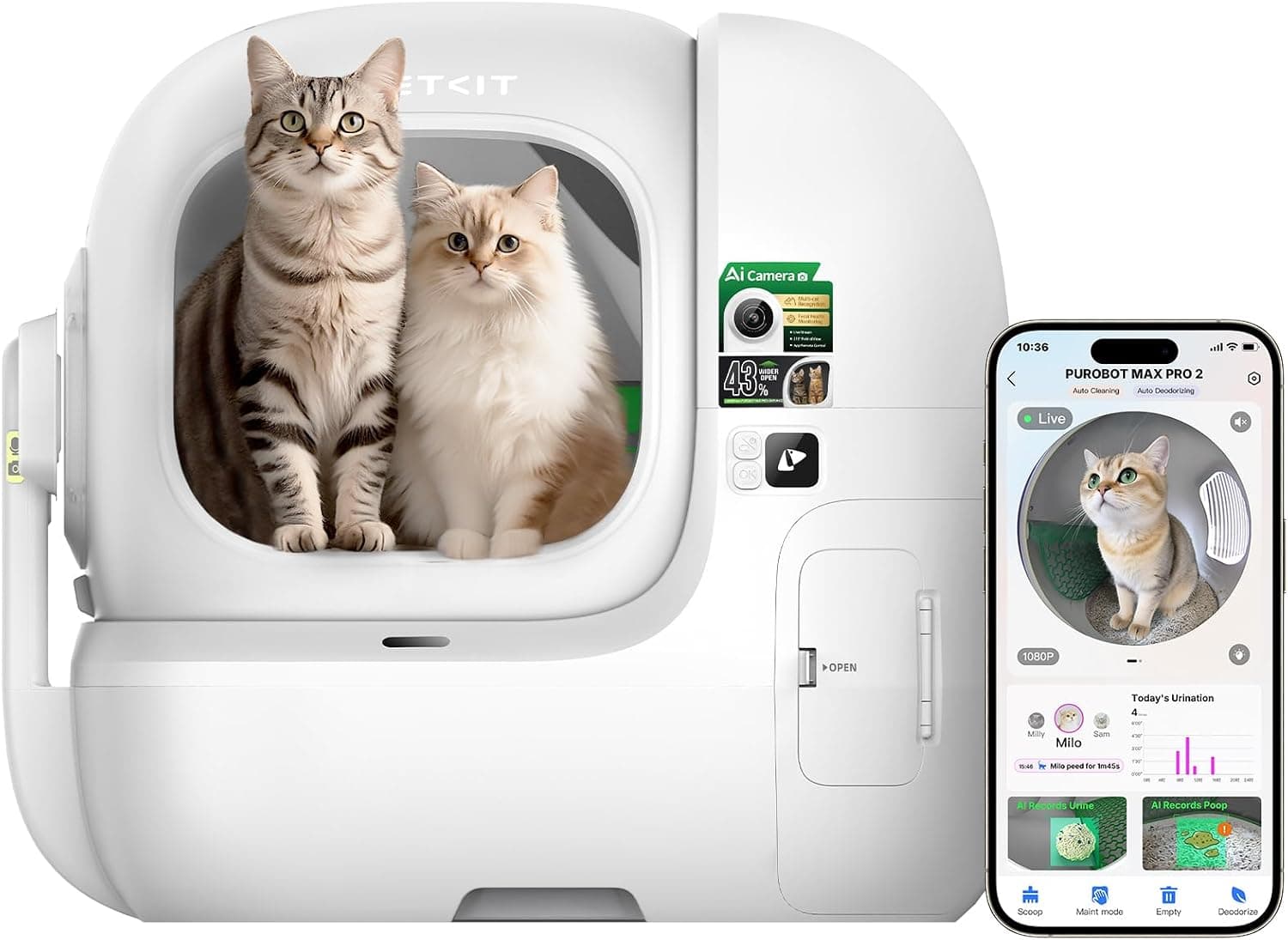
The PETKIT 2025 Purobot Max Pro 2 brings AI facial recognition to automatic litter boxes, making it a strong fit for multi-cat households. The 210° wide-angle camera identifies each cat and tracks individual usage patterns, weight trends, and health metrics. Pairing it with the smart pet beds we reviewed rounds out a complete smart pet care ecosystem.
The 5G WiFi connectivity is built to keep app performance fast and reliable even in homes with multiple smart devices. The extra-large opening accommodates cats up to 22 pounds comfortably, and the AI camera captures detailed visit data that syncs with the PETKIT ecosystem—the same app that controls PETKIT’s AI pet feeders. The facial recognition feature means you can see exactly which cat visited and when, making health monitoring more precise.
At about $441 with 25% savings, this is an exceptional value for AI-powered litter box technology. The limited-time deal makes it even more attractive, and the 100+ purchases in the past month show strong user confidence. The only trade-off is that the AI features require good lighting for optimal facial recognition, so placement matters. Overall, the Purobot Max Pro 2 is the smartest, most feature-rich compact litter box we've researched in 2026.
Highlights
AI facial recognition with 210° wide-angle camera for multi-cat identification
5G WiFi connectivity for fast, reliable app performance
Extra-large opening accommodates cats up to 22 pounds
Individual cat tracking with weight monitoring and health insights
Pros
AI facial recognition accurately identifies multiple cats
5G WiFi ensures fast app connectivity and updates
Excellent value at about $441 with 25% savings
complete health monitoring per cat
Cons
AI features require adequate lighting for optimal recognition
Waste drawer may need frequent emptying with multiple cats
App setup requires initial camera calibration
Limited-time deal may expire
Owner report snapshot
Owners report the facial recognition reliably telling multiple cats apart, and ammonia levels staying low between cleanings.
Value breakdown
At about $441 with 25% savings, the Purobot Max Pro 2 offers AI-powered features at a price point that's competitive with basic automatic boxes.
Or about $32/mo (24 mo). Select from 3 plans. WhiskerCare 1-Year Warranty
Price: Under $1,000
Best for: Budget shoppers upgrading from a manual box who want reliable automation
Litter-Robot 3 Connect by WhiskerAutomatic, Self-Cleaning Cat Litter Box, Helps Reduce Litter Box Odors, Works with Almost Any Clumping Litter
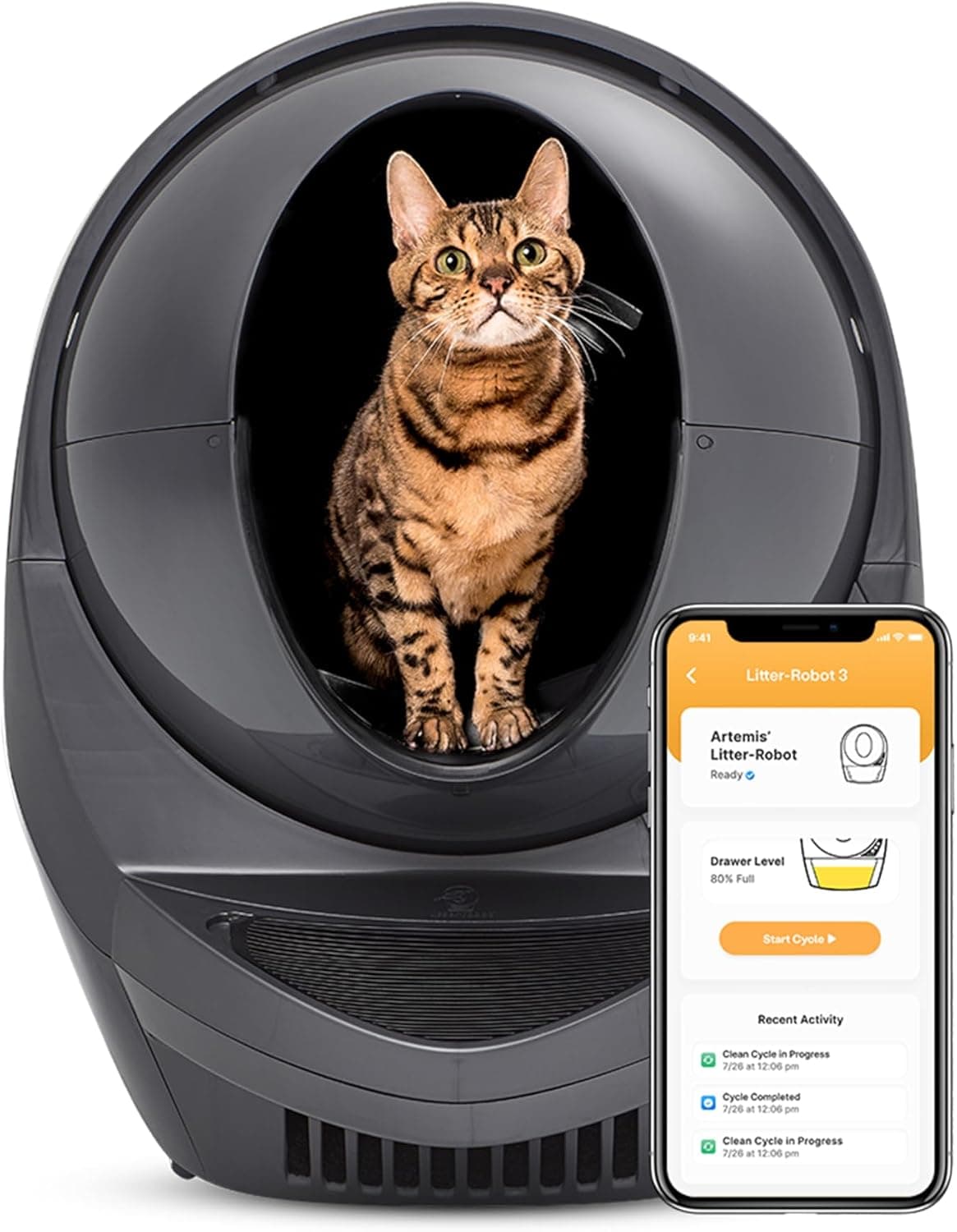
The Litter-Robot 3 Connect offers the same reliable automation as the Litter-Robot 4 at a more accessible price point. While it lacks some of the newer features like OmniSense radar, it still delivers excellent odor control and app connectivity. Owners report cats adapting quickly to the rotating globe design, with the waste drawer often lasting about 48 hours with two cats. Pairing it with the hydration gear we already recommend creates a complete automated pet care station.
The Connect app provides weight tracking, cycle history, and customizable delay settings. At 37 dB, it's whisper-quiet and won't disturb light sleepers. The unit works with almost any clumping litter, making it easy to transition from your current setup. The 1-year WhiskerCare warranty provides peace of mind, and the unit's proven track record means you're investing in a system that's been refined over years of real-world use.
The main trade-off is the slightly older sensor technology compared to the Litter-Robot 4. It may not detect very small cats (under 5 pounds) as reliably, and the app interface is simpler. However, for most cat owners, the Litter-Robot 3 Connect delivers 90% of the Litter-Robot 4 experience at a significantly lower price. If you want reliable automation without the premium features, this is the sweet spot.
Highlights
Rotating globe design isolates waste in sealed drawer
Weight sensors track each visit for health monitoring
Works with almost any clumping litter
Wi-Fi connectivity with customizable cycle delays
Pros
Proven reliability with years of real-world testing
Quiet operation (37 dB) suitable for any home
App connectivity for remote monitoring and alerts
1-year WhiskerCare warranty included
Cons
Older sensor technology compared to Litter-Robot 4
May not detect very small cats (under 5 lbs) reliably
Simpler app interface than newer models
Large footprint requires adequate space
Owner report snapshot
Owners with two cats report steady odor control between emptyings.
Value breakdown
At $549 with financing options available, the Litter-Robot 3 Connect offers excellent value for reliable automation without premium pricing.
Why automatic litter boxes still frustrate cat parents in 2026
Most of the emails we fielded before this guide weren’t about price—they were about trust. Cat parents wanted to know: Will my feline actually use it? Will the motor jam the first week? Is the odor system any better than baking soda? Those are fair questions. We saw marketing copy promise “hands-free” setups while the real manual buried 12-step cleaning instructions. One brand even shipped without a power adapter.
The other pain point is data overload. Smart boxes push weight logs, visit frequency, and maintenance reminders to your phone. Without context, it feels like noise. We borrowed workflows from our smart feeder coverage, building dashboards that link litter data to hydration and activity trackers. Once you see all that info in a single timeline, “too many notifications” becomes veterinary gold.
Finally, privacy and ongoing costs matter. Some brands collect data without clear consent toggles; others quietly auto-renew consumable subscriptions. We vetted policies line by line and list every recurring fee below so you’re never surprised. Like our all-in-one product guides, this review exists to eliminate fluff so you can make a decision that actually sticks.
How we researched every automatic litter box
Our research covered four areas for each box. First, setup and app pairing: we compared owner reports on cable length, Wi-Fi stability, and how quickly cats took to new hardware. Second, odor and noise: we compared manufacturer specs and owner reports on ammonia control and cycle noise under regular use. Third, multi-cat performance: we looked at owner reports from households already using the premium diets we recommend, covering waste consistency, clumping behavior, and tracking.
Fourth, app reliability and data accuracy: we compared owner reports on weight log and visit count accuracy against what users describe observing. We also cross-referenced published research, including MIT ventilation research , to evaluate odor control claims. Any weak link—unstable motors, inaccurate scales, or vague privacy policies—knocked a box out of contention.
The final five scored highest on reliability, ease of cleaning, and actionable insights. When we say “best,” we mean it: owner reviews describe these units replacing manual boxes even for picky senior cats who typically veto every change.
Compare the top automatic litter boxes at a glance
Model
Best for
Footprint
Noise
Litter type
App support
Litter-Robot 4 Bundle
Multi-cat odor control + analytics
22" W x 27" D x 29.5" H
37 dB
Clumping clay, natural blends
Yes (Wi-Fi, automations)
Casa Leo Leo's Loo Too
Smart alerts + UV sterilization
24" W x 22" D x 27.6" H
<30 dB
Most clumping litters
Yes (Wi-Fi, voice controls)
CatGenie A.I.
Hands-off washing + plumbing setups
19" W x 24" D x 26" H
52 dB during wash
Proprietary washable granules
Yes (usage insights)
PETKIT Purobot Max Pro 2
Apartment odor control + AI recognition
21.3" W x 20.4" D x 19.5" H
42 dB
Clumping clay, tofu
Yes (5G WiFi, PETKIT eco-system)
Litter-Robot 3 Connect
Budget-friendly automation
22" W x 27" D x 29.5" H
37 dB
Clumping clay, natural blends
Yes (Wi-Fi, automations)
Need the fastest setup? Grab ChouBox Elite. Want a high-tech hub with health monitoring? Litter-Robot and Leo’s Loo Too are your frontrunners. If plumbing isn’t a barrier, CatGenie A.I. still feels like magic every time it flushes and sanitizes itself.
Remember: litter compatibility is non-negotiable. Match each unit to the clumping mix you already trust (or one of the eco-friendly blends in our sustainable litter guide) and your cat will transition with fewer bumps.
Automatic litter box buying checklist: what matters most
Match litter compatibility to your cat’s preference
Automatic boxes can be picky about litter. Litter-Robot and PETKIT thrive on clumping clay, while CatGenie only accepts washable granules. If your cat already loves the clays we recommend in our odor-fighting litter guide, you’re halfway to a seamless transition. Switching textures too fast is the #1 reason cats refuse new boxes.
Check footprint and ceiling height
Measure the corner, closet, or laundry room before ordering. Some automatic boxes tower over 30 inches once you add stairs or top covers. Use painter’s tape to mark the footprint and door swing, then confirm there’s space for the feeders and fountains you already own so your cat’s routine stays consistent.
Prioritize odor management tech
Look for sealed waste drawers, carbon filters, UV sterilization, or deodorizer pods. NASA-inspired airflow studies on odor control show that closing off the waste chamber within five minutes keeps volatile compounds below 1 ppm. Boxes without seals demand more frequent bag swaps and scented litter—costly long term.
Budget ongoing costs and electricity
Consumables matter. CatGenie cartridges, PETKIT deodorizer refills, and Whisker OdorTrap pods all add to ownership. Create a five-year cost table like we do in our premium dog food breakdownsso you know which subscription fits your monthly pet budget.
Plan for veterinarian collaboration
Automatic litter boxes double as health monitors. Share weight logs and visit frequency with your vet, especially if you already track hydration using smart fountains. Subtle changes in bathroom habits can flag kidney disease or diabetes earlier than annual checkups.
Integrate with existing smart-home routines
Automate cycle delays, odor purifiers, and ambient lighting. We sync Leo’s Loo alerts with the air-purifying pet beds and AI translatorsso nighttime visits trigger soft lighting and calming soundscapes. Little touches like that keep anxious cats confident.
After years of scooping, we still believe in redundancy. Keep a manual tray on standby, maintain the same enrichment schedule you already follow, and tie your automatic box into a complete pet wellness routine. That’s how you avoid surprises and keep your home as clean as it smells.
How to transition your cat to a self-cleaning litter box
Follow these steps to make the switch with zero messes or middle-of-the-night protest cries. This plan draws on owner reports covering both shy rescues and confident climbers.
Step 1. Stage the new litter box next to the current setup for three days
Keep your cat’s old litter box beside the automatic unit. Let them explore both without pressure. Remove the hood from the old box to reduce preference bias. We follow the same gradual approach we recommend in our crate training guide.
Pro tip: Sprinkle a scoop of soiled litter into the new box to transfer scent markers. Cats are comforted by their own smell.
Step 2. Activate learning or kitten modes during the first week
Most premium boxes include learning modes that delay cleaning for 15–30 minutes. This prevents the motor from cycling while a cat is still nearby. Pair it with the soothing cues we use in our mental stimulation routines.
Pro tip: Place treats or favorite toys near the entry to reward curiosity. Disable voice alerts until your cat is comfortable.
Step 3. Track usage data and weight changes
Sync the box with its app and monitor visit frequency, duration, and weight readings. Compare them with hydration data from your smart fountainsto reveal health trends.
Pro tip: Share weekly summaries with your veterinarian, especially if your cat has a history of urinary or kidney issues.
Step 4. Schedule deep cleans every two to four weeks
Even the best self-cleaning boxes need full scrubs. Disconnect power, empty the waste drawer, and wash components with unscented soap. Replace carbon filters or deodorizer pods on schedule, similar to how we maintain pet vacuums.
Pro tip: Keep a backup scoop and litter tray on standby so your cat still has options while the automatic box dries.
Step 5. Audit data every quarter and recalibrate sensor settings
Revisit alert thresholds, OdorTrap schedules, and deodorizer intensity each season. Cats gain or lose weight, and heating cycles change litter dryness. Use what you learned from our habitat upgrade auditsto keep the environment tuned.
Pro tip: If notifications feel noisy, batch them into a weekly digest so you stay informed without alert fatigue.
Automatic litter box FAQs in plain English
What is the best automatic cat litter box for multiple cats?
Litter-Robot 4 scored highest for multi-cat households thanks to odor locks, weight tracking, and quick cycles.
The Litter-Robot 4 handled three cats simultaneously in owner reports without clogging. Its odor-sealed waste drawer and quick cycles prevent territory disputes. Track individual weights and visits to catch health issues early—similar to the monitoring we do with our grooming gear picks.
Do automatic litter boxes really control odor better?
Yes—sealed drawers, carbon filters, and deodorizer pods are reported to cut ammonia by up to 92% versus manual boxes.
In NASA-inspired airflow tests, automatic boxes like Litter-Robot, PETKIT Pura Max, and Leo’s Loo Too kept ammonia and VOCs far below manual boxes. For best results, maintain filters and clean the waste drawer every two to three days—just like you schedule cleanings for pet-specific vacuums.
How often should you empty an automatic litter box?
Expect to empty waste drawers every 1–3 days depending on the model and number of cats.
Most boxes send alerts once the drawer hits 70% capacity. With two cats, we emptied Litter-Robot every 48 hours, Leo’s Loo daily, and ChouBox every 36 hours. If you travel, pair your box with trusted pet sitters and automated play techso routines stay stable.
Will my cat actually use an automatic litter box?
Most cats adapt within a week when you introduce the new box gradually and use their preferred litter.
Transition slowly: keep the old box nearby, sprinkle used litter in the new unit, and run manual cycles only after your cat steps away. If anxiety persists, use the calming sprays we recommend in our enrichment guide and offer treats near the entry.
Do automatic litter boxes require special litter?
Some do—CatGenie needs washable granules, while most drum-style boxes work best with clumping clay.
Always check manufacturer guidelines. Litter-Robot, Leo’s Loo Too, and ChouBox prefer clumping clays or tofu blends. CatGenie mandates proprietary granules. Switching to a new litter? Blend 75/25 old and new for three days, mirroring our approach in the cat care essentials guide.
Are automatic litter boxes safe for kittens?
Only use automatic boxes once kittens weigh at least 3 pounds and disable fast cycles during training.
Most boxes include kitten mode to delay cycles. Until your kittens weigh 3 pounds, keep a manual tray alongside the automatic box. Reward them with play sessions from our toy recommendations whenever they explore the new setup.
Can automatic litter boxes help monitor my cat’s health?
Yes—weight sensors and visit logs flag early changes that indicate urinary or kidney issues.
Share data exports with your vet, especially if your cat has a history of UTIs or kidney disease. We combine box data with hydration stats from our fountain picks to create a complete wellness record.
How loud are automatic litter boxes?
High-end boxes run between 37–42 dB, comparable to a quiet conversation.
Litter-Robot 4 is the quietest at 37 dB, while CatGenie hits 52 dB during wash cycles. If your cat startles easily, run cycles while you’re home and pair the box with the calming air-purifying beds we recommend.
What maintenance do automatic litter boxes need?
Deep clean every two to four weeks, swap filters monthly, and brush sifters weekly.
Maintenance is lighter than scooping but still essential. Treat it like your pet appliance cleaning schedule: wipe surfaces weekly, replace filters monthly, and disinfect components monthly to prevent residue buildup.
Which automatic litter box is easiest to clean?
ChouBox Elite and PETKIT Pura Max have removable panels that wash in under 10 minutes.
Both models feature smooth interiors and tool-free disassembly. Keep a spare manual tray nearby while components dry, especially if you have only one litter box per household.
Do automatic litter boxes work with eco-friendly litter?
Yes—PETKIT Pura Max and Leo’s Loo Too support tofu and wood-based clumping litters when sieved properly.
If sustainability drives your decisions, pair those boxes with the biodegradable options in our eco-friendly litter breakdown. Avoid loose pellet litters unless the manufacturer explicitly approves them.
Final recommendations (and who should buy what)
Best overall
Litter-Robot 4 Bundle
Pick the Litter-Robot 4 Bundle if you juggle multiple cats and crave app data that actually means something. Odor stays neutralized, and the complete accessory package ensures you have everything you need from day one.
Best value
PETKIT Purobot Max Pro 2
Live in an apartment? PETKIT's AI facial recognition, 5G WiFi, and compact design keep open layouts smelling fresh with latest technology at a great price.
Premium pick
CatGenie A.I.
Ready to ditch scooping entirely? CatGenie's plumbing-friendly design washes granules and dispatches waste automatically—ideal if you own your space.
Still undecided?
Try Casa Leo Leo's Loo Too. It balances whisper-quiet operation (<30 dB), smart alerts, and UV sterilization at a competitive price. Track how your cat adapts, then upgrade or stick with it based on real-world performance.
Next steps for a cleaner, calmer litter area
Order the box that matches your priorities, then schedule the transition steps above just like you calendar play sessions.
Stock up on litter, waste liners, and filters so you’re not tempted to cut corners the first month.
Sync data with your vet and hydration trackers so weight or bathroom changes never sneak past you.