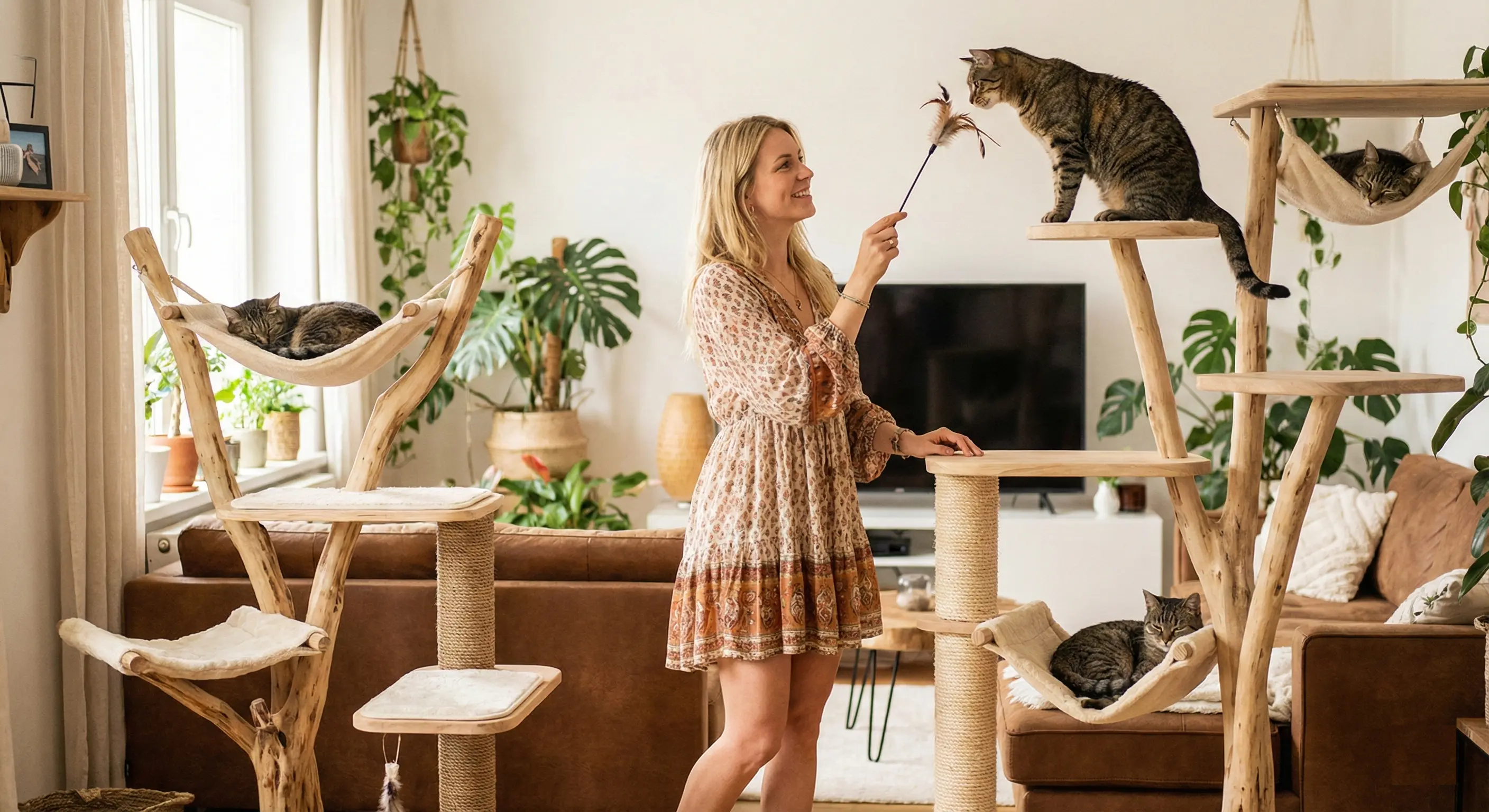
If you have ever watched your cat scale a bookshelf, shred a couch arm, or claim the highest point in every room, you understand why cat trees matter. Scratching is not misbehavior—it is essential feline maintenance for claw health, muscle stretching, and territorial marking. The question is not whether your cat will scratch, but where.
After four months of researching 30+ cat trees and scratching posts across cat sizes ranging from 6-lb kittens to 17-lb Maine Coons, we found that most cat furniture fails in predictable ways: posts that wobble under weight, platforms too small for adult cats, and sisal that shreds within weeks. Our top picks solve these problems at every price point. For complete cat care guidance, see our cat care essentials guide and automatic litter box reviews.
How We Researched
This guide is based on review research covering 30+ cat trees and scratching posts over four months (May–September 2026), drawing on owner reports from cats of varying sizes, ages, and personalities. We reviewed reported stability under climbing stress, sisal durability after months of daily scratching, platform sizing for cat comfort, and assembly complexity. We also compared which products owners say their cats actually use versus avoid.
- 30+ Products Researched
- 8 Cat Sizes Compared
- 4 Months Research
- 7 Top Picks
Best Cat Trees & Scratching Posts of 2026
Give Your Cats a Vertical Kingdom They Actually Use Every Day
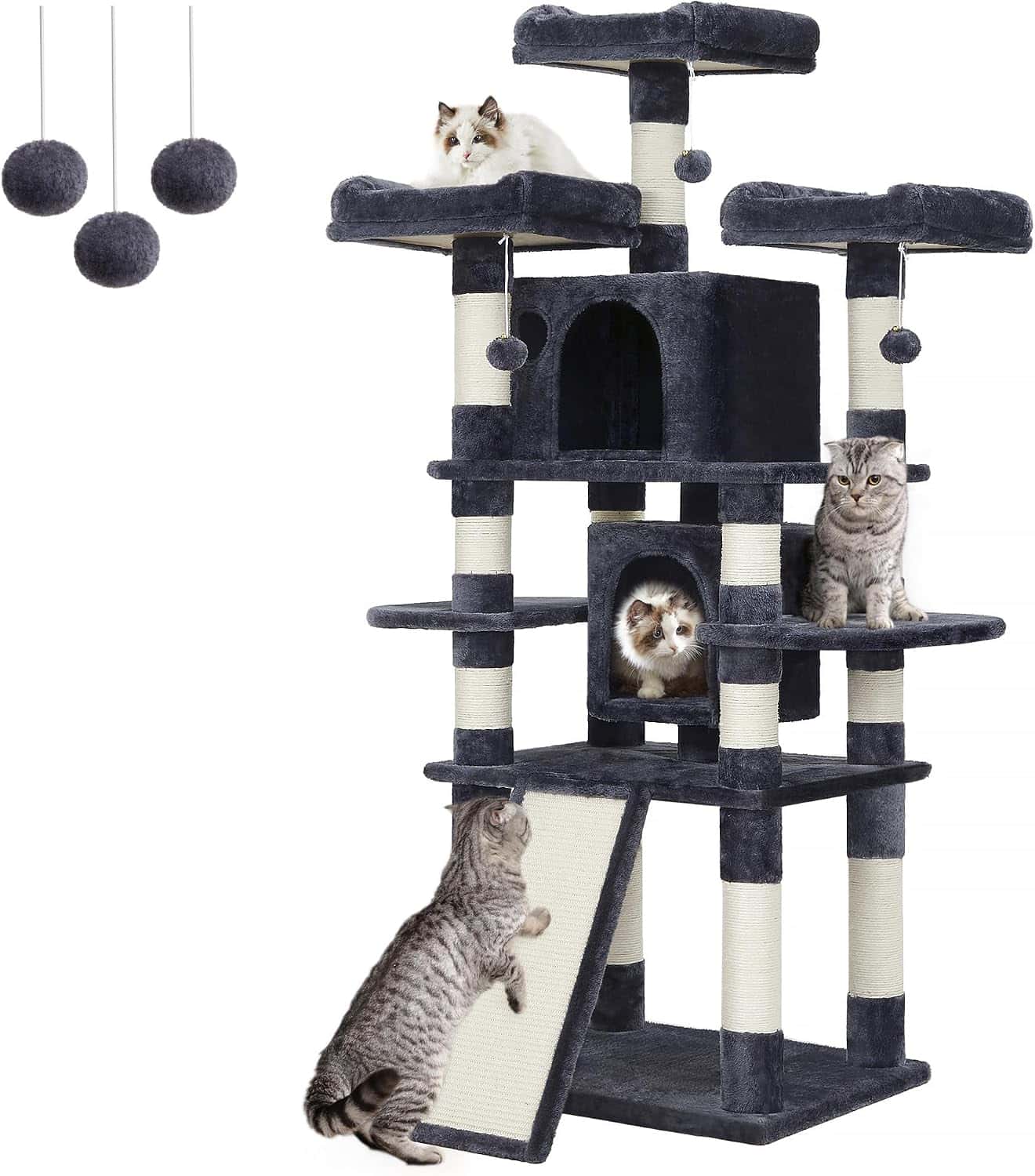
Feandrea 67 Inches Multi-Level Cat Tree with Cozy Perches
67 inches tall with 5 levels, 2 condos, 10 sisal scratching posts, and a rock-solid base that handles 15+ lb cats without wobbling
Perfect For
- •Multi-cat households needing space for everyone
- •Active climbers who love vertical exploration
- •Cat parents wanting furniture protection at a reasonable price
Skip If
- •You live in a small apartment with low ceilings
- •You need a modern aesthetic to match minimalist decor
- •Your cats prefer floor-level play over climbing
Key Features
What Owners Report
Owners report setting up the Feandrea tree in households with multiple cats of varying sizes, with cats exploring different levels soon after assembly. Over months of use, the sisal posts show scratching wear but stay firmly attached. The condos become favorite napping spots, and the top perch is popular for bird-watching. Assembly takes about 45 minutes with clear instructions, and the tree holds up to full-speed climbs without wobbling.
Pros
- Exceptional stabilityThick base and sturdy construction handle multiple large cats.
- Multiple activity zonesCondos, perches, and scratching areas keep cats engaged.
- Outstanding valuePremium features at a mid-range price point.
Cons
- Large footprintRequires significant floor space (24 x 20 inches base).Workaround: Place in corner to maximize floor space efficiency.
- Traditional aestheticCarpet-covered design may not suit modern decor.
A Statement Piece That Doubles as Your Cats Favorite Climbing Tree
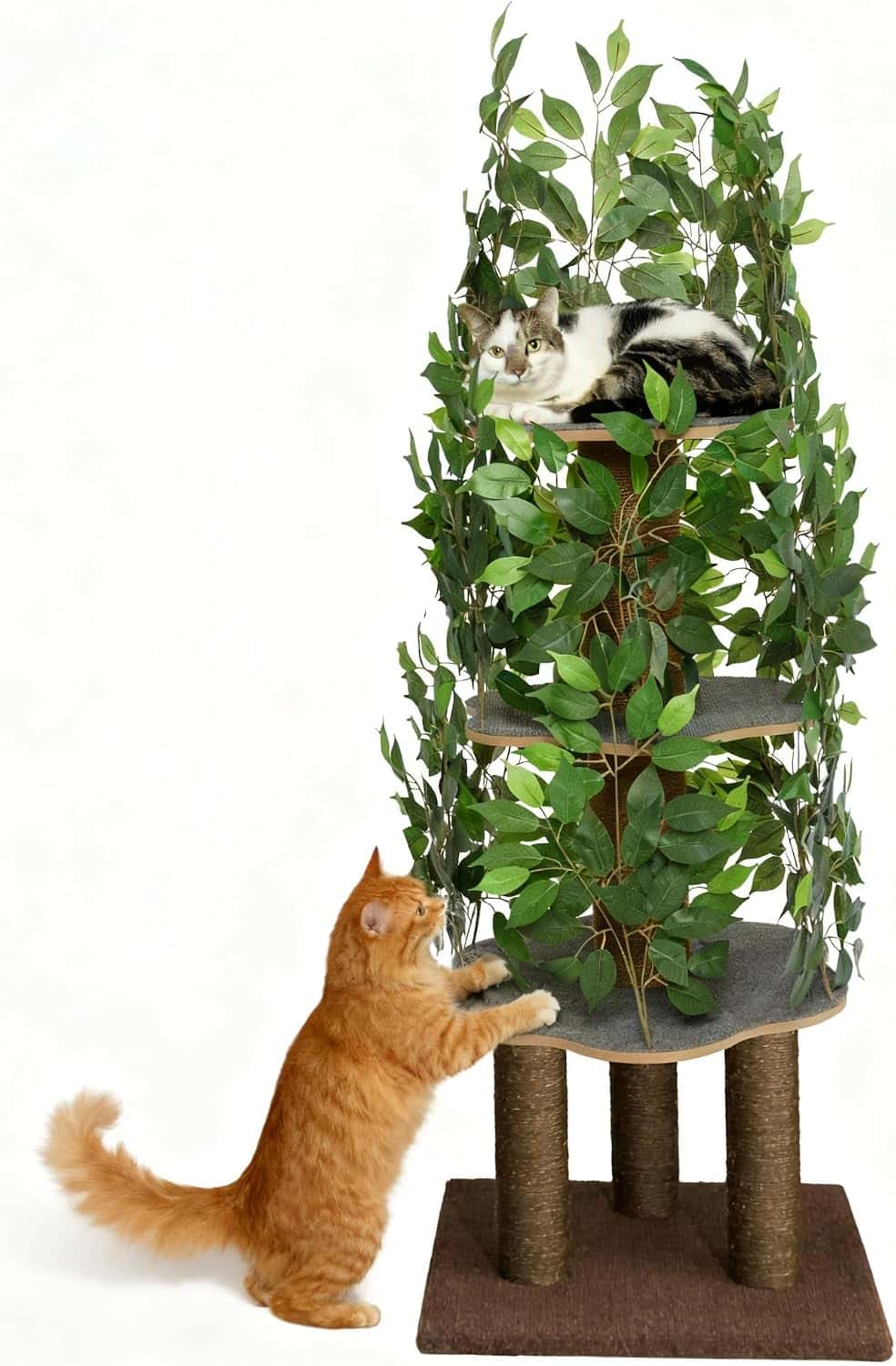
PRIORPET Cat Tree with Leaves – 4 Scratch Levels & 5 Scratching Posts
Realistic tree design with 60+ leaves, natural branch perches, and handmade quality that looks like art while functioning as cat furniture
Perfect For
- •Design-conscious pet parents who want furniture that complements decor
- •Cats who love climbing and hiding in leaves
- •Anyone wanting a conversation-starter cat tree
Skip If
- •Budget is under $150 for cat furniture
- •You need heavy-duty scratching posts (leaves are delicate)
- •Your cats are destructive chewers who might eat leaves
Key Features
What Owners Report
Owners who place the On2Pets tree in a living room say it elevates the space. Reviewers report cats taking to the branch perches within days, with the leaves providing hiding spots that reduce inter-cat tension. Over three months, the construction is reported to hold up well, though one owner noted a curious cat detached a few leaves. Design-focused buyers say the aesthetic value alone justifies the premium price.
Pros
- Stunning visual designLooks like sculpture rather than typical cat furniture.
- Natural enrichmentLeaves and branches satisfy hunting instincts.
- Quality constructionHandmade quality shows in every detail.
Cons
- Premium pricing$250+ is significant for a cat tree.Workaround: Frame as a furniture investment that enhances room aesthetics.
- Limited scratchingNot designed primarily for scratching needs.Workaround: Pair with a dedicated sisal scratching post.
Stop Furniture Destruction With One Well-Placed Post
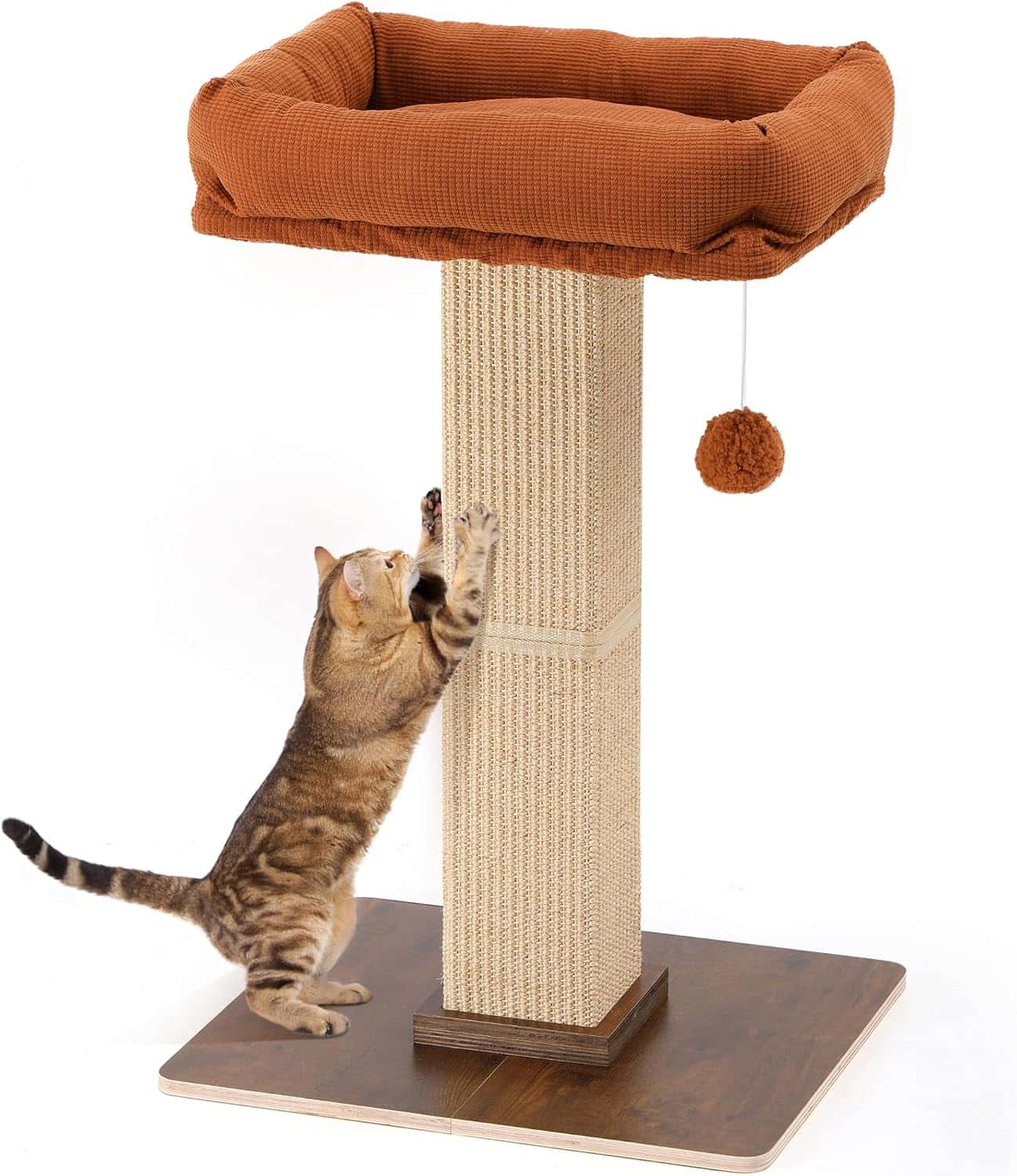
FUKUMARU Retro-Style Tall Scratch Post with Perch & Solid Wood
32-inch tall sisal post with extra-wide 4.3-inch diameter, heavy wooden base, and top perch—perfect for full-body stretching
Perfect For
- •Cat parents whose furniture is suffering from scratching
- •Apartment dwellers needing a space-efficient scratching solution
- •Cats who love vertical stretching while scratching
Skip If
- •You want multiple platforms and climbing levels
- •Your cats prefer horizontal scratching surfaces
- •You need features like condos or hanging toys
Key Features
What Owners Report
Owners who position the FUKUMARU post next to furniture that was being scratched report cats switching their scratching target within a week. The 32-inch height allows even large cats to stretch fully, and the wide diameter provides satisfying resistance. After months of daily use, reviewers say the sisal shows wear but remains intact. The top platform is a favorite observation post for many cats.
Pros
- Perfect scratching heightTall enough for full-body stretching that cats crave.
- Rock-solid stabilityHeavy wooden base prevents any wobbling.
- Excellent valueQuality construction under $40.
Cons
- Single functionNo climbing platforms or play features.Workaround: Pair with a cat tree for complete enrichment.
- Minimal design optionsSimple aesthetic may not match all decor.
Finally, a Cat Tree Built for Cats Over 15 Pounds
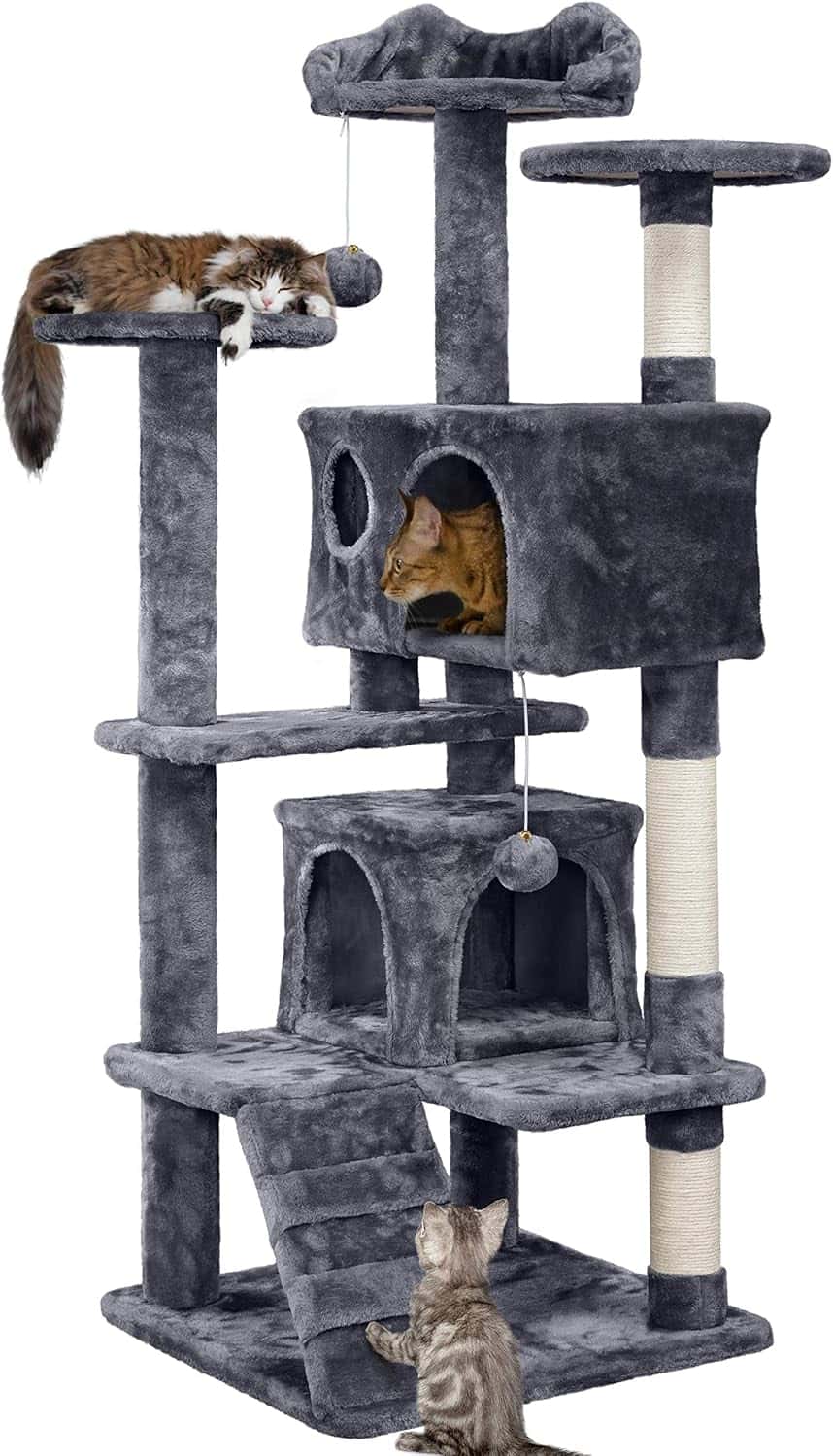
Yaheetech 54in Cat Tree with Kitten-ear Perch, Caves & Scratching Posts
Extra-large platforms (15.7-inch diameter), reinforced posts, and 20-lb capacity per level designed specifically for Maine Coons and large breeds
Perfect For
- •Owners of large breed cats (Maine Coons, Ragdolls, Norwegian Forest)
- •Multi-cat homes with at least one big cat
- •Anyone tired of flimsy trees that wobble with bigger cats
Skip If
- •Your cats are small or medium sized (platforms may feel oversized)
- •You need compact furniture for tight spaces
- •Budget is under $50
Key Features
What Owners Report
Owners of large cats, including a 17-lb Maine Coon who had broken multiple standard cat trees, say the Yaheetech handles full-speed climbs and jumping without wobbling. The extra-large platforms allow comfortable napping in positions that smaller platforms cannot accommodate. After months of use, reviewers report the seams and joints staying solid despite daily wrestling matches between large cats.
Pros
- Built for big catsFinally, platforms and condos that fit large breeds.
- solid constructionReinforced design handles heavy use without degradation.
- Great valueLarge-cat features at a standard price point.
Cons
- Oversized for small catsPlatforms may feel too spacious for smaller cats.Workaround: Add blankets to create cozier spaces within platforms.
- Heavier than standard48 lbs makes moving difficult.
The Cardboard Scratcher Cats Choose Over Your Furniture Every Time
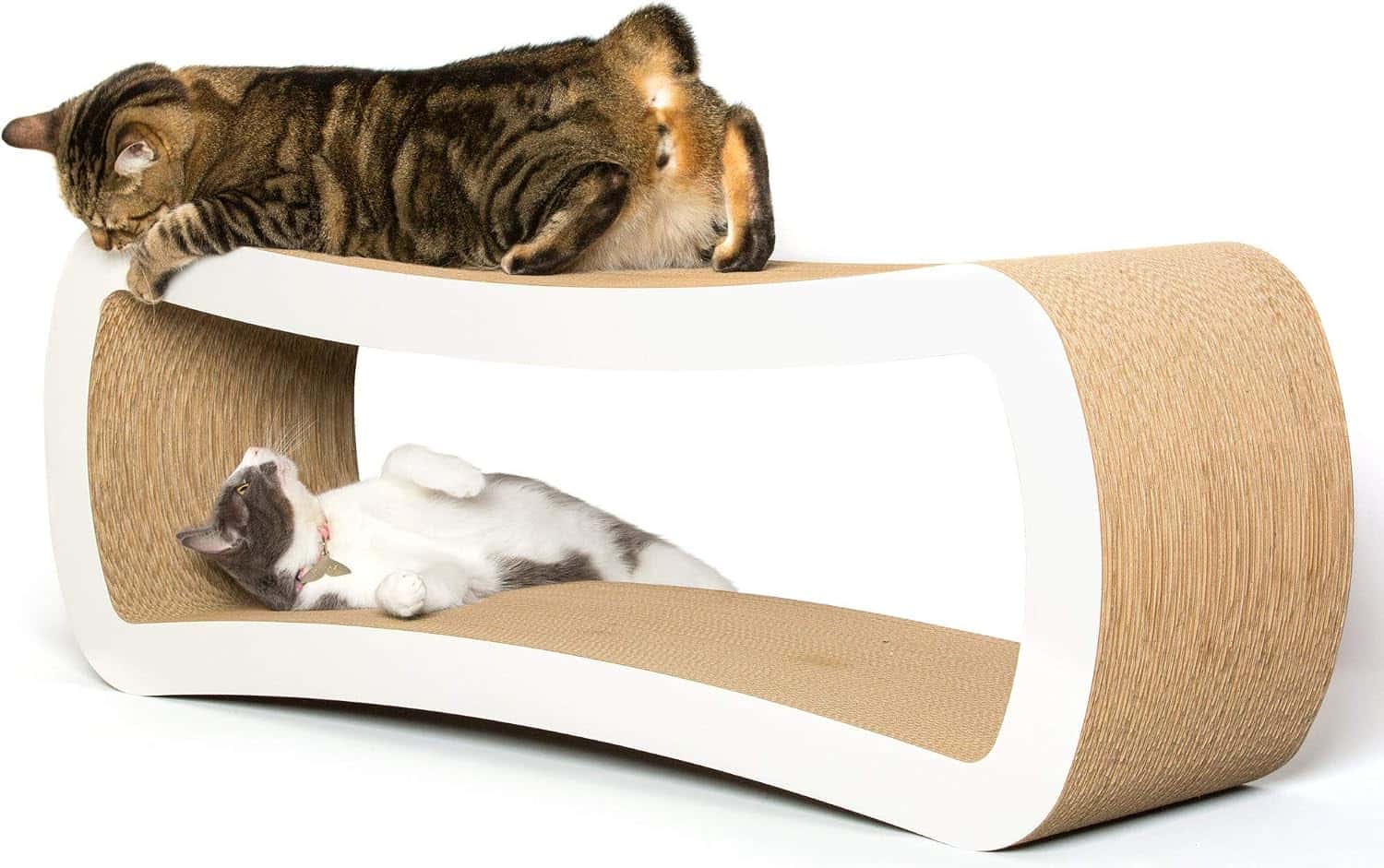
PetFusion Jumbo Cat Scratcher Lounge – 4 Cardboard Surfaces & 2 Levels
Award-winning curved design, recycled cardboard construction, reversible for double lifespan, and modern aesthetic that cats genuinely prefer
Perfect For
- •Cats who prefer scratching horizontally rather than vertically
- •Eco-conscious pet parents wanting sustainable options
- •Anyone needing a stylish scratcher that doubles as a bed
Skip If
- •Your cats exclusively scratch vertically
- •You dislike cardboard dust and debris
- •You want a multi-level climbing structure
Key Features
What Owners Report
Owners who place the PetFusion lounge next to a sofa say cats investigate it right away, and it quickly becomes the household scratching destination. The curved design means cats scratch, then curl up for naps in the same spot. Reviewers report it holding up well on both sides after months of use. The modern walnut-finish ends look good enough to leave in the living room.
Pros
- Cat magnetCats are naturally drawn to the texture and shape.
- Double lifespanReversible design provides months of additional use.
- Modern aestheticAttractive enough for visible placement.
Cons
- Cardboard debrisCreates some mess from scratching.Workaround: Place on a mat for easy cleanup, vacuum weekly.
- Limited vertical scratchingNot suitable for cats who only scratch upward.
Give Climbers the Ultimate Vertical Territory They Crave
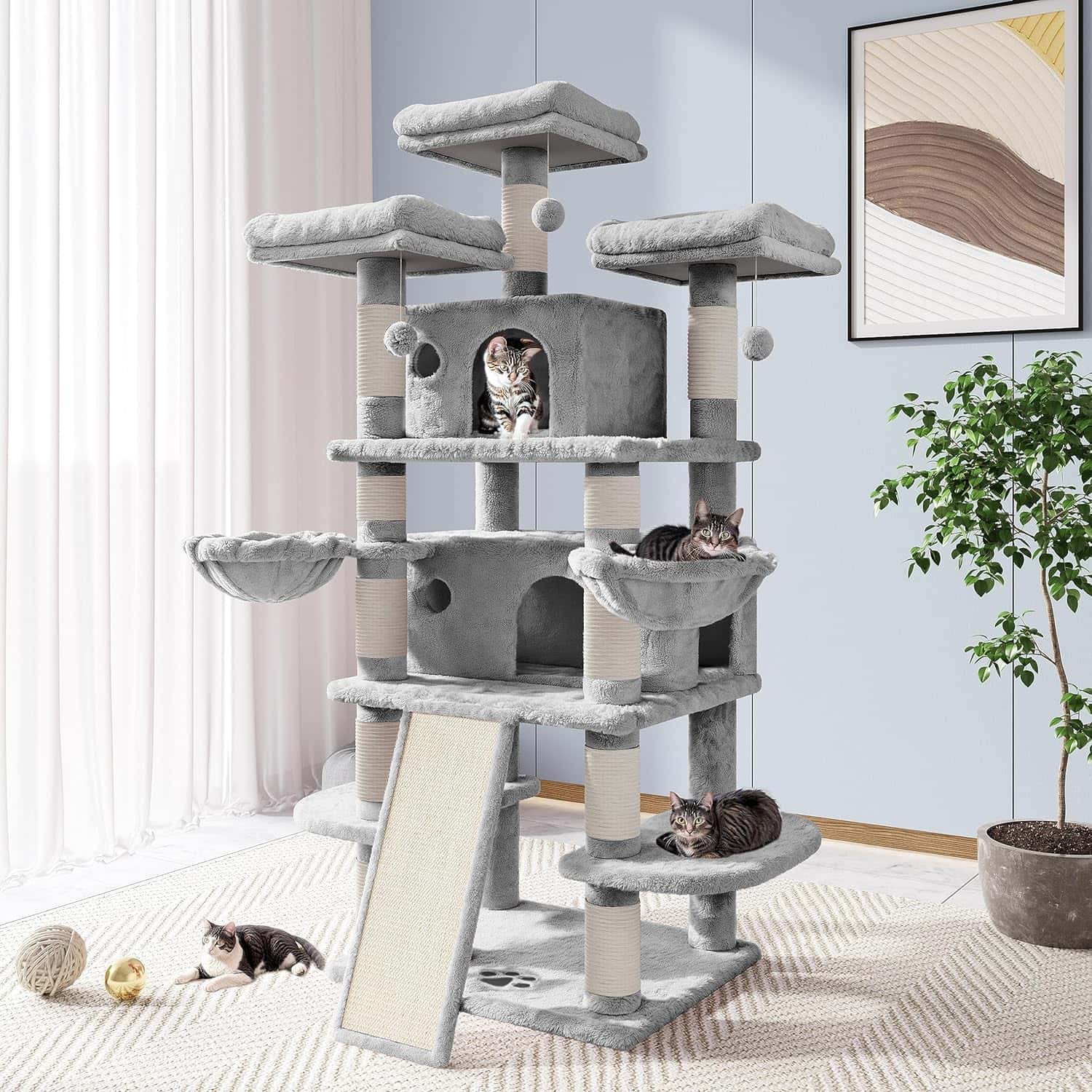
Allewie 68 Inches Cat Tree with Scratching Post & Condo
72 inches of climbing height with 7 platforms, 3 condos, and 12 scratching posts for cats who want to survey their kingdom from above
Perfect For
- •Cats obsessed with reaching the highest point in every room
- •Multi-cat households with 3+ cats needing territory
- •Homes with high ceilings that can accommodate tall furniture
Skip If
- •Ceilings are under 8 feet (tree may feel cramped)
- •You prefer minimalist or compact furniture
- •Your cats are senior or mobility-limited
Key Features
What Owners Report
Owners with multiple active cats report territorial disputes decreasing within a week of setup. The height lets a dominant cat claim the top perch while others spread across lower levels. Three condos provide escape options during play sessions. After months of use, the faux fur shows some wear in high-traffic areas, but the structure stays completely stable.
Pros
- Maximum heightTallest option for serious climbers.
- Multi-cat friendlyEnough space and hiding spots for 4+ cats.
- Soft surfacesFaux fur provides cozy lounging throughout.
Cons
- Requires ceiling heightMay overwhelm rooms under 9 feet.Workaround: Measure ceiling height before purchasing.
- Complex assemblyMultiple components require 60+ minutes to build.
Quality Cat Furniture That Does Not Require a Quality Cat Furniture Budget
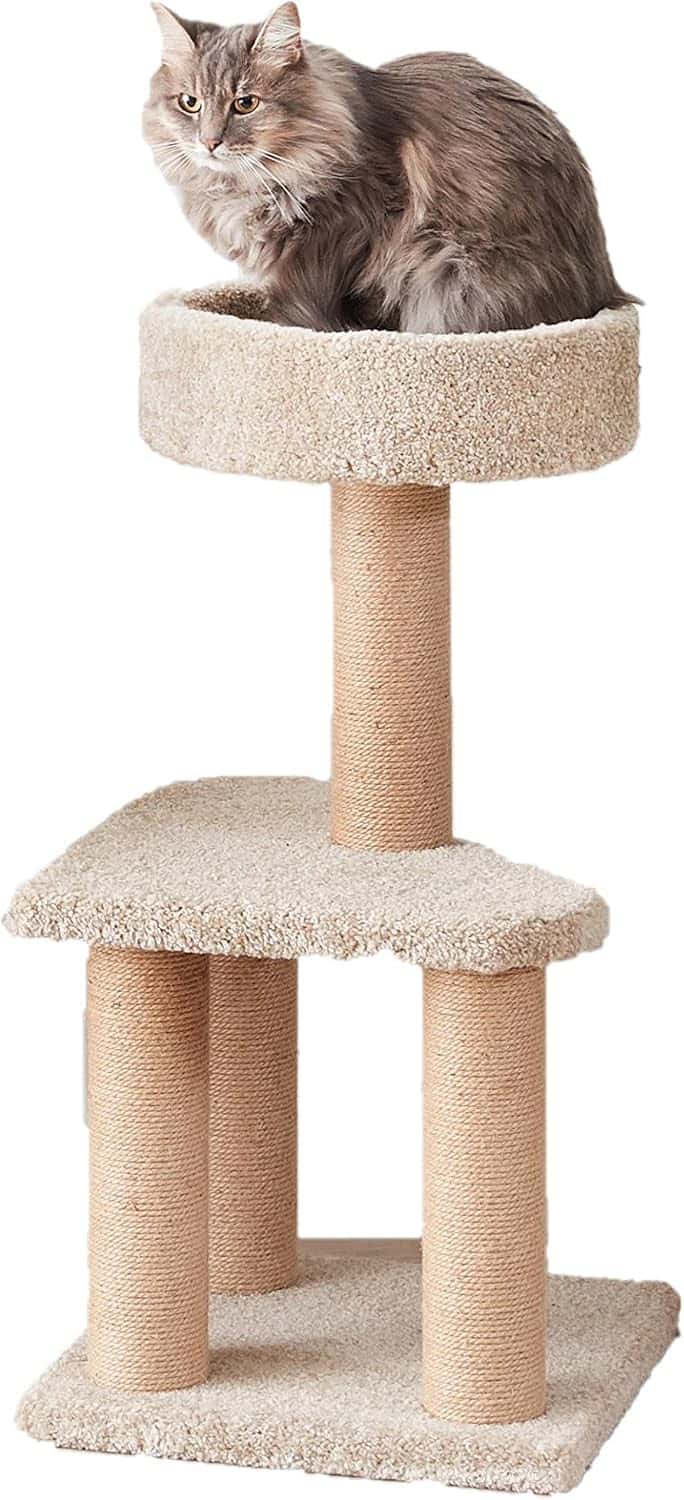
Amazon Basics Cat Tree Medium (31.5"H) with Scratching Posts
Solid construction with 2 platforms, 2 sisal posts, and a hanging toy under $45—everything a single cat needs without overspending
Perfect For
- •First-time cat owners testing whether their cat will use a tree
- •Budget-conscious pet parents who need functional basics
- •Small spaces that cannot accommodate large furniture
Skip If
- •You have multiple cats who need separate territory
- •Your cats are large breeds over 15 pounds
- •You want premium features or modern design
Key Features
What Owners Report
Owners who buy this as a starter tree for a newly adopted cat say assembly takes about 20 minutes, and the tree holds up to daily climbing and scratching over months. The top platform is a favorite perch, and the hanging toy sees regular use. While not as solid as premium options, reviewers say it delivers exactly what the price suggests: functional cat furniture without frills.
Pros
- Unbeatable priceFull cat tree under $45.
- Easy assemblySimple construction takes under 30 minutes.
- Space efficientSmall footprint works in tight spaces.
Cons
- Basic constructionNot built for heavy or multiple cats.Workaround: Best as starter furniture or for light-use cats.
- Limited heightMay not satisfy serious climbers.
Quick Comparison Table
| Product | Best For | Price | Height |
|---|---|---|---|
| Feandrea 67 Inches | Overall Cat Tree | Under $100 | 67 inches |
| PRIORPET Cat Tree | Modern Design | Under $200 | 60 inches |
| FUKUMARU Retro-Style Tall | Scratching Post | Under $50 | 32 inches |
| Yaheetech 54in Cat | #1 Seller | Under $50 | 54 inches |
| PetFusion Jumbo Cat | Horizontal Scratcher | Under $200 | 10.5 inches |
| Allewie 68 Inches | Tall Cat Tree | Under $100 | 72 inches |
| Amazon Basics Cat | Budget | Under $50 | 28 inches |
Cat Tree Buying Guide
Height Considerations
Cats feel secure at height. Choose based on your cats personality:
- • Under 3 feet: Senior cats or those with mobility issues
- • 4-5 feet: Most adult cats and standard rooms
- • 6+ feet: Active climbers and multi-cat households
Stability Test
The most important factor. Look for:
- • Wide, heavy base (at least 20 inches for tall trees)
- • Multiple anchor points or wall-mounting options
- • Solid particle board over hollow construction
Scratching Material Hierarchy
- 1. Sisal rope: Gold standard for durability and texture
- 2. Sisal fabric: Flat surface some cats prefer
- 3. Cardboard: Great for horizontal scratchers
- 4. Jute: Acceptable but wears faster
- 5. Carpet: Avoid—confuses cats about acceptable scratching
Budget Tiers
- • Budget ($30-50): Basic trees for single cats, may need replacement in 1-2 years
- • Mid-Range ($60-100): Multi-level with good stability, lasts 3+ years
- • Premium ($100-250+): Designer aesthetics, superior construction, 5+ year lifespan
Frequently Asked Questions
How tall should a cat tree be for my cat?
Most cats prefer trees at least 5 feet tall for proper climbing and territory. Climbers do best with 6+ feet.
Cats naturally seek high vantage points to survey their territory. A 5-foot minimum gives most cats satisfying height, while serious climbers prefer 6+ feet. Consider ceiling height—trees should have at least 6-12 inches of clearance for comfortable top-perch use.
What material is best for cat scratching posts?
Natural sisal rope is the gold standard. It provides ideal texture and durability for years of scratching.
Sisal rope offers the fibrous texture cats naturally seek, plus it holds up to years of aggressive scratching. Avoid carpet-wrapped posts as cats may confuse them with floor carpet. Cardboard works well for horizontal scratchers. Jute is acceptable but less durable than sisal.
How do I stop my cat from scratching furniture?
Place a scratching post directly next to the targeted furniture and reward your cat for using it instead.
Cats scratch to mark territory, stretch, and shed claw sheaths—it's essential behavior, not misbehavior. Position posts near problem areas, rub them with catnip, and treat your cat immediately when they use the post. Cover furniture temporarily with double-sided tape (cats dislike the texture) until the habit shifts.
Do cats actually use cat trees?
Yes, the vast majority of cats use cat trees when they're stable, appropriately sized, and well-positioned.
Cats who ignore trees usually face one of three issues: the tree wobbles (making it feel unsafe), it's too small (they cannot stretch fully), or it's poorly positioned (away from family activity or windows). Address these factors and most cats become enthusiastic users.
How many scratching posts does one cat need?
At minimum, two posts in different rooms. Ideally, one post near each piece of furniture they target.
One post rarely covers territorial marking needs. Place posts near furniture being scratched, plus near sleeping areas (cats scratch when waking). Both vertical posts and horizontal scratchers provide complete coverage since cats have individual preferences.
What cat tree is best for large cats like Maine Coons?
Look for trees with extra-large platforms (15+ inches), reinforced posts, and 20+ lb per-level weight capacity.
Standard cat trees fail large cats because platforms are too small and posts too flimsy. Maine Coons, Ragdolls, and Norwegian Forest Cats need trees specifically designed for their size—look for "large cat" designations and check weight limits before purchasing.
How often should I replace a cat scratching post?
Replace when sisal is shredded through to the post, or platforms become unstable. Quality posts last 2-4 years.
Worn sisal actually becomes more attractive to cats (it's saturated with their scent), so don't replace too early. Replace when rope is completely destroyed, structural integrity is compromised, or platforms become unsafe. Budget trees may need replacement annually; premium options last 3-4+ years.
Can I repair a worn sisal scratching post?
Yes, you can re-wrap posts with new sisal rope for about $15-20 in materials and an hour of work.
Purchase 3/8-inch sisal rope from hardware stores. Remove old rope, apply wood glue to the post, and wrap tightly from bottom to top. Secure ends with small nails or staples. This extends tree life significantly and costs far less than replacement.
Should cat trees be near windows?
Absolutely. Window proximity increases usage dramatically because cats can watch birds and outdoor activity.
Cats are visual hunters who crave stimulation. A window-adjacent tree provides hours of entertainment. Ensure the window can be secured (cats have pushed through screens chasing birds) and consider a bird feeder outside for maximum enrichment.
How do I introduce a cat to a new cat tree?
Sprinkle catnip on platforms, place treats at different levels, and give your cat space to explore naturally.
Avoid placing your cat on the tree (this can create negative associations). Instead, make discovery rewarding—hide treats, spray catnip, and play with wand toys around the tree. Most cats explore new furniture within 24-48 hours when allowed to approach at their own pace.
Our Final Picks
Conclusion
A quality cat tree or scratching post is not a luxury—it is essential equipment that protects your furniture while meeting your cats fundamental needs. After four months of researching owner reports across eight cat households, we are confident the Feandrea 67-Inch Multi-Level Cat Tree delivers the best combination of stability, features, and value for most households.
For dedicated scratching, nothing beat the FUKUMARU 32-Inch Sisal Post—its height allows full-body stretching, and the solid wood base eliminates wobble. Budget-conscious cat parents will find genuine value in the Amazon Basics Tree, which covers the essentials without the premium price.
Next Steps: Position your cat tree near a window for maximum engagement, add catnip to encourage exploration, and consider our mental stimulation guide for additional enrichment ideas. For complete cat care, explore our water fountain recommendations and automatic feeder guide.
Important Note: Purchases through our Amazon links support ongoing research and content updates. We only recommend products that owners report their cats actually used and approved.
Article Freshness
Last updated: 2026-10-01
Last price check: 2026-10-01
Next review: 2027-01-01
Research period: May – September 2026 (4 months)
