Updated: October 21, 2026
Clients Keep Picking the Agency With the Bigger Team. Here Is Where One Person Actually Wins.

Short answer
A solopreneur can beat an agency on four things a bigger team cannot copy: decisions in minutes instead of meetings, one person who both answers and does the work, a niche too small for an agency to chase, and a voice that honestly belongs to one human. The agency’s real edge is output, because several people work at once. AI now drafts much of that output for you. Keep the judgment and the client relationship yourself, and say “I” when it is you.
Why does the client pick the agency when your work is better?
Usually because the agency showed up with more, faster. Not better work. More finished things on the table, on the first day.
The book opens its last chapter on exactly this loss. A one-person coffee roaster pitches a café owner who likes her coffee more. A national brand turns up with the whole package: a campaign ready to run, label drafts, sourcing facts on one sheet, and replies to every question inside sixty minutes. She brings coffee samples and says she will follow up on everything else. He picks them.
Swap the coffee brand for an agency and the scene is the same in design, marketing, consulting or web work. The book’s diagnosis is blunt: the bigger side did not win on talent. It won on parallel work. Several people did several jobs at the same moment while one person did them in a row.
Why “look bigger” and “charge less” both backfire
The two usual fixes move you onto the agency’s ground. Cutting your rate is a fight about money, and the side with more of it can outlast you. Dressing up as a firm, with “our team” on the site and a sanded-down voice, throws away the thing clients trust more.
Roughly 7 in 10 Americans reported high confidence in small business; for big business the figure was about 14 percent (Gallup, June 2025).
That survey asks about big business in general, not agencies. The mechanism still carries over. The more people touch a sentence before it goes out, the less it sounds like a person, and the less it commits to anything specific.
Solo vs agency, side by side
Here are the structural differences in plain terms. Neither column wins everywhere, and the bottom row is a real cost of being one person.
| What the client meets | One person | Agency |
|---|---|---|
| Time from idea to a yes or no | Minutes. The person who spots it is the person allowed to act on it. | Often a brief, a second opinion and a meeting before anyone commits. |
| Who the client talks to | The person doing the work, in one step, usually the same day. | Usually an account lead who passes the message to the people doing the work. |
| What a promise can say | A specific line with your own name behind it. | Wording that several people have to agree on, so it tends to get safer and vaguer. |
| Smallest job worth taking | One that pays one person well. | One that covers several salaries, rent and the sales effort to win it. |
| Work done in parallel | One pair of hands, plus AI first drafts you approve. | Writers, designers and researchers working at the same time. |
| Cover if someone is ill | You need a plan, and you should say what it is. | Another person can usually step in. |
The first four rows are yours to press. The fifth is the one AI changes. The last you handle by telling clients your capacity and your cover plan upfront. The steps below take them in that order.
Step 1: Map where your speed beats theirs
Speed is the edge you probably waste most, because “I’m faster” stays a feeling. The book turns it into a four-column sheet called the Speed Map. Pick one decision you have been sitting on and fill it in.
- The decision. Break it into its parts: decide, price, write, design, launch, adjust.
- How long it takes you. Be honest. Minutes for the call, an hour for an AI-drafted email you then edit.
- How long it takes them. Count the sign-offs and meetings a bigger team needs for the same part.
- How you use the gap. One concrete move per row, such as “send the revised proposal Monday, before their review.”


In the book, the roaster fills six rows in five minutes and launches a limited blend that Friday. Over the weekend she sees the larger bag selling faster. By Monday she makes it the default. The whole loop takes five days.
Just 37 percent of executives said their companies decide both well and quickly (McKinsey survey of 1,228 executives, 2019).
One rule keeps speed from turning into sloppiness: move fast only on things small enough to fix next week. A fast mistake on a small test is a lesson. A fast mistake on a client’s whole budget is not.
Step 2: Make “one point of contact” visible
With an agency, the client’s question travels through someone before it reaches the maker. With you, it does not. That only counts if the client knows it.
So say it. Sign every reply with your own name. Put your name on the proposal, the invoice and the reply-to line. Tell new clients in one plain sentence that they are writing to the person who does the work, not to a help desk. Answer the question they actually asked, and where it is true, tell them what you would choose.
When something goes wrong, the book’s method is short. Name it before the client has to ask. Explain it in a sentence or two, then give the fix and a date. Then stop. Then keep the promise, because the second message is the one that builds loyalty.
Step 3: Pick a slice of work too small for an agency
An agency has a minimum job size it can afford to want. Below that line, it rarely shows up. That is where you can become the obvious choice instead of one quote among five.
The book’s Niche Wedge has three lines. The broad market where you keep losing on their terms. The narrow slice where you could be the obvious pick. And the reason a bigger firm would not bother following you there. Write all three before you change a word on your site.

The test for “specific enough” is whether your ideal client’s description of their problem and your description of your business are the same sentence. If ten competitors could paste your tagline onto their site unchanged, you went narrower but not specific.
Two warnings from the book. A slice with no paying people in it is a hobby. And the right slice is usually already in your client list, among the people who rehire you and refer others.
Step 4: Use AI to close the output gap, starting with one department
This is the row where the agency used to win outright. AI now drafts a usable version of much of that parallel work. Not a finished version, a usable first draft, which is what you were missing.
In a study of 5,179 support agents, AI help raised output about 14 percent on average and about 34 percent for the least experienced (NBER working paper 31161, 2023).
With AI help on professional writing tasks, time to finish fell about 40 percent and graded quality rose about 18 percent (Noy and Zhang, Science, 2023).
Outside your core craft, you are probably a novice at most jobs, and novices are exactly who those gains favor. The book’s AI Department Map draws the line in three columns, one row per department:
- The department an agency pays for, named by its output: “a launch plan for this client,” not “marketing.”
- Your AI-assisted version: the first drafts, ten concept options, the one-page research digest, replies to repeat questions.
- What stays you: which draft is honestly right, what the data means for this client, the unhappy client, your name on the result.
Start with the department that cost you the last pitch, and only that one. In the book, the roaster runs marketing alone for a month before touching design. Four new systems at once means four things that can break in the same week.
Step 5: Say “I” or “we” honestly
Use the word that would survive a client watching you work for a full day. That is the book’s test, and it settles most cases quickly.
- You do all the work yourself: write “I.” It can feel exposing. That openness is what clients trust.
- A regular contractor handles one part: say so by role, for example “I design, and a copy editor I have worked with for years checks every page.”
- You want a business name that outlives you: use the name as the subject, and keep your own name on replies.

The hard line is fakery. Invented staff photos, made-up testimonials or a rating with nothing behind it turn your best edge into your worst risk. One screenshot is enough to end the trust that made being small worth anything.
The book behind these steps
 The Unfair Solopreneur on Amazon (opens in a new tab)
by Ismail Gunaydin
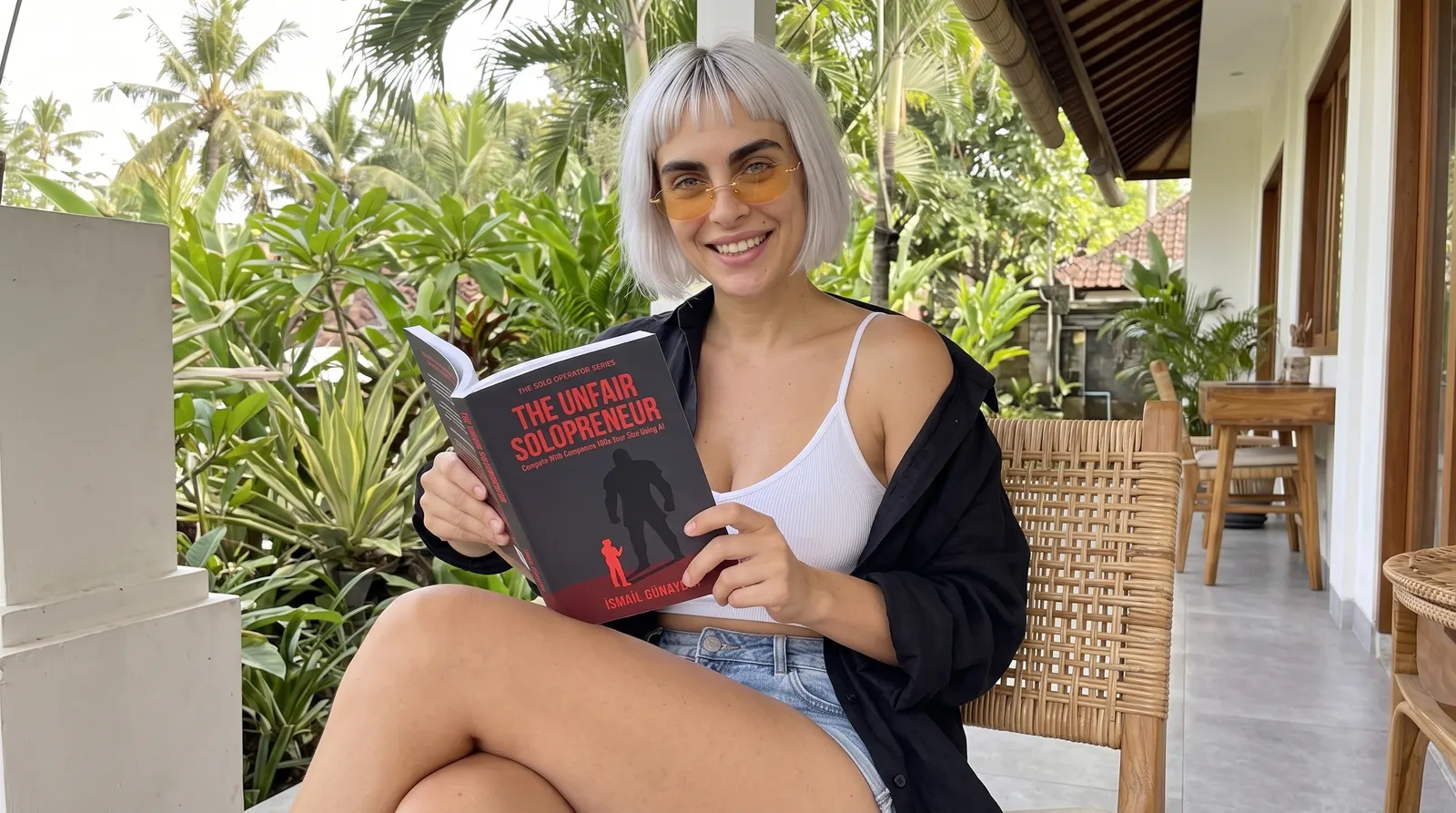
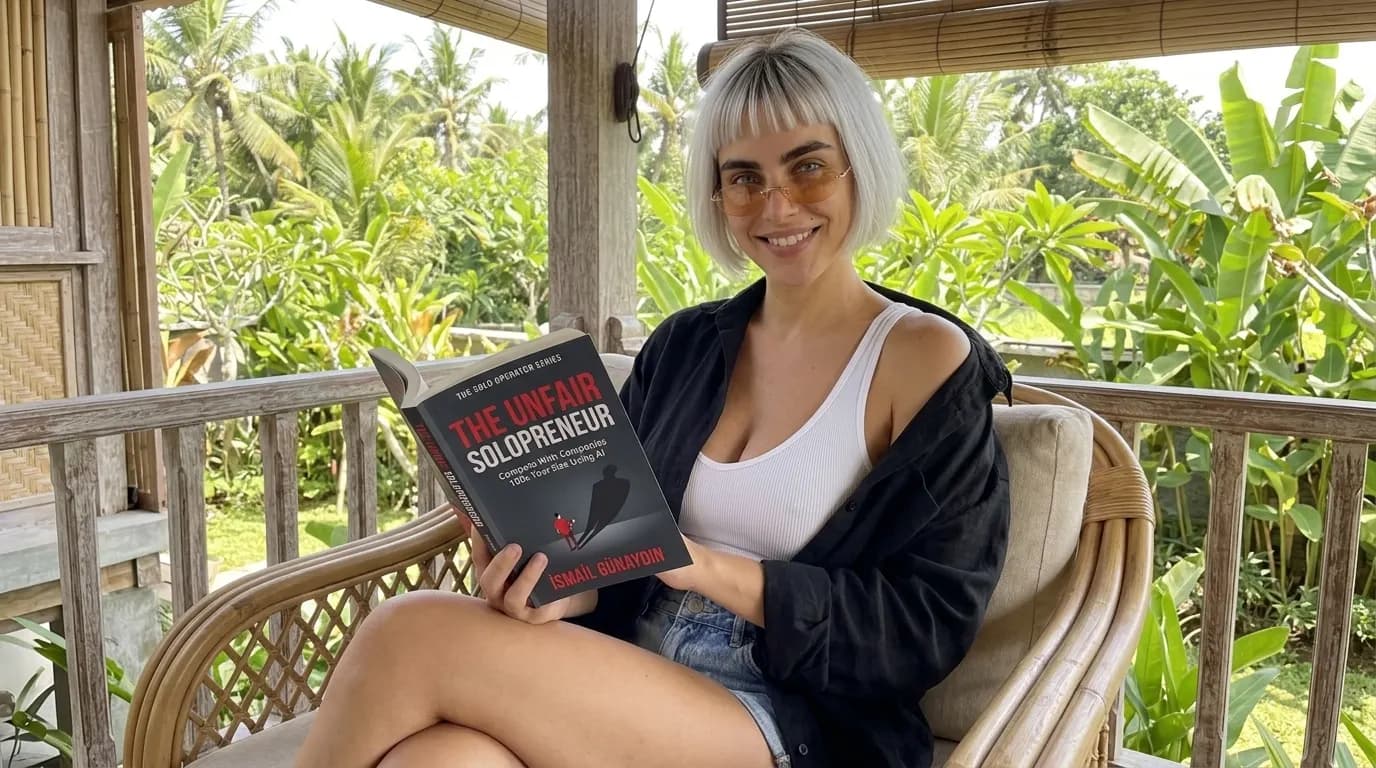
The Unfair Solopreneur is a 60-page book on five advantages a bigger competitor cannot copy, with seven one-page tools and a 90-day plan that presses them in order. It is Book 4 of The Solo Operator Series. The author, Ismail Gunaydin, is our founder.
This page gives you the Speed Map, the Niche Wedge and the department map in short form. The book adds the fourth advantage, knowing each client in a way a bigger firm can only guess at, plus the audit to run before you start.
- Speed: You Move While They Meet: why bigger teams slow down, and the Speed Map from Step 1
- Trust: You're a Person, They're a Logo: the visible-human checklist and how to admit a mistake well
- Focus: Own the Slice Too Small for Them: the Niche Wedge and the four ways a niche goes wrong
- Firepower: One of You, the Output of a Whole Department: the AI Department Map and the line between production and judgment
It fits if
- You keep losing pitches to agencies and assume their budget is the reason
- Your site says “our team” and the team is you
- You want to produce what a small marketing team does, alone, with AI drafts
Skip it if
- You plan to raise money and hire quickly
- You want a list of tricks without the reasoning behind them
- You want to build an agency of your own rather than stay solo
Fair doubts
“Some clients only want a firm. Nothing changes that.”
True. A client who needs ten disciplines at once is better served by an agency, and you can say so. The book is about the clients who chose the agency for output you can now match, not about winning every pitch.
“The examples are about coffee. I sell services.”
The running example is a roaster, and the tools are generic on purpose. A Speed Map works on a proposal as well as on a product launch. The department map has rows for marketing, design, research and support, which most service businesses need.
Questions people ask about solo vs agency
Is it better to hire a freelancer or an agency?
It depends on the job. A solo specialist tends to be faster, closer to the work and focused on one narrow kind of client. An agency brings several skills at once and can swap people in. For a well-defined job in one specialty, one person is often the better fit. For a large job that needs many disciplines at the same time, an agency usually is.
How can a one-person business compete with a bigger company?
By competing where size is a cost, not where it is a strength. Decide faster, answer clients personally, own a slice of work too small for a bigger firm to chase, and use AI to draft the output that used to need extra staff. Price and reach are the ground where the bigger firm wins.
Should a solopreneur say I or we?
Say I for the work you do yourself. If a regular contractor helps, name that help plainly instead of hiding it inside a vague we. The test is simple: would the words still be true if a client watched you work for a whole day? A we that suggests an office and staff who do not exist fails that test.
Can one person with AI really match an agency's output?
On first drafts, often yes. Campaign copy, mockup ideas, research summaries and replies to common questions are the kind of work AI drafts quickly. What it does not supply is the judgment: which draft fits the client, what the data means for this job, and the relationship. That part still takes your time.
What are the real disadvantages of hiring one person instead of an agency?
Capacity and cover. One person can only take so much work at once, and if they are ill, nobody steps in automatically. A good solo provider says this upfront: how many clients they take, what happens if they are out, and which work they pass to trusted help.
Should I lower my price to beat an agency?
Usually not. Price is one of the places where a bigger firm can outlast you. The stronger move is to compete on what it cannot copy: a fast answer, direct contact with the person doing the work, and depth in one narrow specialty.
Sources
- Gallup, Confidence in Institutions (June 2025 reading; small business and big business)
- McKinsey, Decision making in the age of urgency (2019)
- Brynjolfsson, Li and Raymond, Generative AI at Work, NBER working paper 31161 (2023)
- Noy and Zhang, Experimental evidence on the productivity effects of generative AI, Science (2023)
- The Unfair Solopreneur by Ismail Gunaydin, chapters 1, 2, 3 and 5
