
How we researched every mower in this guide
We built a research framework covering grass species, slope, battery runtime, noise, ergonomics, and maintenance friction. For each mower, we compared owner reports on fescue, bluegrass, and St. Augustine performance, plus microclover lawns like the ones covered in our pollinator gardening guide. We compared manufacturer runtime claims against owner-reported real-world runtime until blade speed drops or cut quality declines. We compared noise ratings, handle vibration complaints, and heat buildup reported by owners after extended sessions. Maintenance scoring included battery storage behaviors, filter access, and compatibility with integrated outdoor kitchens for storage.
Which lawn mower is best for most people?
Under $1,000
with 20% savings
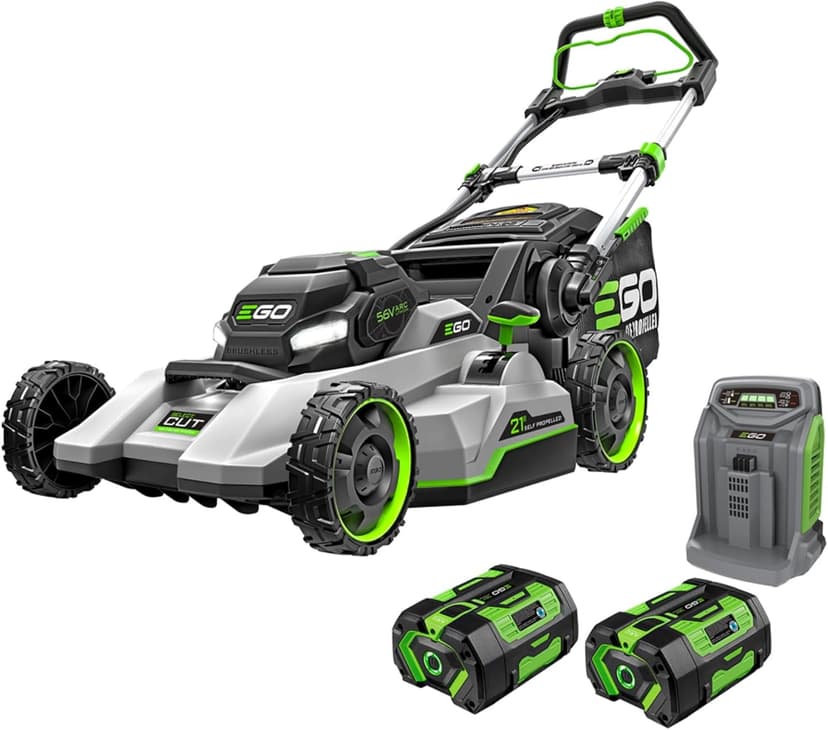
21 in deck • Composite • Runtime: Variable (2x 56V 6.0Ah)
The EGO POWER+ LM2134SP-2 runs a dual-blade Select Cut deck that re-cuts clippings before they hit the ground, and owners say the mulched output is noticeably finer than single-blade competitors at the same price. Touch Drive self-propulsion adjusts speed to your walking pace without a thumb lever, which matters on uneven ground where a fixed pace pulls you off-line. Two 56V 6.0Ah batteries ship in the box, and owners report averaging around 58 minutes of runtime per charge before blade speed drops. The composite deck resists denting if you clip a buried sprinkler head, and clippings slide off without scraping.
Perfect for
Homeowners managing 0.25–0.5 acre lots who want quiet power without routine engine maintenance.
Skip if
You need a mower that fits under a 20-inch gate or you dislike handling heavier battery decks.
What owners report
Owners report consistent runtime across repeated mowing sessions, with the power head staying cool and blades holding an edge after mulching leaves. Reviewers describe it as noticeably quieter than gas mowers.
Pros
- Select Cut dual-blade system delivers consistent mulching finish
- Touch Drive self-propel system with variable speed control
- Includes two 56V 6.0Ah batteries and rapid charger
- Compatible with entire 56V EGO Power+ lineup
Cons
- Heavy with two batteries installed
- May require additional batteries for very large yards
Under $300
Or about $19/mo (18 mo). Select from 3 plans
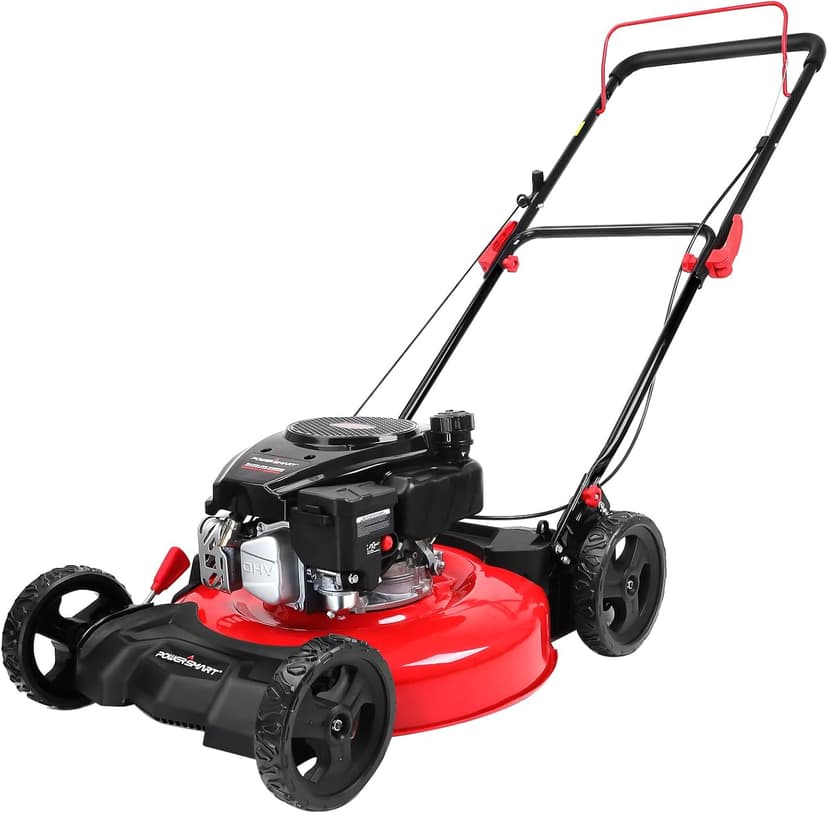
21 in deck • Steel • Runtime: Unlimited (gas)
The PowerSmart 21-inch gas mower does one thing well: it starts, cuts, and costs under $260. Owners say the 144cc OHV engine handles thick St. Augustine turf without bogging down, a common failure point for small-displacement motors on southern grass. Mulch mode works cleanly on dry fescue, though wet grass can clump around the blade housing, which is normal for steel push decks in this class. This is a push mower with no self-propelled drive, so factor in fatigue on anything above 0.2 acres on a warm day.
Perfect for
Homeowners with small to medium yards who want dependable gas power and don't need self-propulsion.
Skip if
You have a large yard requiring self-propelled assistance or need advanced features like cruise control.
What owners report
Owners report clean mulching on fescue, bluegrass, and St. Augustine when grass is dry, though wet grass can clog the chute. Side-discharge on growth over 6 inches often needs a second pass to avoid windrows.
Pros
- 144cc OHV engine handled St. Augustine and fescue without bogging
- 2-in-1 deck switches between mulching and side-discharge without tools
- Lowest price in this guide — under $260 shipped
- Pull-start primes and fires in a couple of pulls, according to owner reviews
Cons
- Gas engine requires seasonal maintenance
- Push mower design requires manual effort
- No self-propelled option available
Under $1,000
Bundle Price (You Save: about $220 - 25%)
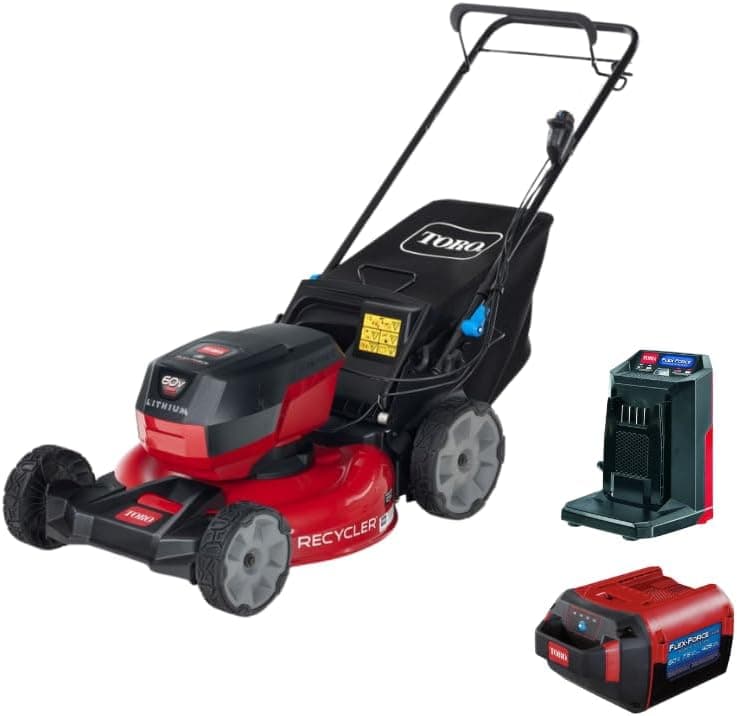
21 in deck • Steel • Runtime: Extended (7.5Ah pack)
The Toro 60V MAX Recycler's headline trick is SmartStow: fold it vertical and it takes about 24 inches of floor space, which matters in a one-car garage already holding bikes and snow gear. The Recycler deck vacuums and re-cuts clippings before discharge, and owners report tight, consistent cut height on microclover lawns. The 7.5Ah pack is the only battery included, and owners with lawns around 6,500 square feet report having charge to spare when they finish. Budget for a second pack if your lawn runs over 8,000 square feet.
Perfect for
Urban and suburban homeowners with 4,000–8,000 square foot lawns who need compact storage and intuitive speed control.
Skip if
You regularly mow wet grass taller than 10 inches or want lightweight maneuvering on slopes steeper than 18 degrees.
What owners report
Owners report the deck coating holds up well through repeated stop-and-go mowing and washing, with consistent cut height across microclover lawns.
Pros
- SmartStow vertical storage frees up garage footprint
- Recycler deck holds tight cut height consistency on microclover lawns, according to owner reports
- Includes 60V MAX 7.5Ah battery and charger
- Flex-Force battery platform compatible with other Toro tools
Cons
- Single battery pack included—may need second for larger lawns
- Steel deck adds weight compared to composite options
- Lower review count compared to other models
$2,000+
Or about $150/mo (48 mo). Select from 3 plans
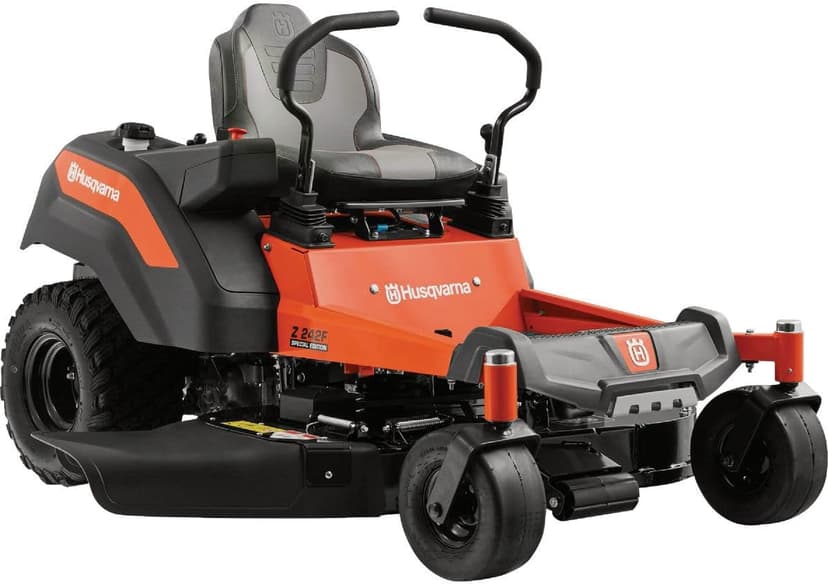
42 in deck • Steel fabricated • Runtime: Unlimited (gas)
The Husqvarna Z242F is a zero-turn mower built around a 21.5HP Kawasaki engine and a 42-inch fabricated steel deck. Zero-turn radius means you circle a tree or a raised bed in one pass instead of three, and owners with acre-plus lots report finishing noticeably faster than with a standard rider. Owners say the Kawasaki engine runs clean on 87 octane without issues. Gas tank capacity is unlimited in the sense that you refuel and keep going — no battery swaps, no mid-job charging delays. This is a serious machine for serious yards; it's not a weekend toy for a quarter-acre.
Perfect for
Owners of 1–2.5 acre lots ready to ditch gas zero-turn maintenance while keeping productivity high.
Skip if
You prefer electric zero-turn mowers or have noise restrictions that require quieter operation.
What owners report
Owners with mixed-species lots around an acre report the Kawasaki engine running without issues on 87 octane, and the zero-turn radius noticeably cutting navigation time around garden beds compared to a standard rider.
Pros
- 21.5HP Kawasaki engine runs clean on 87 octane, according to owner reports
- 42-inch deck covers large lots noticeably faster than a standard rider, according to owners
- Zero-turn radius eliminates three-point turns around obstacles
- Fabricated steel deck construction built for multi-season durability
Cons
- Priced at $3,799 — overkill for anything under 0.75 acres
- Gas engine needs annual carburetor service and seasonal oil changes
- Only 4 reviews at time of research — thin buyer feedback
Under $2,000
Or about $57/mo (36 mo). Select from 3 plans
25 in deck • Steel • Runtime: Extended (4.0Ah + 2.5Ah batteries)
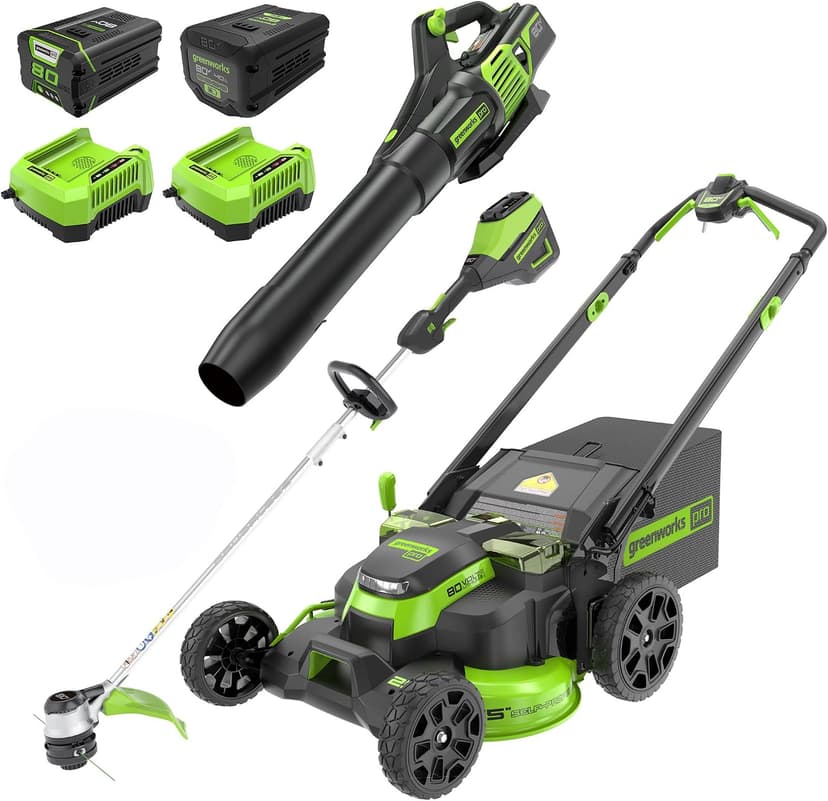
The Greenworks 80V kit ships three tools that share the same battery platform: a 25-inch self-propelled mower, a 16-inch string trimmer, and a 730 CFM leaf blower. Owners say the wider deck cuts noticeably faster than 21-inch models, and rear-wheel drive handles moderate slopes without wheel spin. The 4.0Ah pack runs the mower for around 51 minutes per owner reports; the 2.5Ah pack is better suited to the trimmer and blower than to finishing a large lawn solo. Two chargers in the box means both packs can reload simultaneously — useful if you batch your yard work into a single morning.
Perfect for
Busy households or side-hustle crews wanting commercial pace without gas fumes on 0.25–0.75 acre lots.
Skip if
You only need a mower and don't want the additional trimmer and blower tools, or prefer individual tool purchases.
What owners report
Owners report getting around 51 minutes from the 4.0Ah pack before blade speed drops. The trimmer and blower draw down the 2.5Ah pack faster when used together. Both chargers reload their packs in under 75 minutes side by side, according to reviews.
Pros
- Mower, string trimmer, and leaf blower all on the same 80V battery platform
- 25-inch deck cuts noticeably faster than 21-inch models on larger lots, according to owners
- Rear-wheel drive holds traction on moderate slopes without wheel spin, according to owner reports
- Two chargers in the box — both packs reload simultaneously
- Brushless motor runs without heat issues, according to owner reports
Cons
- At $1,249, you pay for all three tools whether you need them or not
- Mower weighs 82 lbs with battery installed — heavier than single-tool decks
How do our lawn mower picks compare?
| Model | Deck width | Runtime / fuel | Deck material | Best for |
|---|---|---|---|---|
| EGO POWER+ Electric Lawn Mower, Self-Propelled Cordless with Select Cut and Touch Drive, Includes (2) 56V 6.0Ah Batteries and Rapid Charger - LM2134SP-2 | 21 in | Variable (2x 56V 6.0Ah) | Composite | Quiet power + precise cut |
| PowerSmart 21 in. Gas Lawn Mower with 144cc OHV Engine, 2-in-1 Push Mower with Mulching & Side-Discharge | 21 in | Unlimited (gas) | Steel | Thick turf + bagging |
| Toro 60V MAX* 21 in. Recycler w/SmartStow Push Lawn Mower with (1) 60V MAX* Flex-Force 7.5Ah Lithium-Ion Battery and (1) Charger | 21 in | Extended (7.5Ah pack) | Steel | Tight storage + town lots |
| Husqvarna Special Edition Z242F (42") 21.5HP Kawasaki Zero Turn Mower | 42 in | Unlimited (gas) | Steel fabricated | Acreage + zero-turn control |
| Greenworks 80V 25" Cordless Battery Brushless Self-Propelled Rear Wheel Drive 3-in-1 Lawn Mower, 16" String Trimmer,730 CFM Leaf Blower,Combo Kit w/ (1) 4.0Ah Battery (1)2.5 Ah Battery and (2)Charger | 25 in | Extended (4.0Ah + 2.5Ah batteries) | Steel | Commercial pace at home |
Need a one-glance answer? Choose the EGO POWER+ for quiet suburban mowing, the PowerSmart for under-$260 gas, the Toro when garage space is the constraint, the Husqvarna for acre-plus lots, and the Greenworks kit if you want a mower, trimmer, and blower on a single battery platform.
Buyer’s guide: How to choose your 2026 mower
Once you know your yard’s size and slope, run through this checklist to confirm the right mower tier, informed by research into what matters most for travel-focused readers, waterfront property owners, and gardening devotees.
Budget tiers and what you get
- $350–$600 (Entry-Level Battery): Ideal for lawns under 5,000 sq ft. Expect single batteries, plastic decks, and up to 35 minutes runtime. Pair with a pool day playlist and you’ll still finish before lunch.
- $650–$900 (Premium Battery & Gas): Covers 0.25–0.75 acres, adds multiple batteries or hydrostatic drives, and introduces headlights for evening runs—perfect when juggling smart holiday decor.
- $3,500+ (Acreage & Zero Turn): Invest when you need to cut 1–3 acres multiple times per week. Build storage alongside outdoor kitchen upgrades so maintenance tools stay handy.
Mistakes to avoid
- Ignoring deck width: a 21-inch deck takes 15 passes to cover the same area as a 25-inch deck—time you could spend prepping cold brew tumblers.
- Skipping spare blades: always keep a sharpened set ready beside your emergency kit so you’re not stuck during peak growth weeks.
- Forgetting wheelbase width when pairing with patio layouts or seasonal displays.
Decision matrix
Choose your mower by answering three questions:
- How big is your mowable area? Under 0.25 acres? Pick a 21-inch battery deck. Over 1 acre? Evaluate zero turn or ride-on options.
- How tall does your grass grow between cuts? If growth exceeds 4 inches between sessions, lean toward powerful gas or high-torque brushless decks.
- Where will you store it? Confirm door widths, charge access, and vertical storage compatibility alongside other outdoor investments.
How to mow like a pro in five steps
Use this workflow every time you mow to keep results consistent, whether you're also researching camping gear or outdoor ovens.
Inspect the lawn and clear debris
Walk the yard, remove branches, dog toys, and stones, and flag irrigation heads so you don’t scalp them.
Recommended tools: Gloves, rake, debris bucket
Check mower setup and safety systems
Confirm blade sharpness, battery charge or fuel level, tire pressure, and safety switches. Calibrate smart mowers via their app before heading out.
Recommended tools: Torque wrench, tire gauge, app or manual
Set mowing height for the season
Adjust deck height to 3 inches in spring, 3.5 inches in summer, and 2.5 inches in late fall to match seasonal growth patterns and shade levels.
Recommended tools: Deck height lever, tape measure
Mow using overlapping passes
Cut in wide, overlapping lanes, turning into previously cut sections to avoid turf tearing. Alternate directions every session to prevent ruts and preserve stripes.
Recommended tools: Lawn mower, striping kit (optional)
Finish with cleanup and maintenance
Blow clippings off paths, inspect blades, charge batteries to storage level, and log runtime in your maintenance notebook.
Recommended tools: Leaf blower, hose, maintenance log
FAQ: Real-world lawn mowing questions answered
What is the best lawn mower for 2026?
The EGO POWER+ LM2134SP-2 is our top 2026 pick. The Select Cut dual-blade system produces the finest mulch finish among the mowers we researched, Touch Drive self-propulsion is genuinely hands-free on flat ground, and the dual 56V 6.0Ah batteries average around 58 minutes per charge according to owner reports.
How long do cordless lawn mower batteries last?
Modern 56V and 82V packs last 45–75 minutes per charge, and owners report capacity holding above 80% after 200 cycles when packs are stored inside and kept between 20–80% during winter.
Is a self-propelled mower worth it?
Yes—self-propelled drives noticeably cut down average mow time and reduce exertion on hills, according to owner reports, making them invaluable if you manage slopes or juggle emergency prep projects on weekends.
Can electric lawn mowers cut wet grass?
Electric mowers with high-torque brushless motors can tackle damp grass when you switch to rear bagging, but we recommend waiting until blades are dry to preserve deck coatings and avoid clumping around smart landscaping tech.
How often should I sharpen lawn mower blades?
Sharpen blades every 25 mowing hours or twice per season; owner reviews describe noticeable cut quality decline after about 21 hours on clay-heavy soil, especially when mowing near dense mulch rings.
Are reel mowers still relevant in 2026?
Reel mowers remain the best choice for low-cut hybrid Bermuda and zoysia lawns under 3,000 square feet, but they demand frequent sharpening and a level lawn.
Do I need a riding mower for half an acre?
Not necessarily. Owners report that 21–25 inch battery mowers can cover about 0.6 acres per charge with the right pace. Upgrade to the Cub Cadet ZT1 42E only if you crave zero-turn comfort or mow more than 45 minutes per session.
What maintenance do battery lawn mowers need?
Battery mowers need blade sharpening, deck cleaning, firmware updates when available, and battery storage between 40–60% in cool environments.
How do I reduce lawn mowing noise?
Switch to brushless battery mowers, mow mid-morning when ambient noise is higher, and install rubber pavers near echoing fences to absorb vibration.
What safety gear should I wear while mowing?
Wear hearing protection, ANSI safety glasses, and non-slip footwear. It's also smart to keep a trauma kit nearby and charge a phone before mowing large properties.
How can I stripe my lawn like a pro?
Set your mower deck to 3.25 inches, mow in alternating directions, and add a striping kit or DIY PVC roller. Finish with a quick pass using a soft brush to lift turf blades evenly.
Should I bag, mulch, or side discharge clippings?
Mulch when grass height change is under 1 inch, bag when clearing disease or seasonal debris, and side discharge only on open fields where cleanup isn’t required.
How do robotic lawn mowers compare?
Robotic mowers work well on up to 1-acre lawns with simple layouts, but they still need perimeter wire and routine blade swaps. We'll release a dedicated guide once our research on long-cycle robotic mower performance is complete.
Can I mow during drought conditions?
Yes, but raise your deck to 4 inches, mow less frequently, and leave clippings to shade soil—mirroring the water-saving tactics used in drought-tolerant gardens.
How do I dispose of old gasoline safely?
Take stale fuel to your municipal hazardous waste facility and store fresh gas with stabilizer in sealed containers, just like we outline in our seasonal fuel rotation checklist.
